

A while ago, a friend shared a story about teaching his teenage son to drive his prized Miata. He handed over the keys, sat in the passenger seat, and offered guidance only when needed. He let his son grind the gears. He watched him stall at traffic lights. As much as he wanted to, he resisted the urge to grab the wheel.
“The best way for him to learn was to practice and make mistakes,” my friend said. “If I kept grabbing the wheel, he would never learn. I had to trust him.”
That conversation stayed with me because it captures something that many leaders, including myself, struggle with. Trust sometimes requires you to take your hands off the wheel.
LET THE DIAMONDS SHINE THROUGH
When I was 26 and starting Quest Global, I hired people who were much smarter than I was. Many were technology gurus nearing retirement, with decades of experience. I hired them because they knew how to solve the toughest engineering and organizational problems.
Given their years of experience, I should have trusted them completely. But I was early in my career, and I didn’t know how to trust or let go. I frustrated many of them by frequently checking their work, sitting in every meeting, and reviewing every proposal. They were veterans—diamonds of the industry, so to speak, and I was micromanaging their work. I had to learn to let go and let them shine in client engagements while I stepped back.
Leaders sometimes convince themselves that close oversight is necessary and purely for the team’s benefit. They convince themselves that if they check every step, they can catch mistakes before they snowball. However, this thinking creates unintended consequences.
Micromanagement kills the very thing you need most in any forward-thinking company—creative problem-solving. When people come to expect their manager to redo their work, they stop trying to find better solutions. They just wait for instructions. Beyond killing creativity, micromanagement creates a trust deficit that spreads like rust through metal.
When you constantly override decisions, you send a clear message: “I hired you, but I don’t believe you can do the job.” People start second-guessing themselves. They lose confidence. The bold ones leave, and then you end up with a company full of order-takers.
MICROMANAGEMENT SLOWS PROGRESS
Given enough resources, anyone can do anything. The real challenge is achieving more with less. But when we micromanage, we create the opposite effect. We turn talented people into resources that consume time rather than create value. This is how many senior leaders slow everything down to the speed of their approval process.
I learned this during our expansion into the aerospace and defense industry. I was reviewing every technical proposal, sitting in every client meeting, thinking I was ensuring quality. What I was doing was creating dependency. I did not give my team the room to operate independently and assume full accountability. I finally understood that a company that depends on one person’s daily involvement isn’t a company. It’s just one overly complicated job.
LEARN TO LET DIFFERENT BE GOOD
Working with our semiconductor team taught me a valuable lesson. Instead of standing over every decision, I defined the revenue target and quality standards, but I left it to the vertical leader to define the hiring plan and client approach. The team made initial mistakes, or said differently, they made different decisions than I would have made. They also discovered innovations I would never have considered.
The hardest part of letting go is accepting that things will be done differently than how you would do them. Not wrong, just different. When you learn to appreciate that everyone approaches challenges differently, you can give them the space to make decisions and grow. You cannot teach a person to run if they don’t know how to walk. And they will never learn to walk if you’re carrying them all the time.
It also means investing time in getting to know your people deeply. Not just their skills, but their aspirations, what drives them, and how they think. When you understand how they approach a problem, you can give them challenges that help them grow. You can spot when they need support versus when they need space. This isn’t a suggestion to soft-pedal; rather, this is, by definition, what strategic leadership must look like.
REFRAME SUCCESS CONTINUITY
These days, success means something different to me. Not how many decisions I make, but how many leaders I am able to help develop. Not how many problems I solve, but how many people feel empowered to solve problems themselves.
At Quest Global, we believe ordinary people can do extraordinary things. But they can only do extraordinary things when given the space to be extraordinary. I don’t want us to be a company that depends on any one person or even a few people. I want it to be a place where 21,000+ brilliant minds contribute ideas and shape the company’s long-term success, not just execute against my vision.
I am still learning to let go. After 28 years, I still catch myself hovering over details that don’t need me. But I am getting better at stepping back. I have come to trust the brilliant people we have hired to be brilliant.
My friend’s son continues to remind me that trust is something we all need to remember as leaders. He has been driving that Miata for years now. He handles it better than his father ever did, and the car runs smoother, too.
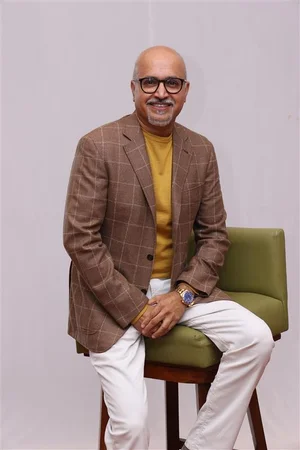
Ajit Prabhu is the cofounder and CEO of Quest Global.