
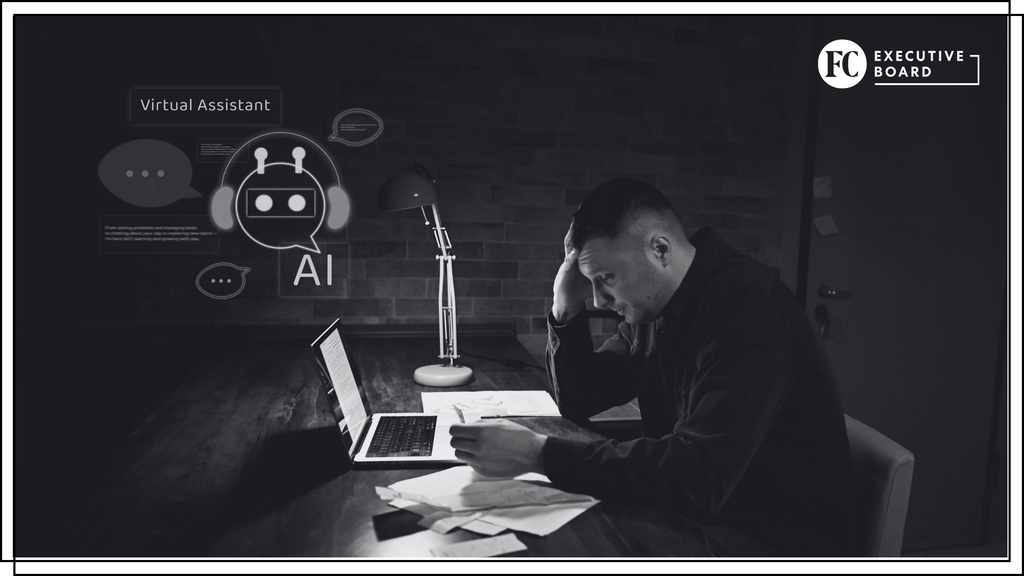

AI is rapidly reducing the time required to complete work. Tasks that once took hours now take minutes. Leaders’ expectations for productivity are rising alongside the pace of work. But the experience of work isn’t getting easier.
Many employees are already stretched thin. Microsoft research found that 80% of workers say they lack the time or energy to do their jobs effectively.
While AI creates efficiencies in some areas, it’s also increasing the pace of work and the number of decisions employees must make. That dynamic is changing what burnout looks like, specifically how much employees are expected to think through, in a given hour.
AI can potentially improve how work gets done. But without deliberate leadership, it can just as easily accelerate strain. Whether AI becomes a performance advantage or a burnout risk will depend on how you set expectations, manage cognitive load, and create clarity.
When outputs rise, expectations rise faster
AI is already driving measurable productivity gains, most of which come from a small early-adopter group experimenting with AI and pushing it into their day-to-day work, often ahead of formal guidance or expectations. While valuable, that initiative isn’t representative of how most employees are operating, especially in the early stages of adoption.
The problem is how quickly those gains get treated as the new baseline. As soon as output improves, expectations shift, as most people are still figuring out how to use the technology. In fact, 53% of leaders say expectations for productivity are increasing, even as employees report already being at capacity.
I’ve seen leaders assume that increased efficiency reflects broader capacity and respond by filling the gap with additional work, rather than giving teams time to adapt to new tools and workflows. That’s where risk starts building and showing up both in the pace and intensity of the work itself, as well as uncertainty around things like:
- What AI means for individual roles
- Which skills will matter in the future
- How performance is being evaluated
Without clear expectations and transparency, employees are left to figure out for themselves how AI should fit into their role, what good performance looks like, and how quickly they are expected to adapt. That’s when curiosity starts to feel like pressure, and productivity gains start to come with avoidable strain.
3 ways to prevent burnout from AI productivity gains
To get ahead of AI burnout, you need to be intentional about how you set expectations, evaluate performance, and support employees as AI changes the pace of work.
1. Protect stabilization periods before raising the bar
When AI starts to improve output, the natural reaction is to ask what else teams can take on. That’s where you need to be careful and resist the urge to turn early gains into more work.
Give teams time to build confidence and develop more consistent ways of working with new tools. In many cases, employees will reinvest that time on their own, whether that’s building new skills, experimenting with AI, or spending more time on complex work.
At Ensono, we’ve long protected time for learning through initiatives like “Thinking Thursdays” so employees can step away from meetings to focus on learning and development. That kind of space becomes even more important as AI adoption accelerates.
2. Look beyond output to understand cognitive strain
Faster turnaround times can make work look easier than it actually is, even as the mental load increases. You can’t rely on output alone to assess performance or understand whether AI adoption is actually working.
In my experience, traditional engagement surveys don’t assess how AI adoption actually affects day-to-day work, because they tend to lag behind employees’ experiences.
More frequent check-ins with employees provide you with a clearer view of where people feel stretched or uncertain and build the trust employees need to speak openly. Without that visibility, it is easy to assume everything is working when strain is actually accumulating.
3. Treat AI governance as a people strategy
AI governance should also aim to reduce uncertainty for employees by setting clear expectations for how AI should be used and what constitutes good use. Just as importantly, be transparent about how roles may evolve and what is still unknown.
From what I’ve seen, employees tend to be less concerned with having all the answers and more focused on understanding how decisions are being made. Being open about what is known and unknown helps build trust and reduces anxiety around how AI will impact their work.
AI adoption isn’t linear. When you acknowledge that and bring employees along in the process, teams are better able to adapt. When they do not, uncertainty turns into hesitation and friction.
AI will reshape work, but leadership will determine the outcome
Leaders will decide whether AI drives resilience or burnout. Pushing productivity higher can deliver short-term wins, but it also increases the risk of burnout when expectations outstrip what teams can sustain.
The leaders who make AI stick will set clear guardrails, pace the rollout, and give teams room to adapt. Otherwise, the gains ultimately come at the expense of the people expected to deliver them.
Meredith Graham is chief people officer at Ensono.