
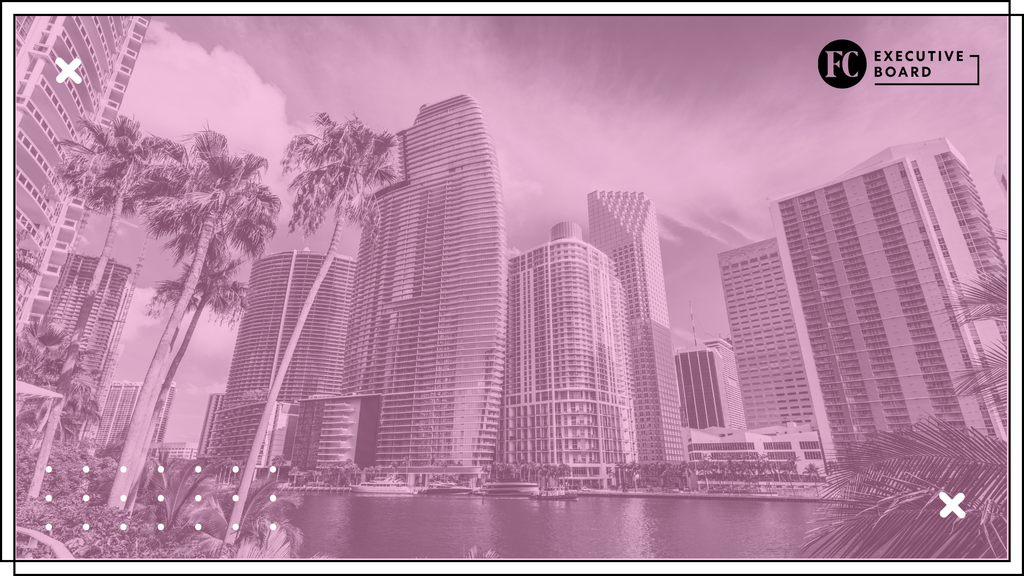

Miami is experiencing an extraordinary evolution. As a dynamic, rapidly growing hub for finance, tech, innovation, and environmental solutions, it’s where you can actively feel the future being built. The arrival of hedge funds, family offices, and tech innovators has made South Florida one of the world’s most watched economic destinations.
By every traditional measure of capital attraction, Miami is winning. But a city’s ultimate success is not defined merely by the wealth it aggregates. It is defined by how effectively capital is deployed to ensure long-term viability.
Right now, Miami is sitting on a historic opportunity to bridge the gap between financial prosperity, environmental resilience, and economic mobility for the residents, communities, small business owners, and artists who made the city what it is today.
As Miami attracts record private capital, it is also facing significant infrastructure vulnerabilities and an affordability crisis. Rents are unaffordable, salaries remain stagnant, and saltwater is pushing further inland, threatening the Biscayne Aquifer, our primary source of drinking water.
The energy grid, heavily reliant on natural gas, faces the triple pressures of severe weather events, record temperatures, and rapidly escalating demand. With limited public transportation infrastructure, Miami now suffers from some of the worst traffic congestion in the world, stifling economic mobility and compounding the city’s carbon footprint.
As I recently noted in Fast Company, we face a massive physical infrastructure blind spot, particularly as the AI boom accelerates, with a lack of regulation to guide it more responsibly. Reliable, affordable and copious amounts of energy and freshwater are required by both the data centers and surrounding communities.
The gap between the wealth arriving in Miami and the investments required to upgrade our infrastructure stems from a lack of financial imagination. It’s a mismatch between legacy investment models and the innovative strategies needed to scale clean energy, water systems, and economic mobility.
Models for the future
Other geographic areas have cracked this code, building the financial structures and long-term investment frameworks that turn water, energy, and climate risk into solvable, investable problems. Miami can draw from these successful global blueprints:
- Singapore: The Asian city-state treats water security as a matter of national survival and economic competitiveness. Through immense public-private coordination, the nation recycles water at scale, providing a resilient supply that is independent of rainfall variability.
- Copenhagen, Denmark: The city has integrated extensive district heating systems into its urban infrastructure, dramatically reducing its dependence on fossil fuels and providing reliable, carbon-smart energy. Combined with major investments in emission-free public transportation and low-emission zones, these initiatives have significantly improved urban mobility and air quality across the capital.
- Medellín, Colombia, transformed itself through “green corridors,” adding natural infrastructure to measurably reduce heat island effects and drive economic revitalization in dense urban corridors.
These blueprints show what is possible. Miami has something none had at the starting line: capital, talent, and global spotlight, all concentrated at once.
We are in the midst of a historic intergenerational wealth transfer, and a meaningful share of that capital has landed in South Florida. In our experience, the next-generation wealth holders driving this migration want real solutions.
A solution for Florida and for investors
This is where innovative finance comes in. A study tracking 320 global adaptation investments in water, health, energy, and infrastructure between 2014 and 2024, costing $133 billion, showed the potential to unlock $1.4 trillion in economic value.
Blended capital can accelerate these efforts. Philanthropy can absorb the risk of funding new, unproven ideas like pilot projects and early-stage models that traditional investors don’t typically fund.
Once proven, those ideas unlock private capital that helps them scale. Together, philanthropy and private investment can move far more money into the resilient infrastructure and economic mobility Miami and its communities need.
Today, in our experience, thousands of specialized private market funds demonstrate the success of this approach. For instance, some fund managers use innovative financial structures to help urban centers and rural communities improve water and renewable energy infrastructure, support farmers with tools to scale regenerative agriculture solutions, build green data centers, and accelerate the decarbonization of key sectors such as real estate and transportation.
However, most of these funds are still missing from traditional wealth management platforms. Investors rarely have access to diversified, multi-asset-class portfolios of these private market funds. This is despite the fact that many investors are keen to invest in systemic solutions that address risks and are necessary for a resilient planet. The investors who move first to accurately price climate and water risk into asset valuations could be positioned to capture generational value.
The AI data centers going up across Florida; the neighborhoods vulnerable to flooding and extreme temperatures; and the businesses reliant on uninterrupted power all require investments in solutions currently sidelined, often deemed “too niche” by legacy platforms.
Miami’s leaders, investors, and corporate decision-makers sit on one of the most consequential opportunities in urban history. The capital is here. The tools exist. The innovative investment blueprints and solutions have been proven globally.
The only question now is: Will Miami lead by deploying capital where it’s truly needed?
Alix Lebec is the founder and CEO of LEBEC.