

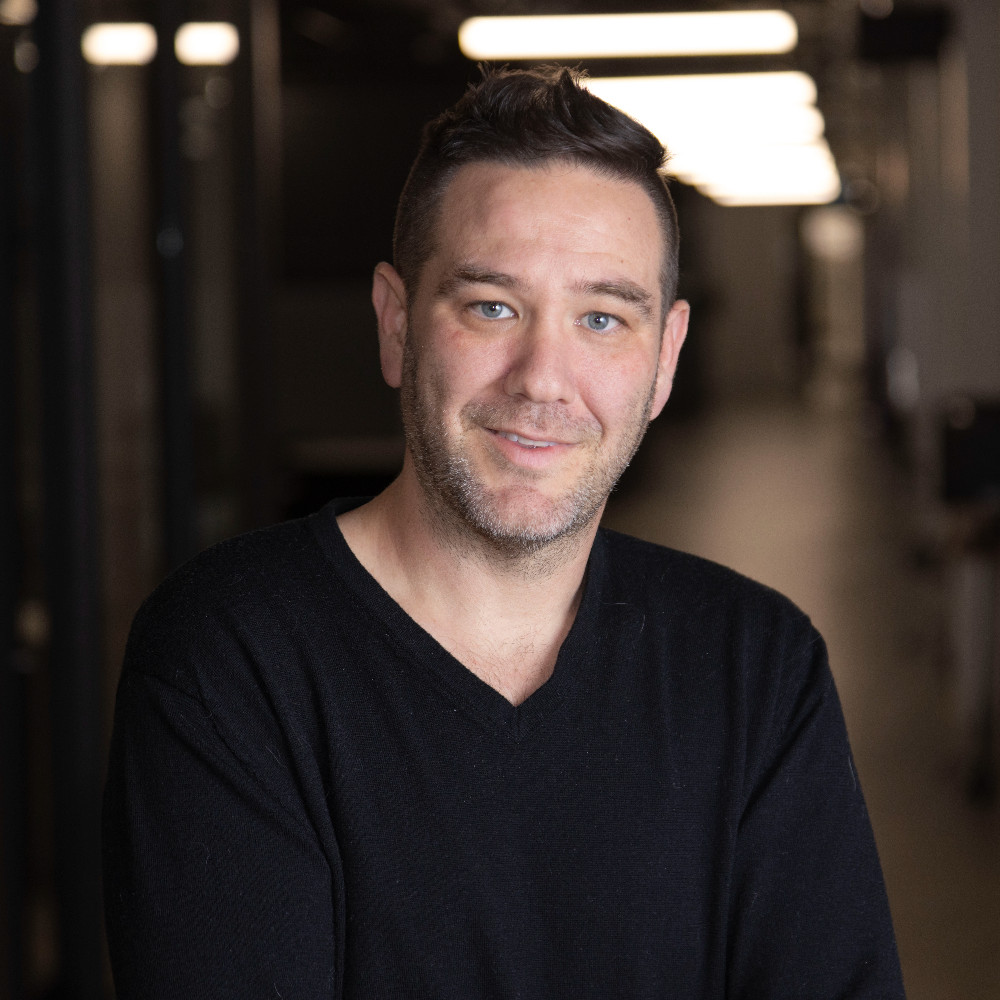
Recently, I realized I have accumulated more than 25 years of work experience. That made me reflect on the biggest lesson I’ve learned: Our experience should not end with us.
I started working as a teenager and, over the years, tried more jobs and professions than I can count. I painted houses, worked as an electronics technician, and held different positions throughout the technology sector. I worked while completing my university studies, often surviving on five or six hours of sleep. For six years, my days started at 7:30 a.m. and ended after I returned home from classes around 11 p.m.
Along the way, I became a parent, immigrated to a new country, and rebuilt parts of my professional and personal life. I experienced layoffs, uncertainty, threats, and moments when I genuinely did not know what to do next. For the last 15 years, I have been building and leading organizations dedicated to helping others create better futures through technology education.
It’s tempting to connect all my experiences into a neat story and pretend that I always knew where I was going. I didn’t. But I now see that my untraditional career path can benefit others.
THE ROAD LESS TRAVELED
For a long time, the conventional wisdom was simple: Stay with one company, demonstrate your loyalty, and build your career from there. I never fully understood that approach. Not because there is anything wrong with staying in one place. But I wanted to test the waters. I wanted to understand what I was good at, what I enjoyed doing, and where I could contribute the most.
So, I moved. I changed roles, explored different responsibilities, and took chances that probably did not make sense on a spreadsheet. Were those the right decisions? Honestly, I don’t know. I probably left money on the table. I may still be doing so today. But I don’t regret the choices I made.
The goal was never to find my “passion.” I was looking for something different: A role where my skills could be useful, where I could build something meaningful, and where I could find my own way to shine.
Sometimes we put enormous pressure on people to discover their one true passion, as if every career decision needs to lead directly to a predetermined destination. But many of us don’t discover what fits us by thinking about it. We discover it by doing. Sometimes, the only way to understand where we belong is to spend time somewhere else first.
AN OPPORTUNITY IS ONLY THE BEGINNING
Over the past several years, I’ve had the opportunity to work with many people across the Americas facing difficult circumstances. Some were unemployed or underemployed. Many were supporting families. All wanted a better future.
Wanting a better future and building one are not always the same thing. I have seen talented people push through difficult circumstances and transform their lives. I have also seen people walk away when things became too hard, frustrating, or uncertain. They had reasons. Sometimes, many of them.
I recognized those reasons. I knew what it was like to be tired, to work and study at the same time, to worry about money, to support a family, and to start over in a new country. That does not mean my experience was identical to theirs. Everyone’s circumstances are different.
But experience taught me something important: Overcoming obstacles is rarely about finding a life without difficulties. It is about deciding which difficulties are worth pushing through. An opportunity can open a door, but someone still must walk through it.
THE MEANING OF A FULL-CIRCLE MOMENT
Earlier this year, my own journey reached a milestone. I was awarded the Meritorious Service Medal by the governor general of Canada in recognition of my work and contributions to the country. As a result, I was invited to preside over Canadian citizenship ceremonies, taking the oath of citizenship from new Canadians and welcoming them to the country.
Standing in those rooms was a genuine full-circle moment. I remembered arriving in Canada as an immigrant myself. Years later, I found myself standing before people beginning a similar chapter in their own lives.
During those ceremonies, I focused on something I believe extends far beyond citizenship—being part of a community comes with a responsibility to contribute to it. Not because we expect something in return or because helping others will necessarily advance our careers. We should do it because when we have received opportunities, support, knowledge, or guidance, we should remember that someone else may be standing where we once stood.
The experiences that shape us become more valuable when we share them. The same principle applies to our professional lives.
As we gain experience, it becomes easy to focus on our next promotion, opportunity, or challenge. But eventually, the lessons we have learned can become just as valuable to someone else as they are to us. A conversation can help someone see an opportunity they didn’t know existed. Mentorship can help someone avoid mistakes that took us years to understand. Sometimes, encouragement is enough to keep someone from giving up.
Helping someone does not always require a formal mentorship program or a major commitment. Sometimes it simply means making time for a person who is trying. Those of us who have already walked a similar path can make the journey a little easier. Not by removing every obstacle, but by helping them believe the obstacles can be overcome.
WHAT COMES AFTER SUCCESS
I don’t know whether every career decision I made was the right one. Some cost me time, money, and opportunities. But every job, failure, difficult period, and unexpected turn gave me something I could eventually use. Some experiences taught me what I wanted to do. Others were equally valuable because they taught me what I didn’t.
At some point, the path stops being only about figuring out where we are going. It becomes about turning around, looking at the people coming behind us, and asking a simple question:How can I help?
Pablo Listingart is founder and executive director of Comit.