

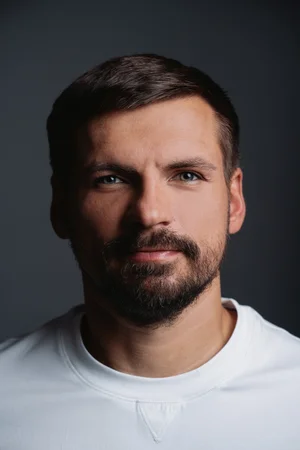
For over 10 years, I built and scaled Parimatch. I joined as the marketing director, then became CEO and one of the owners. Over the years, the company transformed from a loss-making offline betting company in the local market into a global brand operating in over 20 countries, with Mike Tyson and Conor McGregor as brand ambassadors.
When people asked me about work-life balance, I used to joke that God had been merciful—there was only imbalance—but that was never a problem for me. I enjoyed the opportunity to achieve ambitious goals and do things that others didn’t dare to do. The office was my second home.
The business was growing, as was I—both as a person and as an entrepreneur. That’s why I recently stepped away from operational management and launched the investment and advisory firm SP Ventures.
Here’s what led me to this decision and what helped me realize that it was time to transition from being at the center of the business to standing behind the next generation of founders.
YOU OUTGROW THE ROLE
The first change I realized was the scope of issues I wanted to devote my time to. My interests gradually expanded beyond managing a single company. I became more interested in new technologies and what would shape the upcoming decades.
I’ve spent a significant part of my career learning how to build and scale a business, and I never lost interest in that. Still, at some point, I wanted to use that experience to help strong founders build the next generation of businesses.
Hence, I turned to venture capital. Through my investment and advisory firm, I can invest not only capital but also the experience I’ve gained in building a business.
THE ROLE BECOMES PART OF WHO YOU ARE
Once you’ve been running a company for many years, your position gradually becomes part of how others see you, and how you see yourself. You subtly shift from running the business to being the business. The position comes with status, a familiar routine, attention, and people who rely on your decisions every day.
Once you can no longer keep up or give your business what it needs, the reason to make a change becomes obvious. It’s much harder to let go of what brought you success and has become part of your personal story.
I still remember my father’s words: Be more down-to-earth with people, don’t get obsessed with social status, and don’t let it take hold of you. Stay true to yourself—that’s the only thing that really matters.
When I made the decision to step away from managing the company, I mentally separated the work from everything surrounding it—status, habits, recognition—and analyzed what was keeping me in that role. The answer allowed me to move forward.
YOU REALIZE THE COMPANY CAN THRIVE WITHOUT YOU
Jim Collins, in his study of companies that managed to transition from merely good performance to outstanding performance, noticed a common trait among their strongest leaders: They focused their ambition on the company rather than on themselves, and built it so that its success would continue even after they left.
From a rational standpoint, I’ve always agreed with this, so I’ve tried to structure work processes to ensure that decision-making doesn’t depend on a single person. But knowing that the company has to thrive without you is one thing. Recognizing that it is thriving without you is quite another. I think this is one of the most difficult moments for someone who has been at the center of the business for many years.
I realized that the team doesn’t need my daily involvement to continue building a great product. And today, that’s one of the things I’m most proud of.
It’s easy to think that being irreplaceable is proof of your own value. But if a business can’t function without you, that’s a weakness. A much better outcome is to build a company that continues to grow even when you step away.
WHEN STEPPING AWAY BECOMES STEPPING TOWARD
At some point, the decision to step away from leadership is about what you’re moving toward instead of what you’re leaving behind.
By standing behind those building their own companies, I stopped measuring life in quarters and started measuring it in generations. That meant considering what would matter in 10 or 20 years. It’s like planting trees you’ll never sit under yourself.
For me, the measure of success is now impact, whether the founders we’ve supported will be able to build something meaningful because they had the right partner by their side at the right moment.
Sergey Portnov is founder and chairman of SP Ventures.