
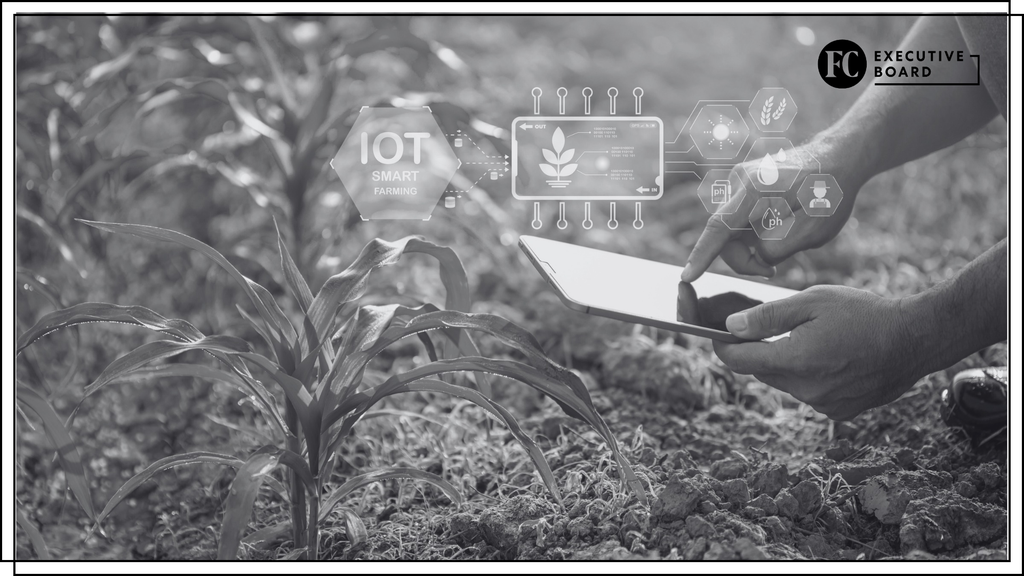

Early in my career, the conversation around precision technology centered on adoption. Would farmers embrace precision tools, connected equipment, and increasingly automated systems? Would these technologies move from early adopters into everyday farming? The picture of adoption is becoming clearer. The bigger question now is what comes next.
I’ve seen precision technology go from “cutting-edge” to “essential.” Farmers are noticing that change, too. We recently launched our inaugural CNH Farmer Pulse, a survey of 217 farmers and ranchers across the United States and Canada examining how farmers use precision technology and what will influence their next investments. The findings show just how far adoption has come: 89% of respondents use auto-guidance technology, 71% consider precision technology important to their operation, and 54% plan to invest in additional precision technology within the next two years.
I found it especially interesting to see how farmers’ expectations from their technology have evolved. Farmers are practical technology users. They want to know: Does it save me money? Does it make my job easier? Can I trust the data? And will it work when I need it? As technology becomes more sophisticated, the challenge is helping farmers get greater value from it across their entire operation.
Here are six questions I believe anyone building the next generation of technology should be asking.
1. WHAT OUTCOME ARE YOU SOLVING FOR?
The best technology earns its place by delivering a clear outcome for the people using it. Our research found that 74% of farmers use or consider precision technology to reduce input costs, 70% to save time and improve labor efficiency, and 59% to increase yields. Farmers are looking for measurable improvements in how their businesses operate.
Artificial intelligence, automation, and data analytics can enable extraordinary capabilities. Their value comes from what they deliver: time saved, costs reduced, productivity gained, or decisions improved. As technology matures, customers expect clearer results.
2. HOW CAN YOU MAKE ADVANCED TECHNOLOGY EASIER TO USE?
As technology becomes more sophisticated, greater focus needs to go into keeping the experience simple. That’s particularly important in agriculture, where operators are managing complex equipment in unpredictable environments and often working within narrow seasonal windows. Added complexity makes it harder for technology to deliver its full value.
In our survey, farmers pointed to training, connectivity, and ease of use as factors that can still slow adoption. I believe we should focus on keeping complexity behind the interface and making the customer experience as intuitive as possible. The goal is to pair advanced capabilities with the simplicity and reliability people need to put them to work.
3. DOES YOUR DATA HELP PEOPLE MAKE BETTER DECISIONS?
Modern farms generate enormous amounts of information from equipment, fields, weather, agronomic systems, and other sources. The opportunity is to make that information useful.
One farmer in our research put it particularly well: If the data being collected only produces a “pretty map,” it has little value. The data needs to be accurate and actionable. That’s an important distinction for every data-driven business. The real value comes from helping people identify problems sooner, use resources more efficiently, and make better decisions about what to do next.
Trust matters here, too. People need confidence in the accuracy of the information before they will use it to make consequential decisions. That makes data quality, transparency, and reliability central to delivering value. Data is only useful if it is applied in practice, helping users make better-quality decisions.
4. CAN CUSTOMERS CLEARLY SEE THE RETURN ON THEIR INVESTMENT?
Our research revealed an interesting tension. Sixty-two percent of farmers rate their precision technology as moderately or extremely valuable, increasing to 82% among the most advanced technology users. Yet 56% still cite cost as an obstacle to broader adoption, while 36% are uncertain whether additional technology will deliver sufficient value. That gap tells us something important. In today’s maturing technology market, customers need to see a clear return on investment before they invest more.
Customers need to be able to connect an investment to tangible improvements in their operation, from what it saves or improves to how quickly they can see the benefit. We can help by making those outcomes easier to quantify and demonstrate. The clearer the connection between an investment and its economic impact, the easier it becomes for customers to make informed decisions about what comes next.
5. ARE YOU DESIGNING FOR THE CUSTOMER’S ENTIRE ADOPTION JOURNEY?
Customers enter the technology curve at different points. Agriculture illustrates this clearly. Foundational precision technologies are already deeply embedded in many farming operations, while newer capabilities are at an earlier stage. For example, 14% of farmers in our survey report using AI-assisted automation, signaling how much room remains for more advanced technologies to grow.
Technology adoption often builds through experience. A tool that delivers meaningful value builds confidence and creates a foundation for adopting more advanced capabilities over time. That means technology companies need to meet users where they are.
6. ARE YOU PREPARING CUSTOMERS TO WORK DIFFERENTLY?
As technology becomes more advanced, realizing its full value increasingly requires new skills and workflows. In our research, 21% of farmers identified the need for more training as a barrier to broader adoption.
Education and training will become even more important as AI, automation, and connected technologies reshape how work gets done across the farm. Helping farmers adapt their operations will be key to unlocking greater productivity and efficiency from these technologies.
Agriculture has moved beyond the question of whether technology belongs on the farm. Farmers have experienced its value and are ready for more, and their expectations continue to rise. The first phase of precision agriculture demonstrated how technology could change the way farming gets done. The next will be about making every advancement easier to use, easier to trust, and easier to connect to measurable business value.
That may be the bigger lesson for technology leaders everywhere: Innovation only matters if people can put it to work and see the value it creates.
John Preheim is head of precision and electronics at CNH.