
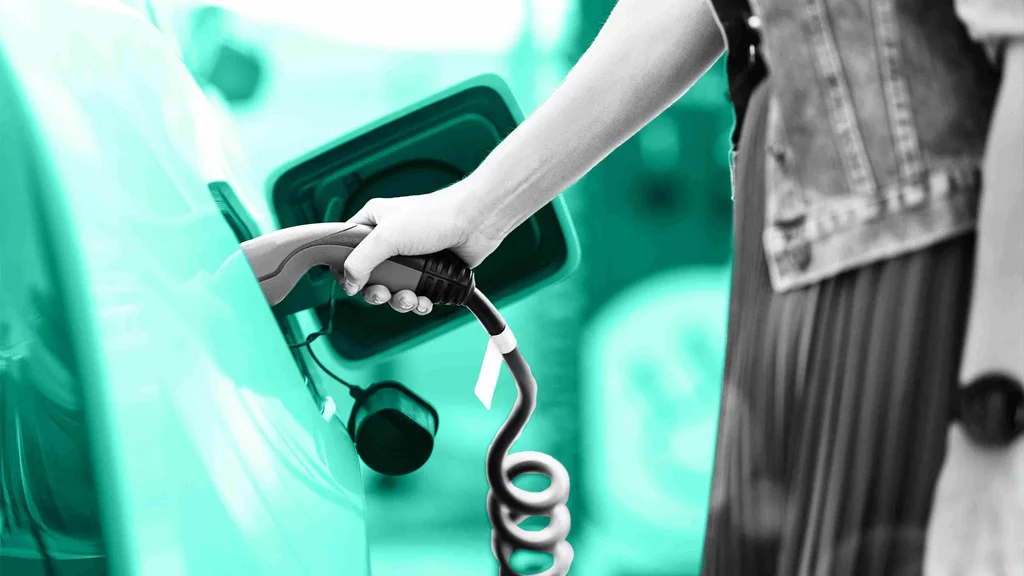

As America steadily builds momentum to become an electric vehicle (EV) powerhouse in the next decade, outdated and rigorous supply chain constraints will see the country falling further behind China and the European Union by 2025, according to a report by the Coalition for a Prosperous America (CPA).
Countless supply chain issues are further dampening legacy car makers and the Biden Administration’s efforts to make 50% of all cars on American roads fully electric by 2030.
Last year marked a 65% jump or two-thirds increase in new EV passenger vehicles sold compared to 2021. Overall, electric cars accounted for 5.8% of all new cars sold across the country in 2022, a steady build-up from 3.1% the year before.
Considering how much the EV market has expanded, determining where it could lead in the coming years is a question of how industry leaders can resolve internal and widespread issues with native innovation and technology.
OVERCOMING THE LACK OF ACCESS TO ADEQUATE MATERIALS
At present, four key materials make up the majority of materials needed to compile lithium-ion batteries — lithium, nickel, cobalt, and copper. Overall these four ingredients make up roughly 50% of a battery’s cost.
These raw materials or raw earth make up several crucial components of electric car operations, including cathode chemistries across several levels, windings, and rotors in motors.
For successful rollout, essential materials would need to be more widely available, in higher volumes and at lower prices if automakers want to meet the industry’s and the government’s ambitious EV targets.
Matthew Hart, the spokesperson for the automotive advice site, Axlewise, comments how America’s newfound love and interest for electric vehicles have only further highlighted how far behind we have fallen in the EV race.
“However, as electric cars continue to become more affordable and accessible, new players are entering the market daily. This is creating both challenges and opportunities for existing manufacturers and consumers alike. Overall, it is clear that electric car prices will continue to rise over the next decade as demand continues to increase,” says Matthew.
To overcome the lack of access to materials, legacy automakers are considering venture deals with foreign manufacturers to help answer their need for supply and demand.
America’s biggest car producer, Ford, announced that it will enter a deal with China’s leading battery maker, CATL, for a $3.5 billion plant it wants to build in Michigan.
This would increase Ford’s footprint on the local EV market, but it allows them to leverage advanced battery makers through partnership, allowing them more adequate access to the components they need to electrify their vehicle lineups.
Instead of looking elsewhere for solutions, EV makers could further their partnership with one another, sharing available resources coming from domestic producers, increasing spending and support with countries that already have a Fair Trade Agreement with the U.S., and help build a more sustainable supply chain within the American EV industry.
Finding adequate materials, within the U.S. and the wider North American ecosystem could open up new possibilities for automakers. This might come with increased competition, as other local automakers begin to electrify their production lines, but it’s a solution that could be more sustainable in the long term for existing players in the supply chain.
REWRITING AMERICA’S EV PLAYBOOK
Securing America’s Future Energy or SAFE, a Washington think tank group, has argued that China and other leading production countries such as Indonesia have seen production take a toll on workers and the environment.
Lower-income extracting countries such as China and Indonesia have in more recent years flooded the market, taking advantage of lax environmental measures and cheaper labor.
These allegations come following a report by the Institute for the Analysis of Global Security, which SAFE has for some time been lobbying in Washington, hoping to garner the attention of policymakers and auto manufacturers.
The potential here lies in seeking domestic venture capital to jump-start an EV ecosystem that can rely on its own resources, materials, and innovations, but further creates opportunities to partner with reliable suppliers.
Aggressive competition has seen General Motors surpass Ford during its first quarter, taking up the second position for the total number of electric vehicles sold in North America. GM has developed a playbook, through which it looks to construct more production facilities within America.
Additionally, this would mean that GM can further increase its electric vehicle footprint, but increase its EV lineup in the coming years, as it aims to deliver at least six new models that will be eligible for the full $7,500 tax credit available through the Inflation Reduction Act (IRA).
Through the establishment of marketplace competition, and increasing the availability of materials, resources, and domestic innovation, both car manufacturers and consumers could benefit from improved supply chain conditions in the near and long term.
As we’ve already seen, public support, trickling down from a federal level has already introduced widespread adjustment to the America EV industry. However, now, private investment and collaboration could further increase and solidify America’s place as an EV powerhouse.
While America is perhaps reluctant to follow the playbook used by foreign-producing countries, the outcomes thereof speak for themselves with nations such as China and those in the EU seeing bulging EV support and growth coming from both public and private sectors.
The scale of opportunity for North America, and perhaps more so for the U.S., is enormous. However, it means that American EV producers and manufacturers are required to rewrite their own playbook but also learn from each other and foreign contenders.
THE BOTTOM LINE
It’s hard to conclude whether America’s longstanding love for legislation and politics could be its demise in the race to electrification. Changing supply chains requires adequate investment, but existing models of business and trade that could ensure long-term relationships, without disruption. American EV manufacturers will need to learn how to become more dependent on local sources from start to finish.
Walid Al-Hajj is the CEO of technium.ca and is passionate about starting and scaling businesses in Fintech, PropTech, Blockchain, and AI.