
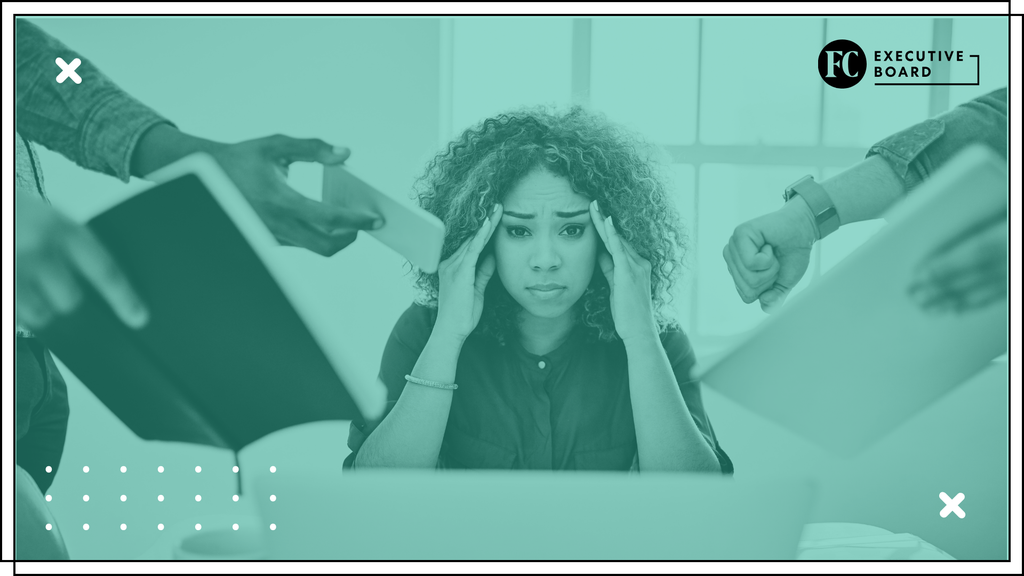

We’ve all met her. She slips into the meeting late, coffee spilling, phone buzzing in her tote, apologizing for the email she hasn’t answered yet. But before the conversation begins, she’s already told everyone how slammed she is.
For years, that performance worked. The busier you looked, the more important you seemed. “I’m slammed” became the universal humblebrag. It sounded like a gripe but functioned as a status signal. I call it busywashing: performing busyness as proof of worth, detached from real output.
Consider the mouse jiggler, re-popularized during the pandemic by remote workers who wanted that green dot to always look active. Then this spring, tokenmaxxing briefly turned AI compute consumption into its own Silicon Valley status game, where sheer token usage and leaderboard placement earned bragging rights. And as of this June, you can now spend a mere $249 for your own glowing on-air LED busy light to ward off chatty colleagues.
IT WASN’T ALWAYS THIS WAY
In his seminal book, The Theory of the Leisure Class (1899), American economist Thorstein Veblen observed that the rich signaled status through conspicuous leisure. Patricians didn’t work; they wafted.
Then the economy changed. As factory work evolved into knowledge work, status stopped coming from freedom from labor and started coming from visible demand for one’s attention. Leisure no longer suggested success; it suggested irrelevance. The signal inverted and busyness became the new conspicuous display.
Columbia Business School researcher Silvia Bellezza found that in a knowledge economy, you stop signaling status through scarce objects and start signaling it through yourself as the scarce object. Your busyness is proof of demand.
Today’s workplace rewards looking productive almost as much as being productive. Asana estimates that knowledge workers spend roughly 60% of their time “working about work.”
As a Redditor fumed in a popular post recently: “I can get my daily tasks done in 4-5 hours if I actually focus. But instead of being allowed to go home or just rest, I have to perform ‘Office Theater’ for the remaining 3 hours. I spend more mental energy trying to look busy (scrolling through old emails, moving folders around, looking ‘intense’ at a spreadsheet) than I do actually working.”
AN EXPIRATION DATE ON BUSYWASHING
But here’s what happens to every status signal: it gets crowded. Once everyone is performing busyness—the executive and the intern, the founder and the freelancer—the signal collapses. You can’t communicate scarcity when scarcity is universal.
The inversion of conspicuous busyness is not a return to conspicuous leisure. Today, conspicuous leisure would mostly signal unemployment.
It’s something more refined. Something Veblen didn’t have a term for. Conspicuous calm. A regulated nervous system as the ultimate luxury good.
Look at what ambitious executives are buying now: Oura rings, breathwork retreats, somatic therapy, glucose monitors, executive coaches with a twist of shamanism. As regulation itself has become aspirational, the $6.8 trillion wellness industry increasingly sells the promise of a calmer nervous system.
The new status signal is looking unhurried. The conspicuously calm executive doesn’t compulsively check her phone in meetings. She’s protecting something scarcer than time: her attention.
Conspicuous busyness says, “Everyone wants a piece of me.” Conspicuous calm says, “I decide who gets a piece of me.” One performs demand while the other performs sovereignty.
Calm has become its own quiet luxury signal.
One obvious objection is that this is simply another conspicuous performance re-attired in a wellness costume: a more expensive hamster wheel with better HRV scores.
Consider two historical archetypes of calm:
The monarch didn’t perform busyness because she didn’t have to. The Queen does not hurry.
The monk didn’t perform busyness because he had renounced the system that makes busyness meaningful. He was calm not because he held power, but because he had opted out.
The modern executive wants the monk’s nervous system without surrendering the monarch’s status. Breathwork at 6 a.m., board meeting at 9 a.m. But it’s an unstable bargain: cosplaying the monk while aspiring to monarch-level power.
THE AUDIENCE TAX
The problem with both busywashing and conspicuous calm is that they’re still performances—and every performance carries an audience tax.
Under constant social evaluation, your attention shifts from the work itself to managing how you’re perceived. That self-monitoring comes at a cognitive cost. Research suggests that social-evaluative stress elevates cortisol, which has been associated with poorer attention, memory, and the brain’s ability to process what the eyes see.
A performing self spends its attention rehearsing responses, managing tone, and wondering how it’s being perceived. An exhausting exercise. An authentic self, which isn’t trying to project or to conform, has the bandwidth to orient outward and notice who wields influence, where resistance lives, and what isn’t being said. The room becomes more legible.
To be released from the performance of office theater, we need to admit that human energy isn’t linear. Some days demand intensity while others require recovery. This is a concept I call cyclical work. Pretending otherwise doesn’t make people more productive—it makes them better at pretending.
THE THIRD WAY
The alternative to busywashing isn’t just about getting better at looking calm. It’s about authentically working in rhythm with your nonlinear self. Once performing a role is no longer the goal, attention can return to the work itself.
The wisest organizations won’t reward whoever looks busiest or whoever looks most serene. Instead, they’ll reward people who read their own internal state honestly—who know when to push, when to pause, and have the autonomy to do both.
Terry Chang is the founder and CEO of Two Moons Health.