

The building industry has always operated with constraints. Budgets, timelines, material availability, and regulatory requirements have shaped what gets built and how. But today, those pressures are converging in ways that are fundamentally reshaping design, construction, and product innovation across the built environment.
Labor shortages, rising material costs, complex building codes, and sustainability mandates are forcing the industry to rethink longstanding approaches. At the same time, architects and designers are being asked to deliver buildings that are higher performing, more resilient, and more adaptable than ever before.
The result is a shift in mindset: constraints are no longer viewed simply as barriers to work around. Instead, they are becoming the catalyst for innovation itself.
Complexity is increasing at every level
Not long ago, products were selected around a single performance need. For instance, in coastal regions, impact resistance may have been the primary concern. In colder climates, thermal performance took priority. Today, those distinctions are disappearing.
Buildings are now expected to meet multiple performance criteria simultaneously, including thermal efficiency, impact resistance, seismic resilience, and evolving fire safety requirements. Building codes are also changing rapidly and often vary not only by state, but by municipality.
That complexity is creating new challenges for architects and designers, who are being asked to navigate a layered set of performance expectations while ensuring that all building systems work together cohesively.
As a result, code is no longer just a compliance checkpoint at the end of the design process. It has become a primary driver of innovation.
Manufacturers are being pushed to stay ahead of evolving standards and develop systems that can meet overlapping requirements without compromising aesthetics, constructability, or performance.
Sustainability drives innovation
Sustainability mandates add another layer of pressure—and opportunity. Projects pursuing ambitious sustainability certifications are forcing teams to rethink how materials are sourced, how systems perform, and how buildings interact with their environment. In these cases, sustainability is no longer an add-on feature. It becomes the framework that shapes the entire design process.
The Kendeda Building for Innovative Design at the Georgia Institute of Technology is a strong example of how sustainability constraints can accelerate innovation. Designed to meet the rigorous requirements of the Living Building Challenge, the project was developed around net-positive energy and water goals while also prioritizing occupant health and environmental responsibility.
My company helped meet the project’s requirements for high-performance thermal systems, extensive daylighting strategies, and careful attention to material sourcing requirements. Rather than limiting the design, those constraints pushed the project team toward more integrated, performance-driven solutions that balanced efficiency, transparency, and occupant experience.
That same mindset is influencing projects across the industry as cities and clients raise expectations around energy performance, carbon reduction, and resilience.
Labor constraints influence product design
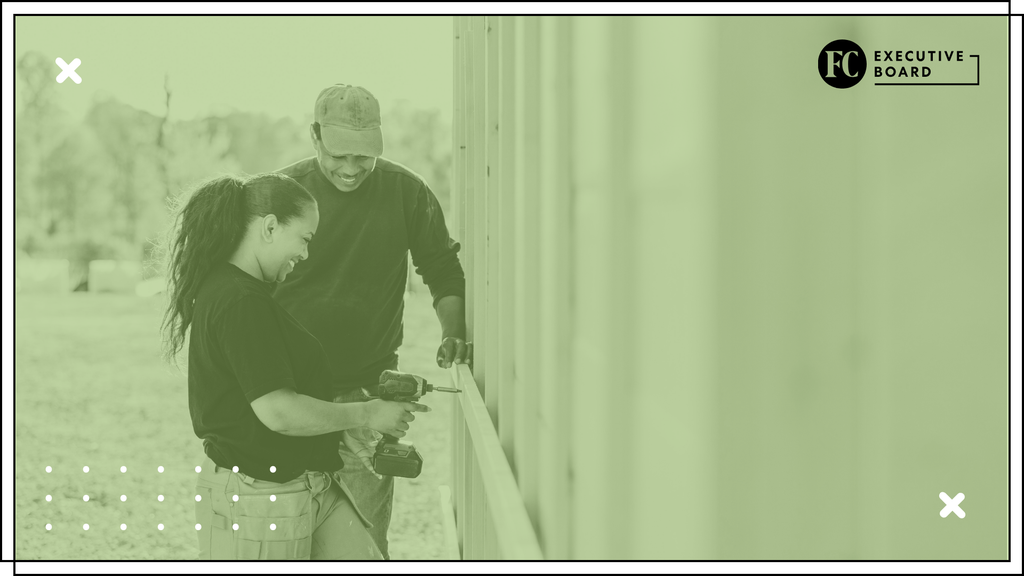
The ongoing labor shortage for construction work is impacting product and building design. Skilled construction labor availability has been declining for years, and this trend accelerated after the pandemic.
As jobsite labor becomes more difficult to secure and retain, construction is shifting offsite into controlled fabrication environments. Prefabrication, modular construction, and unitized façade systems have all gained traction as the industry looks for ways to reduce on-site labor demands and improve consistency.
For manufacturers, that has meant designing products that are easier to assemble, easier to install, and less dependent on highly specialized field labor. In many cases, systems are now partially or fully assembled before arriving on-site, reducing installation time and minimizing the amount of intricate work happening in the field.
This shift is especially important in dense urban environments where space constraints can limit staging areas and complicate construction logistics. Moving more work into fabrication shops allows teams to reduce jobsite congestion, accelerate schedules, and rely on a more stable workforce.
In many ways, construction is beginning to resemble manufacturing, where precision, repeatability, and controlled assembly environments are becoming increasingly valuable.
Complex projects have layered constraints
Some of the industry’s most innovative engineering solutions emerge from projects with the most difficult constraints.
My company’s build of the 111 Main office tower in Salt Lake City demonstrates how structural, seismic, and urban limitations can drive entirely new approaches to façade engineering. Rising above the George S. and Dolores Doré Eccles Theater, the tower was designed under a unique structural condition: no gravity loads could be transferred to the existing theater below.
To accommodate this, the building was suspended from a roof-level steel hat truss system, allowing the office tower to function independently above the theater while sharing the same footprint.
That unconventional structure introduced significant movement and deflection challenges during construction, requiring the façade system to accommodate ongoing structural shifts as the building load changed floor by floor. At the same time, the project’s location near the Wasatch Fault Zone required a seismic-tested façade system capable of maintaining performance during major building movement.
In response, the project team developed a fully customized unitized curtain wall system engineered specifically for the site conditions. Custom anchors with integrated jacking bolts allowed installers to make large-scale adjustments during installation, while specialized framing components enabled the façade to move dynamically during seismic events without compromising performance.
The project illustrates an important reality in the built environment. Constraints are not limiting design possibilities; rather they are the catalyst for redefining them.
Constraints become the blueprint
Every major pressure facing the building industry is driving a corresponding wave of innovation.
- Code complexity is driving the adoption of more integrated approaches to design and performance.
- Labor shortages are accelerating prefabrication.
- Sustainability mandates are advancing high-performance systems.
The combination of these forces requires a new approach to building products and architecture.
The future of the built environment will not be defined by fewer constraints. If anything, constraints are likely to intensify.
What will define the next generation of innovation is how effectively the industry responds to constraints. In today’s environment, constraints are no longer the obstacle to good design. They are the blueprint for it.
Kimberly Ferro is commercial vice president at Kawneer.