

You’ve launched the AI pilots. You’ve rolled out copilots and chatbots. You’ve invested in licenses, training, and dashboards. And yet, the results aren’t showing up the way you expected.
That’s the challenge of AI change management. Communications and training are essential, but without new ways of working, AI stalls at surface-level adoption.
We’ve been here before. In the early 1900s, when factories first electrified, managers simply swapped their steam engines for electric motors and waited for the breakthrough. Nothing happened. The real gains came only when they redesigned the factory floor—removing line shafts, distributing smaller motors, redesigning task flows—and brought their workforce into a new era of operations.
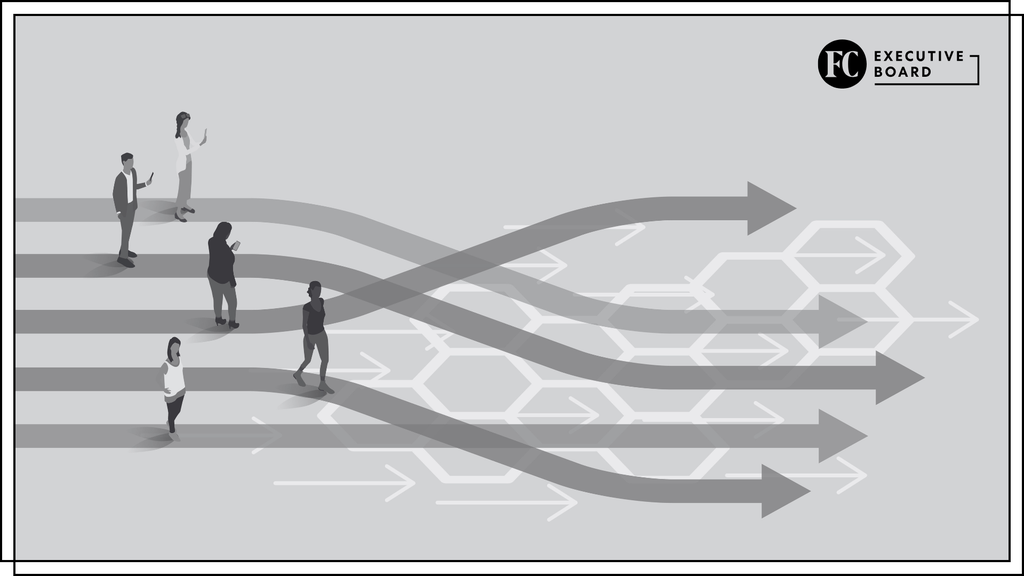
AI is at the same crossroads today. Installing the tool isn’t the win. The real value comes when leaders redesign work itself: who does what, how tasks move, where decisions sit, and how people and machines collaborate.
That’s the new mandate for change management—not just driving adoption but orchestrating the redesign that makes AI stick. The companies that succeed won’t be those with the most software licenses; they’ll be the ones bold enough to rewire their operations and equip their workforces for the AI era.
AI isn’t a software rollout
Many executives still treat AI like a software rollout: buy the licenses, launch training, send the comms, and measure usage. Those steps are necessary, but they’re not sufficient. Unlike traditional enterprise systems, AI doesn’t just digitize manual processes. It reshapes how decisions are made, how information flows, and how humans and machines collaborate in real time.
Employees may learn to use a new tool, but unless they adopt redesigned workflows, the enterprise won’t move any faster or smarter than before.
Executives must decide how AI integrates into their operating model, addressing critical questions such as:
- How can we restructure roles and workflows to balance human judgment with AI-driven execution?
- Where should oversight live, and how do we build trust in AI outputs?
- How do we measure success in adoption, productivity, customer experience, and beyond?
Effective change management for AI requires answering those questions up front and engaging the workforce in the redesign process. Compliance gets people to log in; true change management equips employees to succeed in a system reimagined around AI.
Inside a 60,000-person AI rollout
One global technology company faced this challenge head-on when it rolled out Microsoft Copilot to a salesforce of 60,000 employees across more than 200 countries. The company knew that simply distributing licenses and providing generic training would not be enough. Copilot’s value depended on how sellers applied it to daily tasks such as drafting proposals, responding to customers, and preparing for meetings.
The change program combined classic elements of enablement with deliberate work redesign by offering employees:
- Tailored adoption assets (including an “Adoption in a Box” toolkit) to give local teams ready-to-use materials and role-relevant guidance.
- Targeted communications to emphasize Copilot’s role as an enhancer of human work, not a replacement.
- Dashboards and resistance scorecards to combine usage data and survey insights that highlight where additional coaching is needed.
- A refined hub-and-spoke model, plus kickoff sessions and office hours, to create continuous feedback loops and reinforced usage where work happens.
The sales team shifted repetitive preparation tasks to Copilot and reinvested their time in building client relationships. Change management didn’t just teach people to use a new tool—it helped them redesign how selling happened at scale.
For CEOs and COOs, the lesson is clear: change management in the AI era isn’t about broadcasting information. It’s about creating the structures, training, and peer networks that enable the workforce to embrace new ways of working.
Your AI playbook: Three moves that matter
AI now touches every part of the enterprise, demanding a coordinated approach to adoption and impact. For CEOs and COOs, the challenge isn’t whether employees will use AI, but whether the organization is prepared to capture value from it. The best leaders use change management to turn adoption into impact. Three imperatives stand out:
1. Start with workflows, not tools
AI layered on outdated processes delivers limited value. Executives must identify high-volume workflows that drive the business and redesign them for human-AI collaboration. Even modest improvements in cycle time or accuracy compound quickly, creating visible wins that build momentum.
2. Give employees ownership
AI adoption succeeds when employees see themselves as active participants, not passive recipients. Leaders should build persona-based learning paths, provide hands-on opportunities to experiment, and create champions’ networks inside each business unit. Champions act as trusted peers, modeling adoption and surfacing barriers early. This bottom-up energy reinforces top-down commitment, ensuring that early momentum continues.
3. Govern for trust and speed together
AI rollouts often stumble when governance is bolted on too late. CEOs and COOs must sponsor governance that is integrated from day one—clear guardrails for responsible use, visible oversight, and enterprise-wide standards that prevent fragmentation. Governance should also accelerate adoption by giving employees confidence in safe boundaries, not slowing progress with bureaucracy.
Without strong change management, organizations settle for cosmetic adoption: licenses distributed, tools in use, yet no actual change in how work gets done. That’s when “regret spend” shows up—money poured into pilots that never scale. Leaders who measure success by license counts will miss the real picture. A meaningful scorecard tracks cycle time, voluntary adoption, and productivity gains.
From pilots to power plays
In the early 20th century, electricity didn’t change manufacturing until leaders redesigned the factory floor and brought their people into a new way of working. AI now demands the same kind of leadership.
The gap between pilots that stall and programs that scale isn’t technical—it’s managerial. Redesigning workflows, empowering the workforce, and embedding governance are the new hallmarks of operational excellence. CEOs and COOs who lead on change management won’t just keep up with AI—they’ll set the pace for the next era of operational excellence.
Travis Jones is the chief operating officer Logic20/20.