
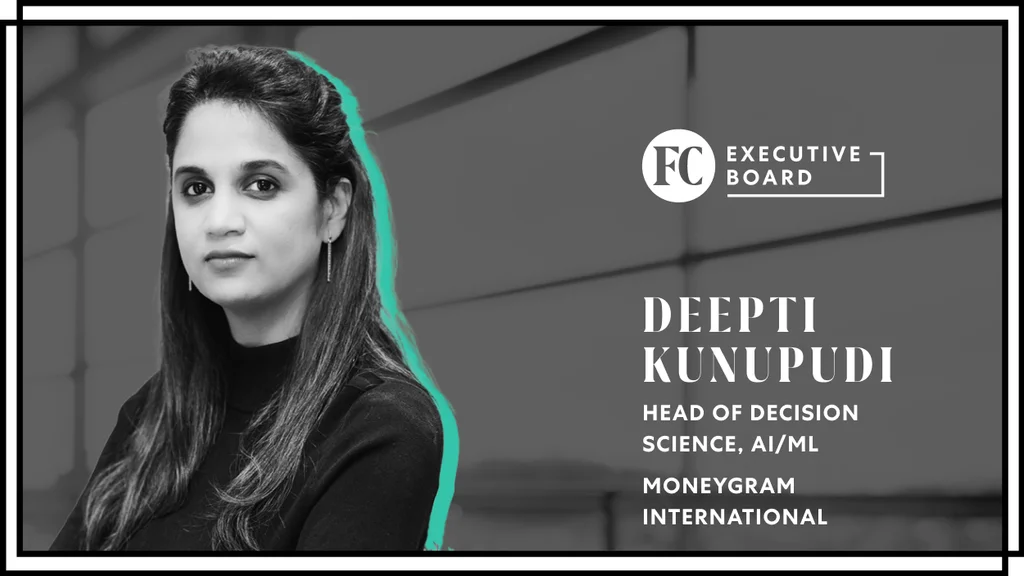

Deepti Kunupudi was only two years into her career in data and analytics when she stepped into her first leadership role. In a short period of time, she went from being an individual contributor—and the only woman in a male-dominated environment—to leading large teams on multimillion-dollar projects.
Kunupudi described her early career journey as transformational, during which she played the roles of both a technologist and a leader. She acknowledged that strong mentors and continuous learning and development have had a profound impact on her career growth. She learned early on that building trust with her team was a crucial aspect of her role as a leader.
“As you’re leading teams, it’s crucial to cultivate collaboration, empower through delegation, and foster strong relationships with each team member to drive impactful results,” said Kunupudi. “Simply assigning tasks is not enough. To achieve outstanding results, it is important to cultivate trust and forge strong relationships within the team. These connections are the cornerstone of great team dynamics and effective communication, motivating team members to excel. Ultimately, it’s the collective experience that leaves a lasting impression, far beyond the specifics of the project delivered. It is all about the experience.”
Now the head of decision science, AI/ML at MoneyGram International, Kunupudi has built on these foundational lessons and evolved her leadership philosophy over time. She now embraces an approach rooted in conscious leadership, which emphasizes self-awareness, empathy, authenticity, and accountability and considers the well-being of team members in decision-making.
Flexibility and emotional intelligence are vital skills in a leader, she noted, and their importance was only magnified throughout the pandemic. Kunupudi manages a remote team distributed across several geographies, and she strives to create a work culture that prioritizes people, not just deliverables.
“Managing your own emotions, as well as understanding those of your team members, has become even more critical in recent years, particularly in remote settings,” she explained. “It’s essential to engage in active listening when team members reach out to you. The challenges posed by the pandemic have affected us all deeply. As a leader, recognizing and supporting your team’s environment and perspectives is crucial for their well-being. Putting people first is not just a priority; it directly influences the overall effectiveness of the organization.”
Looking forward, Kunupudi is resolute in her commitment to cultivating conscious leadership in remote settings and championing diversity, equity, and inclusion in the technology industry. As the co-chair of Young Women in Bio, she actively sponsors programs and events to provide educational, hands-on experiences for women and girls interested in science, technology, engineering, and math (STEM), instilling a sense of inspiration and hope in the audience.
“My priority is to prepare underrepresented communities with the necessary skills and to demystify the STEM field,” she said. “I want to highlight the variety of career paths available and emphasize the importance of introducing these opportunities to underrepresented communities, especially at this crucial time.”
Kunupudi expects that her approach to leadership will continue to evolve as she embarks on the next phase of her career. She remains committed to seeking out opportunities for personal and professional growth, she explained, whether those opportunities come from new experiences, setbacks, or guidance from mentors.
“You need to embrace continuous learning and adaptation,” said Kunupudi. “I’ve realized the importance of having a good mentor and being receptive to feedback, even when it’s critical. It’s vital to continually educate yourself on new technologies, management practices, and leadership skills. You’re always on a journey of iterations. This perpetual learning process allows me to continuously reshape myself. I believe that in five years, my leadership philosophy will have evolved significantly due to all the experiences I’ve gathered and lessons I’ve learned.”