

“Phone service” once meant owning a landline wired to the nearest telephone pole. Now it means being connected to the entire world through a handheld computer with more processing power than the one that guided Apollo astronauts to the moon. Phones are essential to modern life, but they’re still unaffordable for many. About 24% of American adults in households earning less than $30,000 don’t own a smartphone and those who do face expensive and inflexible contracts.
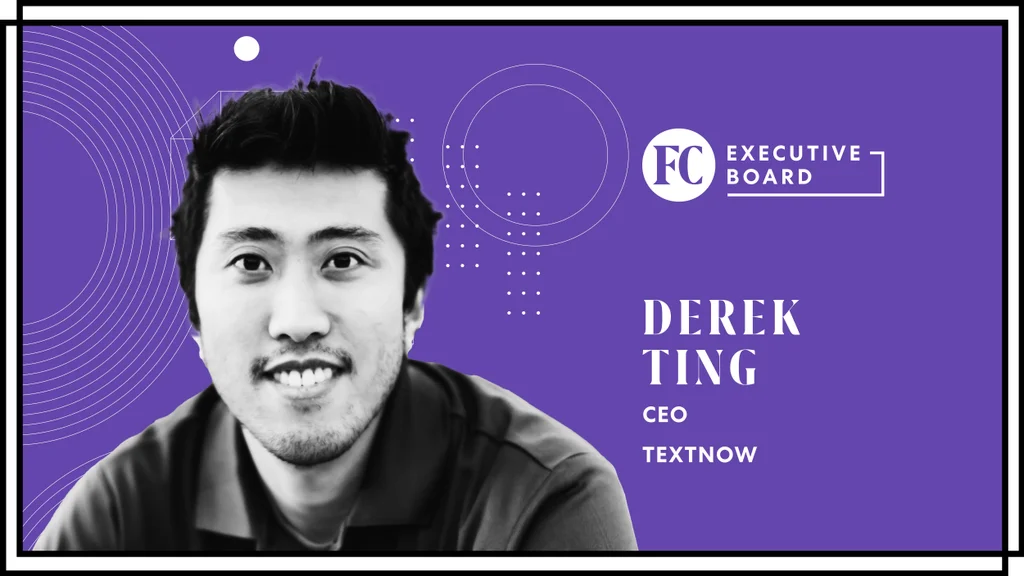
That need inspired Derek Ting to start TextNow, the only free phone service provider in America. “Our mission is to democratize phone service, to make it accessible for everyone,” Ting says. “The people who need phone service the most are the people who struggle to afford it consistently and losing service because of an unpaid bill is a huge pain point.”
Originally launched as a free ad-supported text service, TextNow expanded to offer customers unlimited talk and text. “Over time customers wanted more than free talking and texting,” Ting says. That’s why the company recently debuted a Free Essential Data plan that gives customers access to the most useful apps for daily use.
The new plan includes access to essential apps and services like major email providers, Google Maps, and ride-sharing services like Uber and Lyft, over the nation’s largest 5G network. Customers who need more data can buy flexible data passes good for an hour, a day, or a month. There are no lock-in contracts, and flexible data passes are available right in the TextNow app.
BALANCING UTILITY AND COST
“We always knew we wanted to figure out how to create some sort of free data service that we could support with the free plan,” Ting says. But launching such a major new feature was a learning experience, he adds. “It required a lot of trial and error to find the right product mix and monetization model. It’s not just about making it work technically, but it’s also about making it economically sustainable. The better we monetize, the more we can offer for free.”
It took a few iterations to make the numbers work, Ting says, but eventually, they were able to come up with a sustainable formula. Careful consideration of which apps to include was key. “You’re always trying to balance scale with utility and cost,” Ting says. Some apps had to be fine-tuned to bring them within the data constraints. For example, Google Maps was clearly on the list, but streaming videos through Google itself would eat up too much bandwidth and be too expensive, so only some parts of the Google ecosystem could be permitted.
TextNow experimented with giving customers who wanted to pay for extra data a certain amount of bandwidth, but they quickly learned that technical language was a sticking point. “Most people don’t really understand what megabytes and gigabytes are, and they hate that because they don’t feel like they’re in control,” Ting says. After gathering early customer feedback, TextNow decided to eliminate the terminology and shifted to a time-based model.
“Much of it is learning from customers what they need and what specific pain points we can address,” Ting says.
ADAPTING STEP-BY-STEP
Ting advises technology companies that are rolling out new features to take an iterative approach to product development. “We didn’t try to do everything on day one; we started with a bold vision and took a step-by-step approach to testing and learning.”
Adaptability has been key to TextNow’s success. “We’re always very tuned to customer feedback and willing to tailor our solutions based on what we hear,” Ting says. “The original solution we come up with is often not the one we end up with. Being open-minded to that has been very important for us on this journey.”
Most feedback on the new data feature has been positive, Ting says. “People are definitely finding it useful. We’re building trust and getting more attention from new potential customers.” TextNow is considering what they can add to the plan in the future, including financial services such as banking apps, Venmo, and PayPal.
Being the only company currently offering a free phone plan with data isn’t the only thing that sets TextNow apart, Ting says. “We’re a huge believer in economic sustainability. We don’t want to do the bait-and-switch thing—our goal is to make it free forever. That’s deep in the DNA of our company.”