
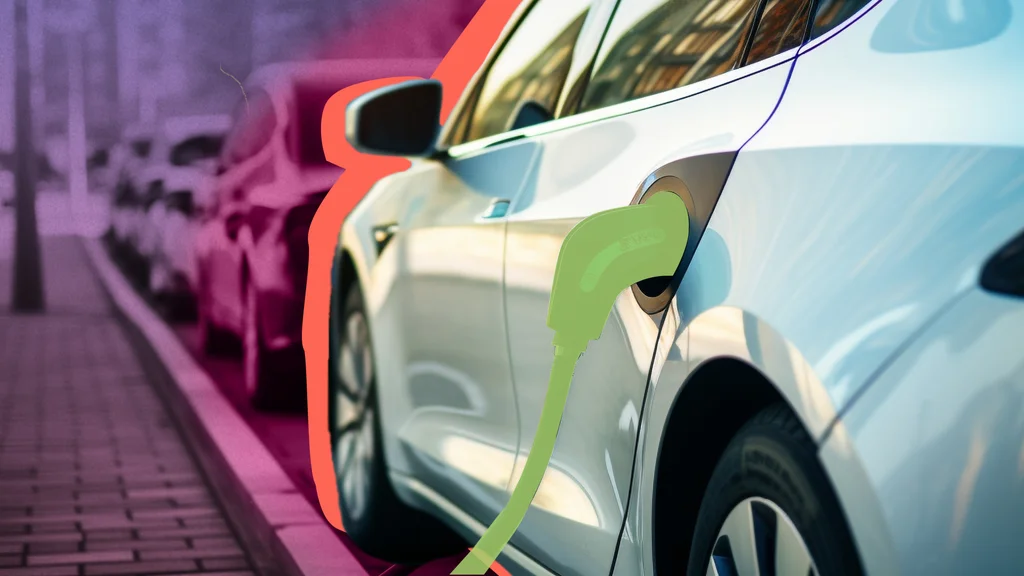

In 2022, Americans bought fewer cars than in any year since 2011, but electric car sales set a new record. According to Kelley Blue Book, total electric vehicle sales exceeded 800,000 for the first time in 2022—an astonishing 65% increase over 2021—and could top 1 million in 2023.
HOW EV GROWTH IS RESHAPING THE GRID
As the penetration of electric vehicles (EV)—not only cars but also medium- and heavy-duty vehicles—continues to accelerate, utility organizations are facing new challenges as well as new opportunities.
To travel 100 miles, the average electric car requires 35 kilowatt-hours—more than a whole day’s worth of electricity consumption for the average U.S. home. The increase in demand that accompanies EV growth is requiring utilities to re-examine their short- and long-term infrastructure investment strategies.
On the other hand, EVs could play a vital role as distributed energy resources thanks to bidirectional charging technology. When EVs are not in use, their batteries can supply power to homes (vehicle-to-home or V2H) to appliances, to other EVs (vehicle-to-load or V2L), or to the grid (vehicle-to-grid or V2G).
While the full economic impact of bidirectional charging has yet to be determined, utilities are optimistic. One of our customers, California’s Pacific Gas & Electric (PG&E), announced three new vehicle-to-everything (V2X) pilot programs in 2022 to explore how to maximize benefits for both consumers and the grid.
IMPACT ON INVESTMENT PLANNING
Current models suggest that if customers charge any EVs they want whenever they want, the current grid will not be able to handle the load. Utilities are focusing their efforts on two approaches to addressing this situation: First, on upgrading the current distribution infrastructure to handle the load, and second, influencing how, when, and where customers charge their vehicles.
Successful investment planning requires a clear picture of the current and future demand for EV charging locally, which depends on an array of factors, including:
- Local levels of EV ownership
- Private charging station plans
- Traffic and parking patterns
- Existing infrastructure capability (and availability/accessibility of upgrades)
- Community goals of regional regulators and of the utility (e.g., net-zero emission objectives, supporting infrastructure in underserved neighborhoods)
- Availability of managed-charging technology options for home-supported infrastructure
- All of the above and more to support business EV traffic for medium- and heavy-duty vehicles
PLANNING FOR THE “WHERE, HOW, AND WHEN” OF EV CHARGING
Planning for the “where”
In addition to home charging ports, today’s EV drivers have access to more than 59,000 charging stations, and the Biden administration has announced a goal to build a national network of 500,000 publicly available chargers by 2030. To plan short- and long-term grid investments, utilities must understand the entire ecosystem of EV charging in their areas—present and future.
Planning for the “how”
Complicating the geographic planning dimension is the fact that not all EV chargers are created equal. According to the U.S. Department of Transportation, Level 1 chargers consume about 1 kW per hour of charging, Level 2 chargers 7–19 kW, and Level 3 chargers up to 350 kW.
Given the discrepancies in power usage among charger levels, incorporating this data is essential for generating accurate load predictions that can inform effective investment planning.
Planning for the “when”
By influencing when EV users charge their vehicles, utilities can smooth out peak demand curves and avoid the need to accommodate dramatic spikes in their grid investment planning. A utility could, for example, offer a homeowner a discounted rate if the homeowner allows the utility to control when their vehicle charges and, if bidirectional charging is available, when it sends power back to the grid.
PUTTING IT ALL TOGETHER WITH AI
AI models are uniquely adept at processing large volumes of data from diverse sources to generate predictive analytics, and this case is no exception. Specifically, utilities can use AI and machine learning with publicly available data to model:
- Where demand will likely occur and whether adequate infrastructure is in place to support it, which informs decisions regarding the placement of public charging stations
- Where, when, and how often EV owners will charge their vehicles, which helps utilities plan for loads on distribution infrastructure
- Impact of different load programs, such as smart charging (charging vehicles at low-load times), charging capacity options, and possibly V2X solutions
Recently one of our data teams created a pilot dashboard that demonstrates how utilities can assess various combinations of EV-related factors impacting the need for infrastructure investments. Using the state of California as a test case, our team built a layered map that enables users to view representations of the following seven datasets for each ZIP code:
- Number of registered EVs
- EV market share
- Locations of public charging stations
- Locations of gas stations without chargers
- Locations of a popular retailer without chargers
- Population density
- Median income
Using this information, utilities can apply artificial intelligence to create scenarios for individual regions, such as:
- What if we incentivize 10% of EV owners in single-family homes to shift charging times to low-load periods?
- What if we upgrade the distribution infrastructure to handle 15% higher maximum loads?
- What if we partner with XYZ retailer to put more charging stations at their locations?
- What if the number of EV owners goes up by 20% over the next decade?
- What if we can get 25% of home users to use managed-charging solutions?
PREPARING FOR AN ELECTRIFIED FUTURE OF TRANSPORT
The rise of EVs has dramatically shifted the power landscape, compelling utilities to re-evaluate their investment strategies and infrastructure planning. To address these complex challenges and opportunities, utilities are capitalizing on the power of AI/ML technologies and the availability of public data.
Leveraging this trove of information through advanced algorithms can help predict demand, locate optimal placements for charging infrastructure, and model the impacts of different load programs. As we move into a future where EVs are increasingly prevalent, intelligent data utilization will be key in harmonizing this transition and ensuring the robustness and resilience of the power grid.
Travis Jones is an entrepreneur, leader, and chief operating officer at Logic20/20, a business and technology consulting firm.