

What’s the first thing you think of when you hear “computer vision?” Depending on your age group (no, I won’t be revealing mine), the term may conjure up something as ominous as the Terminator’s target-seeking red eyes or as goofy as Instagram’s animal-face filters. In fact, businesses are using image-based applications to address a broad range of challenges, from managing inventory to detecting manufacturing flaws to controlling agricultural pests—and they’re just getting started.
But some of the most compelling applications of computer vision are the ones that deliver real human outcomes—solutions that tap into visual technologies to make life better, safer, and more enjoyable for everyday people and their communities.
THE EVOLUTION—AND DEMOCRATIZATION—OF COMPUTER VISION TECHNOLOGY
Computer vision is nothing new, with the earliest algorithms going back to the 1970s. Initial applications were limited to so-called “dumb data”—visual information with no intelligence applied to it. For example, retail stores once used heat maps to evaluate patterns in their foot traffic. The data got delivered, but it was up to humans to make sense of it. With the latest advances in AI and machine learning, algorithms can now combine visual data with additional sources to yield intelligent, actionable insights—and continue to learn from outcomes as time goes on.
For many decades, computer vision was only accessible to large enterprises with IT budgets to match. Over the years, smaller organizations have benefited from declining costs and increased availability of high-resolution cameras, low-code machine learning tools, and public cloud solutions offering large data storage capacity and powerful computing resources. As a result, computer vision solutions are now available to more businesses and for a broader range of use cases than ever before.
In this article, I’ll focus on two of those use cases that are delivering real human outcomes in very different areas: wildfire prevention and accessibility for the visually impaired.
KEEPING COMMUNITIES SAFE FROM WILDFIRES
In 2021 alone, wildfires burned 7 million acres across the United States, placing thousands of communities and potentially millions of lives at risk. Electric utility companies are doing their part to prevent future fires through vegetation management—preventing trees, bushes, vines, and other plant life from growing too close to power lines—and computer vision is playing a vital role in this mission.
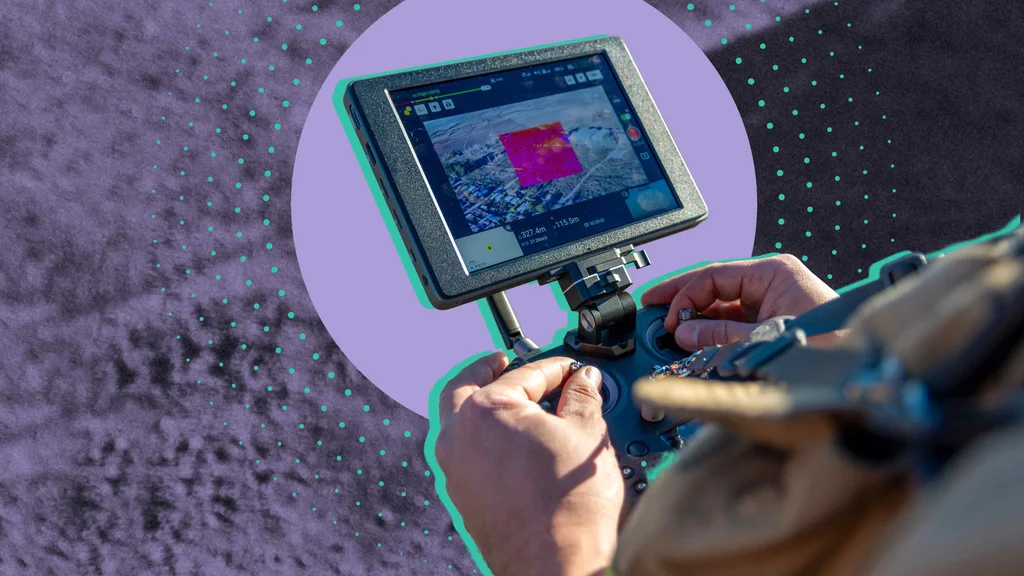
Historically, utilities have approached vegetation management through on-site visual inspections performed according to a set schedule—a costly approach that also carries a high risk of error. Today, they can use computer vision to analyze hundreds of hours’ worth of drone footage and combine it with other data (tree species, weather conditions, etc.) to identify high-risk circumstances and address them promptly. Human experts can focus their energies on analyzing complex situations, and the utility can rest assured that areas where fire risk is highest will receive top priority.
HELPING VISUALLY IMPAIRED FANS ENJOY LIVE SPORTS
The World Health Organization estimates that 2.2 billion people worldwide have a near- or distance-vision impairment. Despite their challenges, people with visual impairments enjoy attending live sports events just as much as their sighted counterparts, usually relying on either play-by-play radio broadcasts or descriptions from a friend or caregiver to follow the action.
One startup is using computer vision to offer visually impaired sports fans a whole new experience by translating visual stimuli into touch sensations. Combining computer vision with machine learning models, OneCourt’s solution sends data from the court or field directly to a proprietary, tablet-sized touchpad. Users can follow the movements of the ball and players with their fingertips as the action occurs, creating a real-time experience that avoids the delay of verbal descriptions. For example, the touchpad would be able to distinguish between a serve, hit, and bounce during a tennis match, or a bounce and pass during a basketball game.
Computer vision is revolutionizing the way many businesses operate, but the results can go far beyond the bottom line. This game-changing technology is making lives better for humans, whether that takes the form of protecting communities from devastating fires or enabling visually impaired football fans to enjoy a lively Sunday afternoon game. It seems like we’re just beginning to explore the many ways computer vision can contribute to the human experience, but one thing is abundantly clear—the possibilities are endless.
Travis Jones is an entrepreneur, leader, and chief growth officer at Logic20/20, a business and technology consulting firm.