

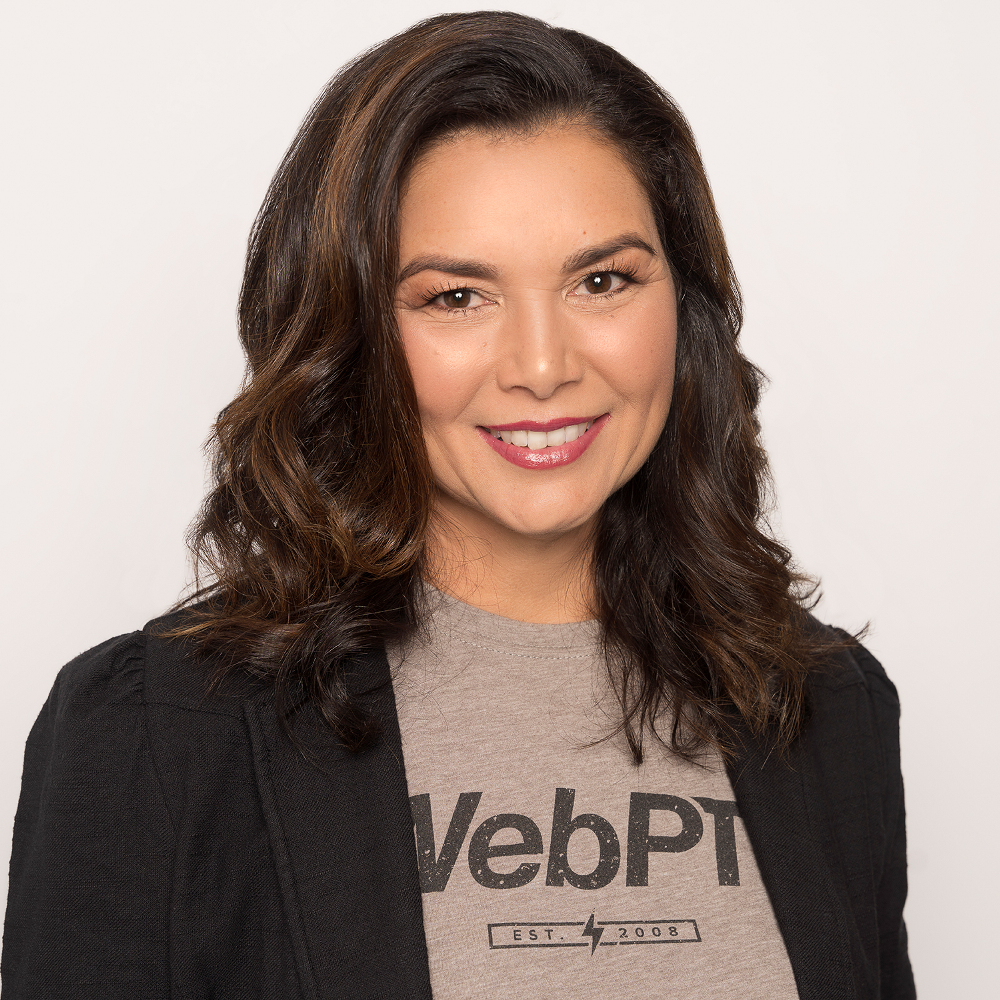
Even in my early days as a physical therapist, I always had a passion for pushing the boundaries of what was possible. Back in 2008, my husband and technologist at the time couldn’t stand the idea of dealing with paper documentation and knew there had to be a modern solution—something specifically designed for physical therapists, occupational therapists, and speech-language pathologists. We couldn’t find one, so we decided to build one.
Fast forward to today, and that startup electronic medical records company, WebPT, is now the market leader in the rehab therapy world. Our community of more than 160,000 dedicated members has taken patient care to a whole new level. I’m incredibly proud of our achievements—but there was more innovation to come.
In 2019, I founded the Rizing Tide Foundation with a mission to champion diversity and inclusion in the PT world. To date, the foundation has awarded more than $1 million in scholarships to 44 individuals, with 23 more winners coming next year. I’ve learned a great deal in building my foundation, and have realized that there are more similarities than differences between the for-profit and not-for-profit worlds—and the for-profit business community could take note of lessons learned.
LESSON 1: HARNESS THE POWER OF A DEFINED MISSION AND VISION
For any company, regardless of scale and profit goals, a clear mission and vision is paramount. These are more than simple statements; they’re the blueprint that shapes every company decision. For instance, Rizing Tide’s commitment to building a community that enhances diversity in the PT industry consistently steers our actions and initiatives.
Additionally, when donors, volunteers, and other stakeholders connect with an organization’s mission, they’re far more likely to deepen their engagement. This fosters trust and enhances fundraising efforts, as donors recognize the tangible impact of their contributions.
We applied this same philosophy at WebPT—a clear purpose galvanized our team around a common goal, guiding the company roadmap and strategy. This structural alignment will resonate internally and with the broader community.
LESSON 2: PRIORITIZE TEAM DYNAMICS AND ORGANIZATIONAL CULTURE
The heart of any company is its people. A clear mission dictates the organization’s direction, but the team drives everything forward. Understanding the skill sets needed to meet the goals of a nonprofit is key to hiring the right personnel. Each role must have clearly defined responsibilities and accountability metrics to review performance.
Within a nonprofit, a mixture of compensated and uncompensated people (e.g., board members, staff, volunteers) move the mission forward. Board members and volunteers offer experience, insight, network access, and financial support—while staff use those insights to execute plans and gain ground on the mission. Whether it’s to execute initiatives, plan events, or bring the community together, building a functional team is key to the viability of both types of businesses.
Additionally, one thread binds everyone together: culture. Many businesses today understand that defining shared values, beliefs, and behaviors influences how a team operates and acts like glue. At Rizing Tide, we defined our values early in our growth cycle. This has aided our scholarship selection process, the hiring of employees, and the hand-picking of our selection committee.
Connection through our mission and common values allows for deeper engagement and provides incentives for others to join the community. When people feel like they belong to something bigger, they’re more engaged, motivated, and committed.
LESSON 3: ENGAGE STAKEHOLDERS AND BUILD A COMMUNITY
Engaging stakeholders is crucial for any organization, but it’s imperative for nonprofits. At the heart of engagement is a budding relationship, which is why communication and a sense of belonging are pivotal puzzle pieces in both nonprofit and for-profit organizations.
At Rizing Tide, we prioritize regular communication with our scholars, meeting quarterly for educational enrichment and staying connected via Slack. Through monthly newsletters, we share milestones, activities, and future plans with our greater community of donors, sponsors, and volunteers. Our blog also serves as a platform for thought leadership, allowing us to speak on topics from career development to health care diversity.
Social media channels allow us to expand our reach, facilitating real-time interactions with industry stakeholders. Tapping into community networks magnifies our impact, promotes our scholars’ visibility, and nurtures valuable partnerships. Participating in industry events—like hosting a booth and happy hour at the 2023 APTA Combined Section Meeting (the PT industry’s largest conference)—allows us to interact face to face with our amazing scholars, give them opportunities to connect with our network, and inspire a broader commitment to our mission.
LESSON 4: MEASURE IMPACT, EVALUATE, AND ADAPT
In order to maintain trust with donors, nonprofits must show the impact of their donations and overall funds. Thus, organizations must establish methods to assess impact, using both quantitative data and qualitative feedback from beneficiaries.
At Rizing Tide, we do this through event post-mortems, anonymous and named opinion surveys, end-of-year recaps and reviews, and tracking communication metrics. After specific outreach pushes, we compare stats with previous years and troubleshoot. For example, we look at our email open rate when we promote scholarships, the number of applicants, and the schools that are and are not engaging with us.
Evaluation allows us to assess past performances and pave the way for future success. By regularly evaluating programs, initiatives, and strategies, nonprofits can identify what’s working and what’s not. Adapting to gathered feedback from stakeholders, beneficiaries, and partners allows nonprofits to maximize impact, just like for-profit software companies.
A TRANSFORMATIVE JOURNEY
My time leading Rizing Tide has been nothing short of transformative. Beyond our measurable successes, this tenure has expanded my horizons, refined my leadership approach, and deepened my sense of hope for the prosperity of the next generation of physical therapists. The success of my nonprofit foundation, however, is rooted in my experience building an uber-successful for-profit.
When passion and purpose converge, the possibilities are boundless. I hope this inspires others to embark on a journey of meaningful leadership, viewing philanthropy through the lens of good business principles.
Dr. Heidi Jannenga, PT, DPT, ATC, is the co-founder and Chief Clinical Officer of WebPT, the leading rehab therapy platform.