
The modern workplace has spent the past few years swinging between extremes, especially after the pandemic. First came rage quitting, a loud rejection of burnout and broken systems. That was followed by quiet quitting, a subtler retreat as employees stayed on payroll while emotionally checking out.
More recently, a new term has entered the conversation: job hugging, which is essentially a response to the economic uncertainty and constant disruption that is upending every industry. Workers are holding tightly to roles they may not love—not out of loyalty, but out of caution.
These trends don’t just describe shifting employee behavior; they reveal a deeper recalibration of how people think about risk, security, and meaning at work.
Each stems from a common place: uncertainty and exhaustion. As Return to Office is once again becoming the norm, employees and employers are bracing for more chaos and uncertainty. The specter of AI has cast an additional shadow as employees worry about what it means for the future of work.
But AI may be the tool employees need to achieve greater agency over work and life. When implemented with intent, AI doesn’t just optimize workflows; it transforms them. It gives employees greater freedom to manage their time and helps them feel more confident about their work and better supported. That shift matters, especially as burnout continues to erode both performance and well-being.
Here are three ways AI can help employees optimize their work to contribute more.
1. Increase efficiency
Efficiency has long been treated as a blunt instrument: do more, faster, and with fewer resources. AI offers a more nuanced outlook.
Used well, AI fundamentally changes how work happens by compressing more tasks into the same number of hours and removing friction that drains energy and attention. The 2026 AI & Data Leadership Executive Benchmark Survey underscores this shift. Most executives surveyed report that their AI investments delivered the greatest returns not through cost reduction, but through productivity gains tied to actual workflows.
AI copilots can now handle routine but mentally taxing tasks such as drafting emails, summarizing meetings, generating first-pass reports, or synthesizing research. Offloading routine tasks frees employees to focus on work that requires judgment, creativity, and insight. Add to that AI agents that can tackle jobs like managing databases, completing repetitive workflows, and analyzing data, and you have a co-worker who is willing to take on the grunt work and, at the same time, is producing relevant outcomes.
AI accelerates task completion through augmentation rather than automation alone. Instead of replacing human effort, it shortens feedback loops, surfaces relevant information faster, and helps teams move from idea to execution with less drag. Work feels lighter because unnecessary effort does not hinder real output.
At Egnyte, for instance, our engineering teams use AI for coding, marketing uses chatbots for generating content, and product teams are creating UX/UI using natural language. These tools enable employees to save hours every day, freeing up time for creative solutions and improving efficiencies.
2. Improve work-life balance
AI can help employees do more, faster by analyzing individual work patterns and tracking when people tend to be most productive. This can impact how tasks are distributed, optimizing work plans. This might mean balancing high-stress tasks with lower-intensity work, recommending breaks, or flagging overloaded schedules before burnout sets in.
In the AI and data benchmark survey, leaders reported that teams using AI-driven planning tools experienced fewer last-minute escalations and more predictable workloads. In other words, output improved not by reducing accountability but by making work more intentional.
For instance, AI agents can function as the always-on teammates to support collaboration across time zones and schedules. When information is readily available, tasks can move forward without real-time intervention, and employees gain more control over when and how they work. That autonomy is one of the strongest antidotes to burnout.
3. Humanize work
Burnout rarely comes from working hard on meaningful problems. It comes from spending most of the day on low-value tasks that crowd out deeper thinking and learning. AI creates an opportunity to rebalance that equation.
By reclaiming time, AI allows employees to invest more energy in creative, strategic, or developmental work, from refining a product roadmap to exploring new skills or collaborating across teams. Evidence from customers and industry leaders show that organizations that have redirected the time employees save using AI toward learning and innovation are seeing higher employee engagement scores than those that simply increased output targets.
This is where leadership intent becomes critical. When leaders signal that reclaimed time should be used for higher-quality work, employees respond with renewed motivation and trust.
AI also enables more inclusive participation. Tools that summarize discussions, generate documentation automatically, or provide context asynchronously ensure that contributions aren’t limited to those who can attend every meeting or respond instantly. This matters to employees who are caregivers, part of global teams, or are just navigating non-linear workdays.
Debates around hybrid work, four-day workweeks, and flexible schedules often miss the underlying question: How can work be designed to respect human limits while still driving performance? AI offers a practical answer.
Final thoughts
By reducing cognitive overload and accelerating meaningful work, AI can help organizations move beyond reactive workforce trends toward a more sustainable model where flexibility isn’t a perk and where trust is built through everyday experiences that feel manageable and rewarding.
AI will not solve workforce problems on its own. But as a catalyst for rethinking how work gets done, it may be the most powerful tool leaders have to create a future of work that people want to stay in and not rage quit, quiet quit, or job-hug their way through.
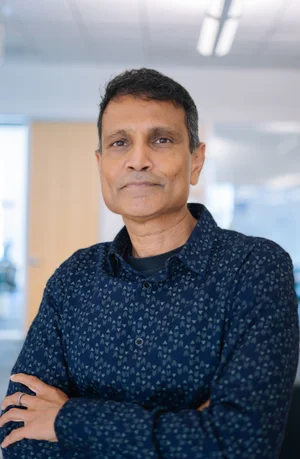
Vineet Jain is CEO and co-founder of Egnyte.