

Why does AI need so much energy? Why does an AI server farm require so much more energy than other server farms? A typical server farm stores and sends content that already exists, like online retail stores or streaming services. Because the servers simply need to deliver you the content, it doesn’t require a ton of energy. A typical server farm needs about seven kilowatts of power.
An AI server, however, has to perform thousands, millions, billions of complex calculations to create and deliver content. This requires a great deal of energy—anywhere between 30 and 100 kilowatts. The newer hyperscale AI server farms might use as much as 100 megawatts. For perspective, that’s enough energy to power 80,000 homes. It’s a massive increase in energy use.
Energy grids have a finite capacity because they’re built to support the neighborhood where they exist. There may be one or multiple power inputs, some storage capacity, and an infrastructure to distribute that power across the homes and businesses in the area. That’s the grid, and there isn’t a lot of excess power capacity. So when a company wants to build a new data farm, they have to increase the capacity within that grid or do something outside of the grid.
THE ENERGY SOURCES THAT ORGANIZATIONS CAN ACCESS
Many of the large tech companies are now looking at building their own onsite power units because their local grids simply don’t have the capacity to support their additional energy needs.
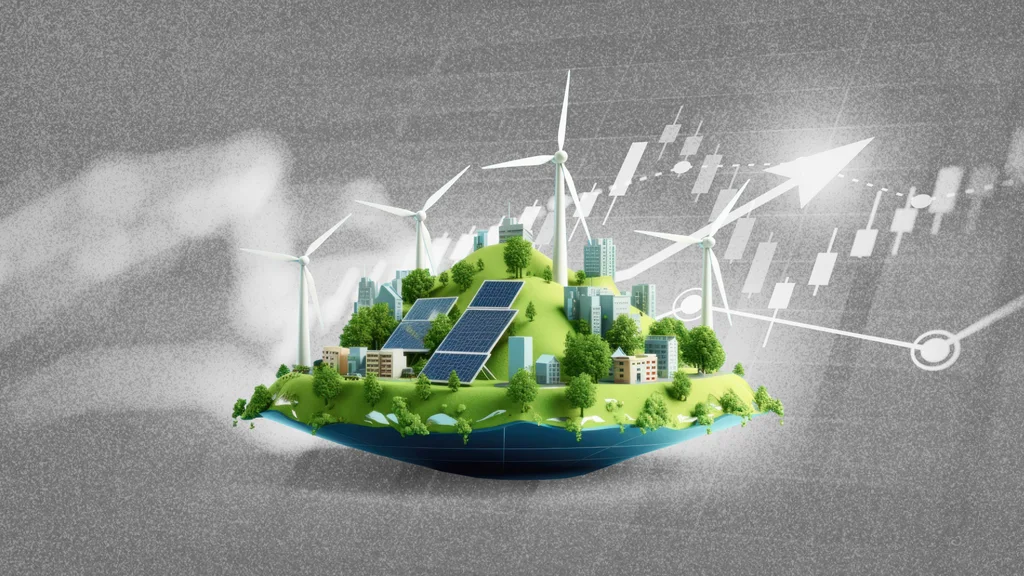
Green energy, like wind and solar, is often one of the first options considered for these new facilities. Companies look at these sources because they can be installed in many different locations and provide renewable energy with no carbon emissions. The problem with wind and solar is they’re intermittent—power only generates when the sun is shining or the wind is blowing. Companies would also have to build additional infrastructure and energy storage to accommodate these energy sources, which create additional costs and complexity.
Biomass is another green energy option. Organic material from forestry, agricultural waste, and even industrial wood waste from construction or manufacturing gets diverted from landfills, processed into biomass, then converted into electricity. Biomass can be stored, and it can ramp up to meet energy needs as necessary, with no significant drawbacks.
THE DRAW(BACKS) OF NUCLEAR POWER
Some large tech companies are starting to look at nuclear as a way to meet their energy needs. But I’m not talking about the huge reactors from the ’60s and ’70s. What we’re looking at now is promising technology like molten salt reactors. They’re much smaller and have quite a bit more safety built into them—and one small reactor can produce enough energy to support a single new AI server farm.
The big challenge for nuclear power is its public perception and the politics around that. The fear and resistance is reasonable, considering we’ve had catastrophes in the past as a result of this power. That particular energy source is nuclear fission, which comes with risks, including radioactive waste. While mini or micro reactors can minimize risk, they’re still using nuclear fission. So when a company wants to put in a mini reactor, there are both social and political hurdles they’ll have to clear in order to get that in place.
A better option we can hope for is nuclear fusion, which replicates the process that powers the stars and offers the promise of virtually limitless energy. Fusion involves forcing atomic nuclei to combine under extreme heat and pressure, which differs fundamentally from nuclear fission’s process of splitting atoms. There are many compelling advantages to nuclear fusion energy. In theory, it produces no greenhouse gas emissions during operation, generates only minimal radioactive waste, and relies on abundant fuel sources such as deuterium—derived from water—and lithium. While long considered a distant dream, recent breakthroughs have dramatically reshaped the outlook for fusion, bringing it closer to reality.
BRIDGING THE GAP
So until we have nuclear fusion and a truly abundant clean energy future, we must turn to wind, solar, biomass, hydro, thermal, and green hydrogen energy, as well as micronuclear reactors, to bridge the gap. Start with existing local options, and ask these key questions:
• Is there excess capacity?
• Can capacity and supporting infrastructure be reasonably increased?
• What natural resources are available?
• Does the area have thermal or hydro options?
• Can solar or wind be installed? Are there local sources of biomass?
• Does the new site have high enough energy needs, timeline, and budget to justify an investment in nuclear?
The world is demanding more energy. When it’s hot outside, you want your home cool. When it’s cold, you want your house warm. When you ask ChatGPT a question, you want an answer. So we need to keep producing more energy. The choices we make to accomplish these things are critical to balancing our growing energy demand with the impacts of producing that energy.