

We live in a business world that celebrates technical skill. We measure outputs. We worship productivity hacks. But the truth is, the people who make the biggest impact are not always the fastest coders or the most accomplished analysts. They’re often the best communicators—the ones who can inspire a room, distill a complex idea, or bring clarity to chaos.
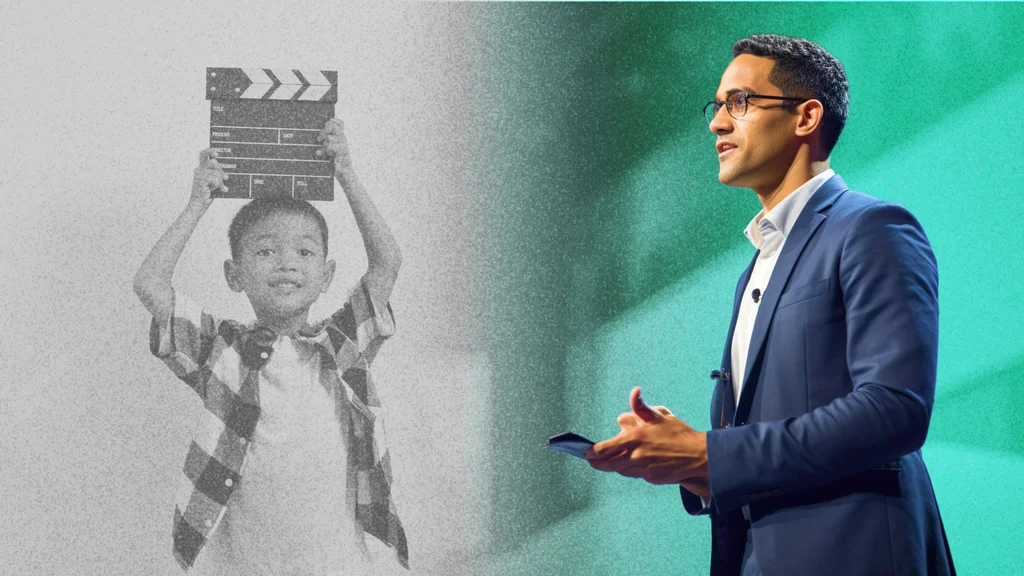
That kind of influence has become an important differentiator in a world increasingly shaped by AI, where computers handle the algorithms, but human connection and clarity are still the ultimate currency. For me, the journey started long before I ever led a team or shipped a product. It started when I was 11 years old on the set of a children’s television show.
Between the ages of 11 and 15, I worked as a child actor in Australia. I never imagined that those early experiences in front of a camera would shape my leadership philosophy as much as the professional training I would later receive. But the truth is, they did. That time taught me how to persist, how to communicate with impact, and how to prepare in a way that captures the attention of others. Those lessons stuck with me, and they continue to shape how I lead today.
THE ART OF THE REBOUND
When you work in acting at a young age, rejection is part of the job. You show up, you audition, and most of the time, you do not get the role. At first, it stings. But over time, you learn to take feedback without internalizing it. You keep moving. That experience laid the foundation for how I respond to challenges in business. Product development, hiring, partnerships—these are all areas where hearing “no” is routine.
Acting taught me that having a great idea is not enough. What matters is your ability to connect that idea to the goals and concerns of the people you are trying to influence.
What I came to understand is that when an idea gets rejected, the most important thing is how quickly you can adapt and recover. The goal is not to avoid failure, but to build resilience in the face of it. In my current role, I work to create a culture where setbacks are treated as data points, not judgments. That mindset took root in those early auditions, and I carry it with me every day. When you fail to connect, step back, put yourself in the audience’s shoes, and move forward.
PREPARATION CREATES IMPACT
One of the biggest lessons I took from acting is that a great performance never just happens. It comes from preparation. As a kid, I learned to run lines until they felt natural. I didn’t know it at the time, but that process built a habit that would shape how I approach every major moment in my career. Whether I’m presenting to an executive team or speaking on stage, I prepare with care. Not because I want everything to be perfect, but because I want the time to matter.
When someone gives you their attention, even for a few minutes, they’re offering a chance to make an impact. If you leave them with nothing—no spark, no idea to carry forward—the moment is lost. That’s what drives me to prepare; not just respecting my audience’s time, but wanting that time to drive a meaningful outcome.
COMMUNICATION IS A CRAFT
As an actor, your job is to reach people emotionally and intellectually. You have to cut through distractions. That training gave me a deep respect for storytelling. In business, the best ideas often go unheard because they are poorly framed. A product strategy without a narrative is just a list of features. A vision with no emotional core fails to engage.
Looking back, storytelling has been an incredible accelerant in my career. I’ve been handed big jobs, wide scope, important programs, and more, all because those around me could see that I wasn’t simply capable—I was able to influence others and make change happen. Some people say that ultimately every job is selling, and honestly, they’re right; all leadership roles are about convincing people to act, to change, to persevere.
I build presentations and write messages with that audience lens in mind. Every communication opportunity is a chance to create connection. And connection is what creates alignment. If people are confused, they cannot contribute. Clarity, not complexity, is the real mark of expertise. Knowing that an idea has connected is a fantastic feeling; when I see an audience start spontaneously nodding, or hear people repeat the one or two key messages later, I know that I’ve done my job.
TAP YOUR EARLY STRENGTHS
It took me years to recognize that my teenage acting experience shaped me in ways that would define my career. Not everyone spends their early years on a set, but everyone has something in their past that makes them who they are. Too often, we compartmentalize childhood as separate from adulthood, but those early instincts and experiences often hold clues to our deepest strengths.
The ability to influence, prepare thoughtfully, and communicate clearly are not soft skills. They are leadership skills. And many of these traits are rooted in experiences we had long before our first jobs.
So, what childhood lessons are you overlooking? Take a moment to reflect on the experiences that shaped you, because those early instincts might provide the unexpected competitive edge you need to lead with greater impact today.