
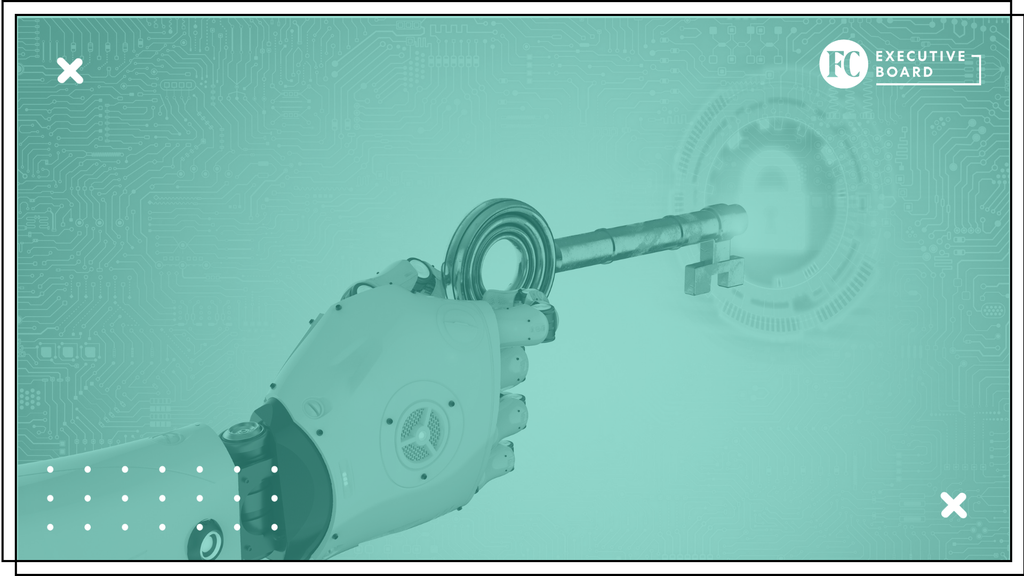

The conversation around artificial intelligence is moving from what it can tell us to what it can do for us.
Across industries, AI is moving beyond generating insights to interacting with the physical world. In construction, AI capabilities include autonomous equipment that adapts to changing site conditions, wearables that help prevent injuries, drones that monitor project progress in real time, and connected machines that optimize their own performance.
This evolution is known as physical AI, and it has significant implications for the construction industry.
AI THAT ACTS
For years, construction companies have invested in collecting data. A survey by RSM found that 94% of construction firms now use AI tools in business processes, including in data analytics and project management. Connected equipment, telematics, drones, and digital twins have created unprecedented visibility into projects. Those data-collection systems have given teams more information than ever before about productivity, safety, and equipment performance.
The challenge for the construction industry has moved beyond data collection. Construction companies must now turn that information into meaningful action while work is still happening. Instead of simply alerting a project manager that something has gone wrong, AI-enabled systems can recognize changing conditions and recommend, or even initiate, the next best action.
The applications and executions are endless: During site preparation, a Gravis Robotics AI-enabled Hitachi ZX135US-7 13-ton excavator can detect unstable soil and adjust its digging pattern. Using smart site orchestration suites like Caterpillar’s Cat MineStar or Applied Intuition’s Vehicle OS, companies with an AI-enabled fleet can automatically reroute equipment to reduce bottlenecks and keep aproject moving.
Physical AI wearables can improve worker safety. For example, products like Aatmunn’s Guardhat or Intuate Group’s Smart Harness can alert a worker to signs of fatigue, heat stress, or a nearby hazard before an incident occurs. These are early examples of AI moving beyond insight and into execution, helping project teams respond faster, work safer, and make better decisions in real time.
SMARTER JOBSITES START WITH BETTER COLLABORATION
Physical AI isn’t a single technology. It’s the convergence of robotics, cloud computing, sensors, machine vision, and connected equipment. These technologies all work together to create jobsites that can sense their environment, learn from it, and respond to changing conditions.
As these technologies become increasingly connected, they create a more complete picture of the jobsite, enabling people and machines to collaborate in ways that simply weren’t possible a few years ago. This collaboration is especially important as construction remains one of the world’s most dynamic work environments—diverse projects, changing weather, crew constraints, multiple subcontractors, shifting site conditions, and other variables.
Unlike a manufacturing facility, a construction jobsite is not a controlled environment. Rather than trying to eliminate jobsite complexity, physical AI is helping the industry adapt to it.
EXECUTION IS BECOMING THE COMPETITIVE ADVANTAGE
The construction industry has spent years digitizing projects. Physical AI represents the next step—putting that intelligence to work in the field.
Companies that will lead won’t simply be the ones adopting AI. They’ll be the ones integrating it into everyday operations in ways that make work safer, more productive, and more resilient. Physical AI is helping the industry do just that with greater precision, adaptability, and confidence than ever before.
Dana Wuesthoff is show director of CONEXPO-CON/AGG.