
When I walk into a client meeting these days, one of the first questions I hear is: “How much of this can AI actually do for us?” The expectation is often that AI will seamlessly take over everything from analysis to execution. But in practice, the story is more complicated. After years of advising organizations on how to implement AI into their operations, I now see two distinct categories of work that AI simply can’t do, at least not yet, and in some cases, maybe never.
The first is the human core: reasoning, judgment, ethics, creativity, and empathy. These are the messy, unstructured, and deeply human aspects of work that no algorithm, no matter how advanced, can replicate reliably.
The second is the regulation wall: areas where even the smartest AI is blocked by law, licensing, or professional accountability. These are jobs society has wisely decided must belong to a human for the final word, whether a pilot in the cockpit, a doctor in the operating room, or a lawyer in the courtroom.
Here’s how I think leaders and professionals should prepare for this AI-assisted future.
THE HUMAN CORE
In my consulting work, I’ve seen companies rush to hand over as much as possible to AI systems. Data crunching, document drafting, even elements of customer service are increasingly automated. But every time we try to push AI past a certain point, we run headfirst into a wall, the human core of work. As McKinsey reported, 80% of corporate AI projects have failed so far and I believe part of the reason is AI’s human core limitation.
One of the clearest examples is decision making under ambiguity. AI thrives on structured data and well-defined patterns. But the real world is rarely so neat. I’ve sat in boardrooms where a CEO has to make a call with incomplete information, conflicting priorities, and uncertain outcomes. No model can weigh the political, ethical, and emotional layers of those decisions the way a human can.
Then there’s ethics and moral reasoning. I often remind clients: Just because an algorithm can do something doesn’t mean it should. Machines don’t carry values or cultural context; they follow our set parameters. Deciding what’s fair, what’s safe, and what’s right requires a human conscience.
Creativity and originality are another frontier. Yes, AI can generate impressive output, sometimes faster than any of us. But true creativity doesn’t come from remixing a dataset; it comes from lived experience, from connecting disparate ideas in ways a machine can’t anticipate. I’ve watched engineers and marketers light up when realizing the breakthrough idea didn’t come from the algorithm, but from their own unexpected leap of thought.
And perhaps most importantly, there’s emotional intelligence and empathy. I’ve learned that trust is built in moments of human connection. No chatbot, no matter how advanced, can replicate the feeling of being genuinely understood.
The takeaway is clear: If you want your teams to thrive in an AI-driven workplace, you can’t just focus on technical upskilling. You need to double down on human skills. That means creating space for employees to practice critical thinking, investing in leadership and communication training, and encouraging cross-disciplinary learning to spark creativity. The companies that succeed won’t automate the fastest; they’ll be cultivating human skills AI can’t touch.
THE REGULATION WALL
The work category getting far less attention is the regulation wall. These are the jobs where AI isn’t just technically limited; it’s legally locked out. In these professions, society has drawn a clear line: No matter how capable the technology becomes, a human must sign off.
Take aviation. As a pilot, I can tell you that while AI can assist with navigation, weather planning, and advanced autopilot functions, no algorithm is licensed to take command of an aircraft. The FAA requires one or two humans in the cockpit, responsible for every decision affecting passengers’ lives. It’s not because machines can’t fly, they absolutely can. It’s because accountability for human lives can’t be delegated to software, at least not yet.
The same principle applies in medicine. I’ve worked with healthcare clients eager to use AI for diagnostics, record keeping, and even patient monitoring. But when prescribing medication, performing surgery, or making life-or-death calls, only a licensed doctor or nurse can do that. Patients and regulators expect a human to carry that responsibility.
Law is another example. AI can draft contracts, summarize cases, or even suggest litigation strategies. But it can’t argue in court or bear the legal responsibility of a licensed attorney. The same goes for engineering: A professional engineer has to seal the drawings, taking personal accountability for the safety of a bridge, building, or water system.
These regulation-bound roles exist for a reason. They’re not about resisting innovation; they’re about protecting the public. AI should be seen as a tool to support licensed professionals, not replace them. That means rethinking training programs so that doctors, lawyers, engineers, and pilots aren’t just experts in their field, but also fluent in supervising AI responsibly. The organizations getting this right will empower their people to combine regulatory authority with technology efficiency, a combination far more powerful than either one alone.
WHERE THE CATEGORIES OVERLAP
These categories don’t exist in isolation, and the most critical professions usually require both. A surgeon isn’t just bound by licensing; they also need empathy when breaking difficult news to a family. A lawyer isn’t just following courtroom procedure; they’re also exercising judgment about what arguments will resonate with a jury. A pilot isn’t just flying within FAA regulations; they’re constantly weighing incomplete information, weather patterns, and passenger safety in ways that call on both technical expertise and human intuition.
I encourage clients to think about this overlap as an opportunity, not a limitation. Professionals who thrive in the future will integrate irreplaceable human skills with their regulated expertise, layering AI on top as a force multiplier.
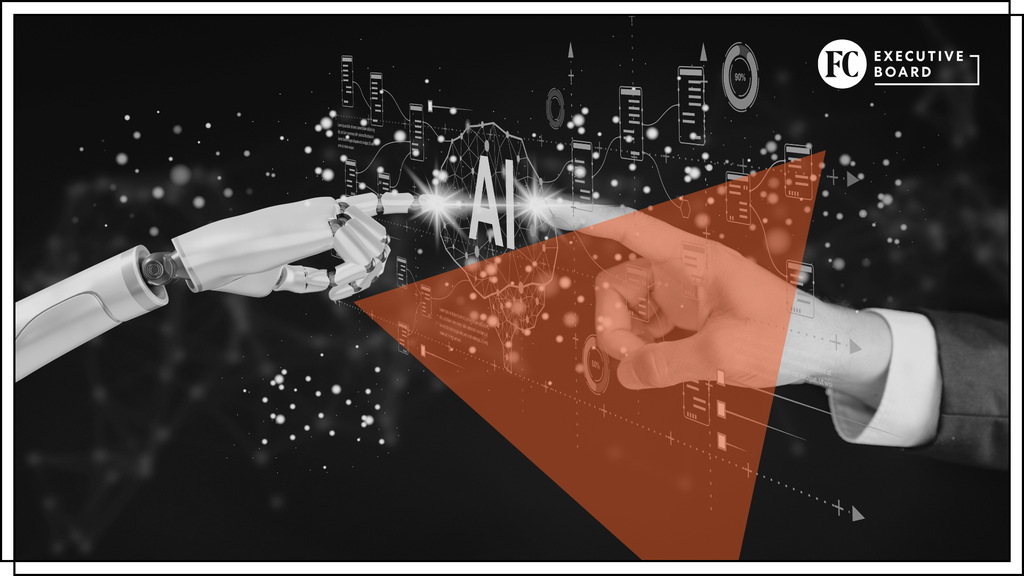
AI’s promise is the strongest in hybrid roles where regulation demands human oversight and human skills make the difference. The machine handles the tedious and the technical; the human handles the nuanced and the accountable. It’s not about humans versus AI, but humans plus AI, in a framework valuing both.
Companies that succeed in the AI era won’t be those that automate the most tasks. They’ll be the ones that prepare their people to do what machines cannot and give them the confidence to partner with AI, not compete against it.
Chris Erhardt is a management consultant at Chris Erhardt Consulting.