
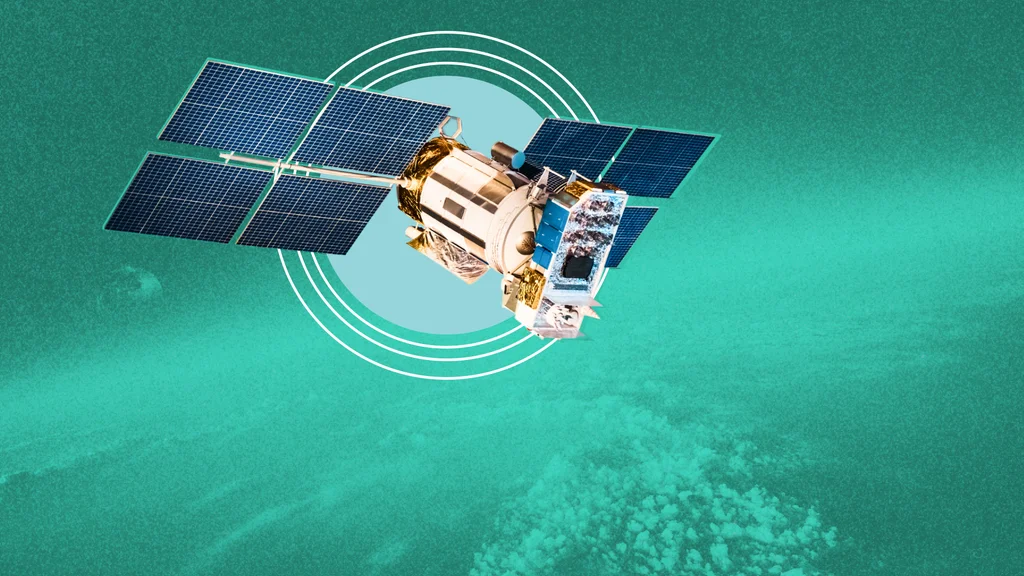

Space is an emerging frontier for creating a more sustainable Earth. The issues we face as a species require deep observational prowess to understand their full scope. The climate of other planets may indicate issues to identify independently. In the case of our home planet, the United Nations’ Sustainable Development Goals (SDG) can all be addressed using space technology.
Food security is one of the biggest concerns globally and a prime interest to the United Nations. Various satellites and terrestrial resources, short-term weather patterns, and long-term climatic changes track insecurity. Space offers a non-stop, high-resolution, global-scale observation of Earth unlike ever before. This ability to understand Earth’s changes comes as we have caused our world’s climate to change. Hopefully, we can use this global perspective to create solutions.
Satellites can track boats illegally poaching protected species and overfishing of permitted populations which affects food security if unchecked. Satellites are also extremely important in the assessment of crop yields, including the tracking of soil moisture and irrigation needs that are in flux due to climatic changes. As such, satellites serve as guardians. They watch for warning signs of crop failures due to droughts and other environmental factors. They can also be used to determine which communities suffer most deeply from food insecurity.
Another SDG focuses on increasing the interconnectedness of the people of Earth. Bringing the Internet to everyone, everywhere, helps to create a global culture with an equal footing in education. We’ve already seen what enhanced connectivity can do during the pandemic when people remained isolated at home—and in conflicts such as the war in Ukraine, where destroyed infrastructure was supplanted with satellite networks. Even in peacetime—or when pandemics are on the wane—space-based communication assets allowing people to work from home will lead to a more resilient economy.
Developing countries are the ones that lack the Internet the most. Traditional infrastructure may not be possible because of the geography or the cost involved. As satellite launching grows cheaper and technology increases, an interconnected world becomes increasingly possible. But there is more to these communication assets than hardware. Global efforts to make information flow—in both directions—will be needed if we want a truly wired planet.
Space is becoming a necessary domain in worldwide industries. Satellites are, as already discussed, vital to modern telecommunications. Phones, satellite television, and the Internet rely on satellites. Most of what we accept as commonplace simply does not work if a satellite is taken offline. The forecasting capabilities that satellites offer improve insurance risk estimations, shipping and transportation, and all aspects of agriculture. The sustainability of business as a whole is improved by the wealth of information that can be handled via space assets. Of course, the value of global sustainability to the business sector is even more important as globalization increases. It is not hard to see that having a healthy Earth to live on is good for business.
Space as a frontier encourages global cooperation—just as global transport and trade have done in centuries past. When satellites provide countries with comprehensive views across the borders on Earth, everyone is held to a standard of transparency—even if it takes longer in some territories. The International Space Station was a joint international project from the onset. The ISS benefits from the technology, resources, and skills of 14 countries. Sharing individual and collective space assets is a prime aspect of operating a larger multinational research vessel in orbit around Earth. This is a lesson for humans on Earth—we often get along with nations far better in space than at home. This ability to cooperate in space is a crucial benefit of SpaceTech.
Space exploration also requires international cooperation—more so than has been a reality. With expansion comes the need for responsible stewardship. With an ever-expanding number of satellites orbiting Earth comes the need to establish space traffic management and space debris mitigation. No one wants to see the Kessler Syndrome unfold, wherein satellites start to collide with each other—with the debris causing even more collisions—as we have seen dramatized in the movies.
Satellites are a boon for validating arms treaties and providing real-time global alerts on the movement and use of military assets. The prevalence of social media reports from the front lines in the Middle East and Ukraine shows how space assets provide updates by anyone from anywhere, at any time, for more transparency. In addition to wartime uses, rescue workers and public safety can also communicate much more quickly and securely using satellites. Space helps us keep each other safe. When it can’t keep us safe, it can provide resources to help find its way.
Technology in space is growing rapidly. This new frontier can also improve consumer, pharmaceutical, automotive, and computer products and services. The cost of sending cargo into space has rapidly decreased as reusable launch vehicles improve and launch services become more competitive. The impact of space on GDP is going to proceed exponentially. The rate at which space technology increases also outpaces the government’s ability to regulate it. Countries that are not investing in space will inevitably fall behind. Competition arises between private and public sectors in other sectors of the economy. In some cases, it even forces them to work together. Space is a perfect example of where such synergies abound.
Space is the next frontier for humanity to utilize. After a half-century in space, we better understand how space travel affects the human body. We also better understand how basic physical processes create new products and improve older technologies. We now have an unprecedented ability to observe Earth and search for other worlds circling distant stars. These implementations can benefit humanity—while protecting Earth. We may one day live on other worlds, but we should first learn to take care of our home planet. Space offers a unique opportunity for both.
Dylan Taylor is the Chairman & CEO of Voyager Space Holdings.