

Your pitch begins the moment a potential client encounters your brand—and it doesn’t stop when the meeting ends. Clients start forming impressions based on how clearly you communicate, how your work exists in the world, and what others say about you when you’re not in the room. This holds true whether you’re running an events agency, a law firm, a healthcare practice, a creative studio, or a tech company.
Many people only think about pitching their business when something is on the line. They prepare for a meeting, refine a deck, or rehearse an introduction before a high-stakes conversation. In practice, pitching is not a single moment. It is an ongoing discipline that shapes how your brand shows up before you enter a room, how you carry yourself while you are in it, and what your work continues to communicate after you leave.
Building and scaling Create Something Amazing taught me this the hard way: personal branding isn’t fluff—it’s infrastructure. It’s one of the most underrated growth levers in my career, not because it makes you visible, but because it makes you legible. When people instantly get what you do and why it matters, trust shows up faster, and momentum doesn’t get stuck in overthinking or explanation.
Create a 30-second pitch
If you were standing next to an investor, a brand partner, or a potential hire, could you explain your business clearly enough that they immediately get it?
One of the most useful exercises we have done is committing to a 30-second pitch we can use anywhere, with anyone, and without slides. Brand awareness does not start with content. It starts with language.
For us, that sounds like this: “Create Something Amazing is a woman-owned experiential event agency that produces creative and interactive events, brand activations, conferences, and curated dinners.”
We learned the need to have a pitch ready the hard way. We would walk into rooms talking about culture, community, and brand impact without first giving people something simple to hold onto. We realized that clarity had to come before creativity. Now that single sentence anchors everything from our capability decks to our partner conversations to how we introduce ourselves at large-scale events.
When your core pitch is simple and repeatable, it gives your audience something to hold onto and provides a consistent throughline across conversations, content, and sales materials.
Move from explanation to storytelling
Once the foundation is clear, storytelling does the real work.
Over the last year, we’ve made a deliberate decision to show our work instead of relying on describing it. That means investing in filming behind-the-scenes moments, and letting people see how our experiences come together, not just showcasing the finished product.
For example, when we produced an activation in Singapore, we did not just post beautiful images of the final event. We shared clips of our team designing the layout, testing guest flow, troubleshooting vendor logistics, and refining the experience in real time.
That shift changed how partners interacted with us. Instead of being seen as solely an events company, we were recognized as strategists who design environments with intention. Visibility got us noticed, but understanding created trust.
Storytelling does not require perfection or overproduction. It requires consistency and care. Your work should be able to speak for itself, even when you are not in the room to explain it.
Know what you’re selling and why
Strong brands are built on self-awareness, not slogans. To get clarity, we asked three core questions.
- What are we actually selling?
- What problems do we solve better than most?
- What experiences do we create that cannot easily be copied?
We didn’t write these answers to sound good—we wrote them to get honest. No audience, no polish, just internal clarity. And that shift quietly changed how we operate.
Because we’re not selling events. We’re helping brands feel premium in real life, not just on a screen. We design environments that make people linger, connect, and walk away with a positive emotional imprint tied to the brand.
That clarity rewired how we pitch. When a brand comes to us asking for “just a pop-up,” we slow the conversation down. We ask sharper questions about audience, status, and long-term positioning before we ever say yes.
This same principle applies to individual professionals. If you cannot clearly articulate your unique value, other people will define it for you, often in ways that undersell your impact.
Pitch decks should clarify, not overwhelm
In fast-moving environments, a pitch deck’s job is to orient decision-makers, not drown them in information. We review and build decks constantly. The strongest ones are simple, visually driven, and tightly focused.
The best pitch decks answer three questions quickly.
- What you do.
- What your capabilities are.
- What your work looks like.
For us, that means showing real activations, not stock imagery. We include photos from past builds, creative concepts, and examples of guest experiences. When a brand can literally see themselves inside our work, the conversation shifts immediately.
If you are an event producer, show the work. Design, creative direction, strategy, and execution should be visible. High-quality images and clean proof points communicate more than paragraphs ever will.
Social media still matters, but we use it sparingly. Instead of loading decks with endless testimonials, we highlight one or two strong case studies that clearly demonstrate impact. Credibility should support the story, not replace it.
Closing thoughts
When personal branding is intentional, networking stops feeling like performance. Partners come in already familiar with our aesthetic, our standards, and our way of thinking.
We have had brand partners reach out after seeing our behind-the-scenes content from Cannes or international activations. By the time we hop on a call, they already understand our approach. That saves time, reduces friction, and makes collaboration smoother.
Our social media presence is not separate from our pitch. It is an extension of it.
So, when people discover us online and then meet us in person, there’s no ramp-up. The relationship starts in motion.
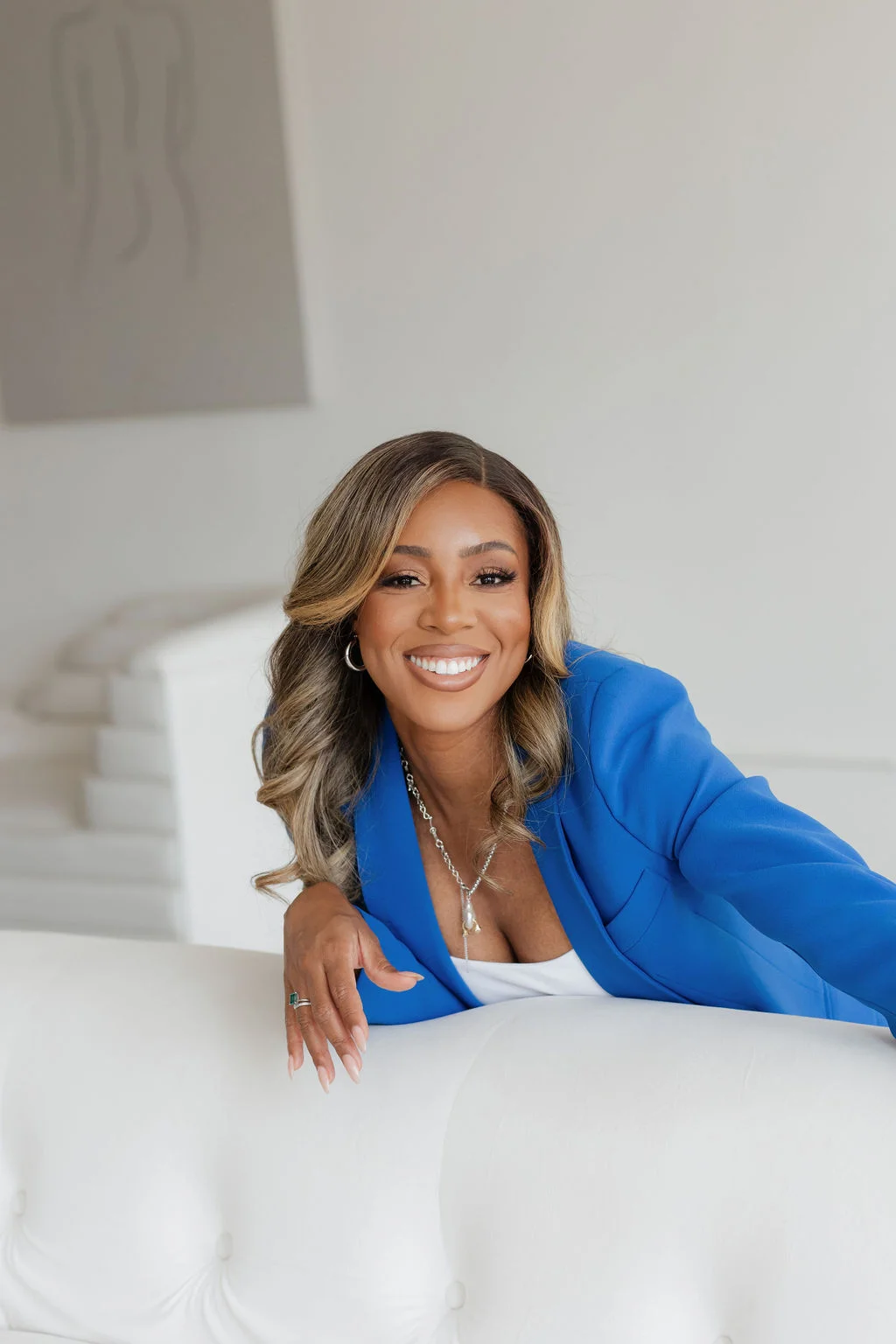
Diana Sabb is Founder and CEO of Create Something Amazing.