
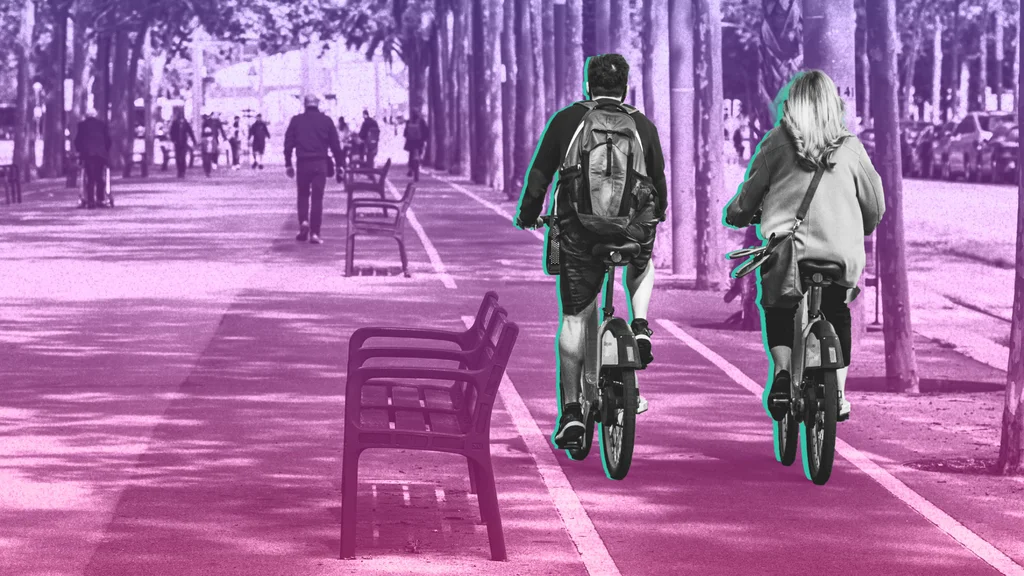

As a lifelong advocate for disability rights and inclusion, I’ve intimately observed how considerate urban design can forge vibrant cities where everyone belongs. While federal legislation like the Americans with Disabilities Act of 1990 has bolstered accessibility, U.S. cities continue to fail persons with disabilities and older persons.
According to World Enabled, “By 2050, 6.25 billion people will live in urban centers. If these estimates hold true, that means that by 2050, nearly one billion urban dwellers will be persons with disabilities. The unprecedented scale of urban expansion demands a radical rethinking of what cities are, and who they are for.”
I started using a wheelchair at the age of 7, and by the time I was in high school, I needed a ventilator at night. This necessity became constant in my late 20s during my doctoral studies, requiring me to use a ventilator 24 hours a day. My life’s path has been one of extraordinary resilience and continuous discovery.
As I traveled to different parts of the world, I saw how cities approached inclusivity in their own ways. These experiences strengthened my determination and gave me a deeper understanding of what it truly means to create cities that include everyone. I’ve seen how inclusive planning can create environments where everyone, regardless of their abilities, can thrive and contribute.
REVOLUTIONIZING URBAN BLUEPRINTS
Achieving true inclusion mandates that accessibility be integrated into urban planning from the onset, not appended as an afterthought. Now is the moment to revolutionize our urban blueprints, placing diversity, equity, and inclusion at the forefront of every decision. This demands leadership across all tiers to endorse accessibility as both a moral and civic imperative.
Inclusive urban design is paramount, offering unrestricted access to the city experience. Cities represent not merely constructions and pathways but vibrant ecosystems brimming with potential. Limiting anyone from navigating or participating in urban life denies them a fundamental human right.
Building inclusive cities demands imagination, empathy, and commitment. Here are five strategies to design for inclusion and guarantee access for all in urban environments:
1. CONSULT THE EXPERTS
Recognizing that people with disabilities are the preeminent experts on their own needs is fundamental to inclusive urban planning. Engaging with them early in the process allows planners to learn invaluable insights into crafting more accessible environments.
Consider this: when designing braille signage, would it be logical to consult someone who can see? Evidently not. The true expert is the individual with lived experiences who possesses a deep understanding of what adaptations will genuinely enhance their experience and accessibility.
2. THINK ACCESSIBILITY FIRST
Employ universal design principles to incorporate inclusion into projects from their inception, avoiding retroactive retrofitting. When accessibility is prioritized, inclusive cities are shaped from the foundation, factoring in the needs of individuals with disabilities at every design phase, from sidewalk layout to public building design.
3. FOSTER DIVERSE COLLABORATION
A collaborative approach is vital in developing inclusive cities. When individuals from varied backgrounds and specialties unite, innovative solutions to challenges faced by people with disabilities emerge. Urban planners, architects, and developers can collaboratively work with accessibility experts to create more accessible pathways, buildings, neighborhoods, and communities.
4. GO BEYOND LEGAL MINIMUMS
Accessibility should be championed as a moral imperative, not just a legal requirement. While disability laws are crucial, genuine inclusivity means embedding accessibility into a city’s culture. Championing accessibility broadcasts a powerful message that all are valued and welcome, contributing to a more inclusive, equitable society.
5. CULTIVATE INNOVATION
In the era of rapid technological advancement, we are presented with an unparalleled opportunity to re-envision our cities, embedding inclusivity at their core. This necessitates a paradigm shift where technology is seen not just as a tool for adaptation but as a driving force for anticipatory design. Leveraging the mighty capabilities of technology enables us to move beyond merely retrofitting our existing infrastructures.
Instead, we can proactively mold urban landscapes that are naturally accessible and welcoming to all, regardless of abilities. This involves interpreting disability considerations not as obstacles to be navigated but as potent opportunities to innovate, reconstructing our cities through a lens of universal design.
FINAL THOUGHTS
Inclusive cities do not solely benefit individuals with disabilities—they enrich everyone. When cities are crafted for all, everyone reaps the rewards. Inclusive cities are safer, more livable, and more prosperous, simultaneously attracting and retaining premier talent, which in turn fosters economic growth and innovation.
I extend an invitation for you to join me in reimagining our cities as inclusive havens for all. By enacting the five strategies delineated above, we can forge cities where everyone belongs and thrives.
Together, we can create the future we need—a future for us all.
Dr. Victor Pineda is the Executive Chairman of the Victor Pineda Foundation, a two-time US Presidential Appointee, and advisor on inclusion.