

Artificial intelligence (AI) has historically played a backstage role in the hiring process. Within recent years its impact and potential has catapulted specifically for job recruitment platforms and companies’ career sites. Today, the human resources industry is also using AI to help organizations develop and retain employees.
Few know this as well as Phenom, a global AI SaaS company founded in 2011 whose early roots in helping organizations meet their hiring goals has evolved to include all aspects of the talent lifecycle including employee onboarding, development and retention — since the candidate and employee experiences are intertwined.
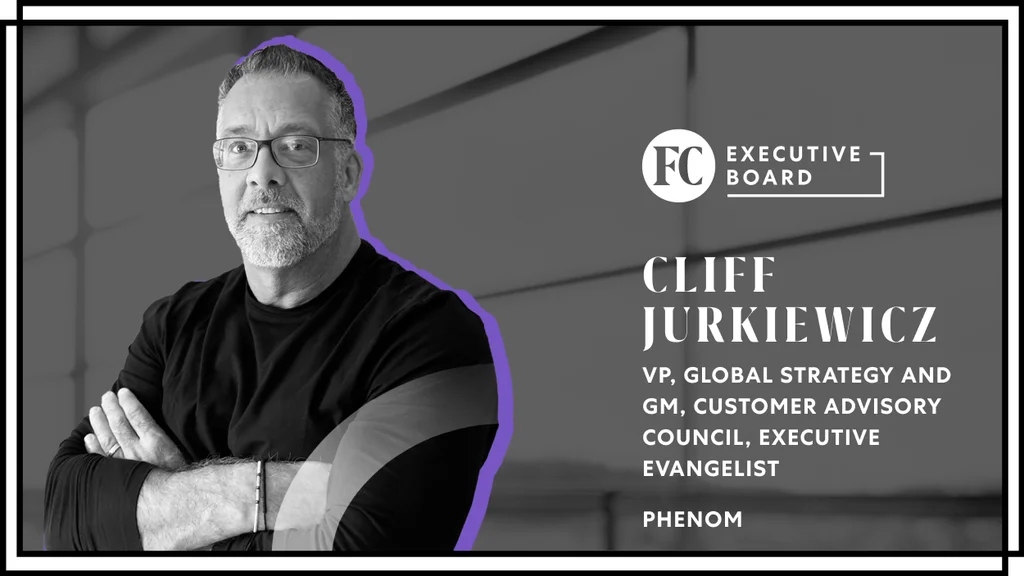
As Cliff Jurkiewicz, VP, Global Strategy at Phenom, sees it, this isn’t about AI taking over HR work. It’s about enabling talent acquisition teams to hire faster and be more productive, while employees plan their career paths so HR professionals can focus on their highest, and more strategic priorities. In HR, that focus has been and will continue to be the people.
“An employee should join a company having a clear view of their path forward, with the resources to make it happen,” says Jurkiewicz.
AI in HR isn’t here to manage people; it’s here to help people manage their career paths better. And for those in talent management, this shift could make a huge difference.
PRECISION JOB MATCHING: CLARITY, NOT CLUTTER
The “big names” in job hunting have all in some way pivoted their strategy towards AI with varying degrees of success. For instance, an AI chatbot that was recently released by one of these organizations has drawn some criticism. While the tool provides feedback on how well a candidate’s skills align with a job posting, it relies heavily on scraping profile data and general company descriptions. This can lead to generic, surface-level recommendations that may not fully capture the nuance of many roles.
At Phenom, the approach to AI-driven job matching prioritizes quality over quantity. “We don’t want to show just any job; we want to show the right one,” Jurkiewicz explains. Unlike platforms that inundate candidates with endless listings, Phenom suggests roles only when there’s a 70% or better fit between a candidate’s skills and job requirements. This focus on intentional matches shifts the job search experience from one of endless scrolling to genuine alignment. In contrast, quick-apply platforms risk overwhelming users with broad, AI-generated job suggestions and overwhelming recruiters with applicants that aren’t qualified for the role — which is not the job seekers fault.
Jurkiewicz believes candidates should be able to immediately see roles that fit them—not just any job, but one they’re likely to enjoy and grow in, because it’s based on skills they already have and areas they’re interested in developing.
The need for skills-based matching is recognized across the HR industry. Over half of recruiters on Linkedin prefer to use the skills-based matching feature. And, according to a Harris Poll commissioned by Indeed, 74% of recruiters prefer to match with skilled candidates based on the candidates’ relevant experience and expertise, rather than relying on manual searches.
For job seekers, this AI-powered clarity can be transformative, offering them roles where their skills and potential genuinely align with the requirements, while employers gain employees ready to make an immediate impact.
CAREER DEVELOPMENT BEYOND THE HIRE
Another problem the HR industry currently faces is how to define career progression. Employees using traditional job boards must make a serious effort to understand and plan for their career development. That takes time they may not have available. Phenom aims to change that. Through personalized career pathing, internal gigs, and structured succession planning, Phenom’s platform creates a roadmap for growth that’s clear and attainable. Phenom uses AI to map specific career options, keeping employees engaged and connected to the company’s mission, and helping them see a future they can get excited about.
Jurkiewicz emphasizes the importance of giving employees ownership of their development. An employee interested in management should be able to find internal projects and skill-building resources tailored to leadership, supporting them every step of the way. Those seeking technical development need a place to plan their training and map their career prospects. Employees shouldn’t have to use additional tools to develop their skills and careers.
PLANNING FOR THE FUTURE WORKFORCE
In a fast-evolving market, companies need more than a picture of current workforce demands—they need a forward-looking strategy. Phenom’s predictive capabilities help companies anticipate and prepare for emerging skills and roles.
By analyzing data from millions of candidates every week, Phenom’s AI gives companies a broad and real-time view of workforce trends. “Our clients aren’t just reacting to changes; they’re preparing for what’s next,” Jurkiewicz says. With insights that blend public labor data with Phenom’s extensive network and a company’s own data, companies and employees alike can develop a clear sense of what skills and roles may become essential down the line. This level of foresight allows people to plan and act with purpose rather than feeling caught off guard.
Instead of scrambling to catch up, organizations that adopt a skills-based approach to AI in talent acquisition and management can anticipate changes with confidence, turning workforce planning into a strategic asset rather than a last-minute reaction.
Phenom’s vision for the future is bold yet refreshingly human: to empower both people and companies to achieve their best without compromising on job satisfaction. It’s a future where AI serves to enhance human potential, bringing creativity, insight, and growth to the workplace.
As Jurkiewicz puts it, “We want people to do what they’re best at and to feel valued while they’re doing it.”