

Just before midnight on the night before my AP history exam, my neighbor was shot and killed in the doorway of his apartment. The news rocked our apartment complex, and the next day, while my fellow classmates focused on crafting the perfect thesis statement, I thought about how I’d respond to police when they questioned me about the 23-year-old who lost his life. I took many AP/IB placement exams during high school; that was the only one I failed. It’s hard to focus on school when life at home feels broken.
The truth is that brutality was nothing new where I lived—it was the best our family of four could afford on my immigrant father’s $35,000 salary. I’d grown accustomed to the sounds of domestic violence spilling through our walls—echoes that weren’t always easy to tune out when it came time to focus on schoolwork. Luckily, I met a lot of wonderful people at public school who invited me into their homes. I learned that living in a disadvantaged neighborhood in America is tough, but higher living standards are possible.
Without the help of people higher up the ladder, it’s nearly impossible to climb your way out. That is in no small part due to the rising cost of education. For decades, kids have been told that the path to a great career unquestionably runs through four years at a university. However, there are a few things wrong with that one-track thinking: The cost of college has skyrocketed, and without significant financial aid, not everyone can afford it. On top of that, it’s difficult to win scholarships when turmoil at home consumes your headspace.
The bottom line is that alternative pathways to well-paying jobs are needed for those who may not benefit from a four-year degree right after high school when the cost is theirs alone to bear. Only then can individuals who find themselves outside traditional educational opportunities have equitable opportunities to improve their future options.
As leaders, I believe we can get better at equipping under-resourced communities with programs that spur economic mobility. In doing so, we can build more prosperous and flourishing communities.
CREATING ALTERNATIVE PATHWAYS
Economic stability begets economic stability, so goes the saying. But the opposite is true as well. Economic instability creates a downward spiral. Less than 1% of people who were never poor as children wind up poor as 35-year-olds, according to the National Center for Children in Poverty. Of those who experience moderate-to-high levels of poverty as children, 45% are poor at age 35.
One path to making it out on the better half of those statistics is earning a college degree. But the path to becoming a college graduate has been narrowing for years, as tuition prices at some institutions have become increasingly disconnected from the value they create. One survey found that college students expected to make more than $103,000 after graduating, but in reality, averaged a salary of $55,260. Meanwhile, yearly tuition at some schools tops $70,000.
We have room to create alternative pathways that allow any individual, no matter their background, a lane to a great life and a well-paying job.
A NEW APPROACH IS NEEDED
There is reason for optimism. While a traditional four-year college education may appear unattainable to some, pathways that decrease a student’s burden of time and money are within our grasp.
I’ve always believed that public education can play an outsized role in uplifting millions of lives. My family immigrated here on that very notion. For me, it worked. But public education has always been put in the tough situation of doing more with less.
I believe that if we keep approaching things in the same way—working in silos that present only one path to middle- and upper-class life—we’ll continue to experience the same economic mobility challenges.
Instead, existing funding streams can be used to develop a scalable community-based ecosystem. Leaders can create new programs that lead to well-paying jobs without strapping students with debt or penalizing them for circumstances holding them back at home.
The company I founded, Transfr, works with high schools, two-year colleges, unemployment offices, employers, and non-profits to provide targeted simulation-based training in a virtual setting. These simulations can scale at low cost, reducing the overall economic cost of training and giving individuals an opportunity to experience a pathway to a profession and financial freedom. In time, we aim to help address the vast talent shortages in industries like manufacturing, health care, automotive, and beyond.
There are 75 workers for every 100 job openings, according to the U.S. Chamber of Commerce. It’s clear by now that there are enough good jobs to go around, no matter a candidate’s economic background. It’s on us, as leaders, to empower individuals to fill those roles.
A MORE INCLUSIVE WORLD
The toughest economic mobility problem underserved communities face is that moving up may require you to move out. My dad’s salary of $35,000 allowed us to get by, but if I’d never left that neighborhood, the odds are that today I’d be making the exact same, according to the Opportunity Atlas.
I was lucky, but far too many folks are not. The challenges I faced growing up have a way of acting like economic quicksand, stopping otherwise promising people from pursuing their freedom. I know this to be true because I’ve seen it firsthand. I may have moved out of the Hickory Hills Apartments, but my experiences with my neighbors remain with me. They motivated me to never stop working to make a more inclusive system for people like them.
I have found that it is within our reach as leaders to create a structure in which ZIP code does not determine an individual’s fate. But first, we must break down misconceptions about the path to financial freedom, build supportive ecosystems and communities, and create less-restrictive pathways to well-paying jobs for all.
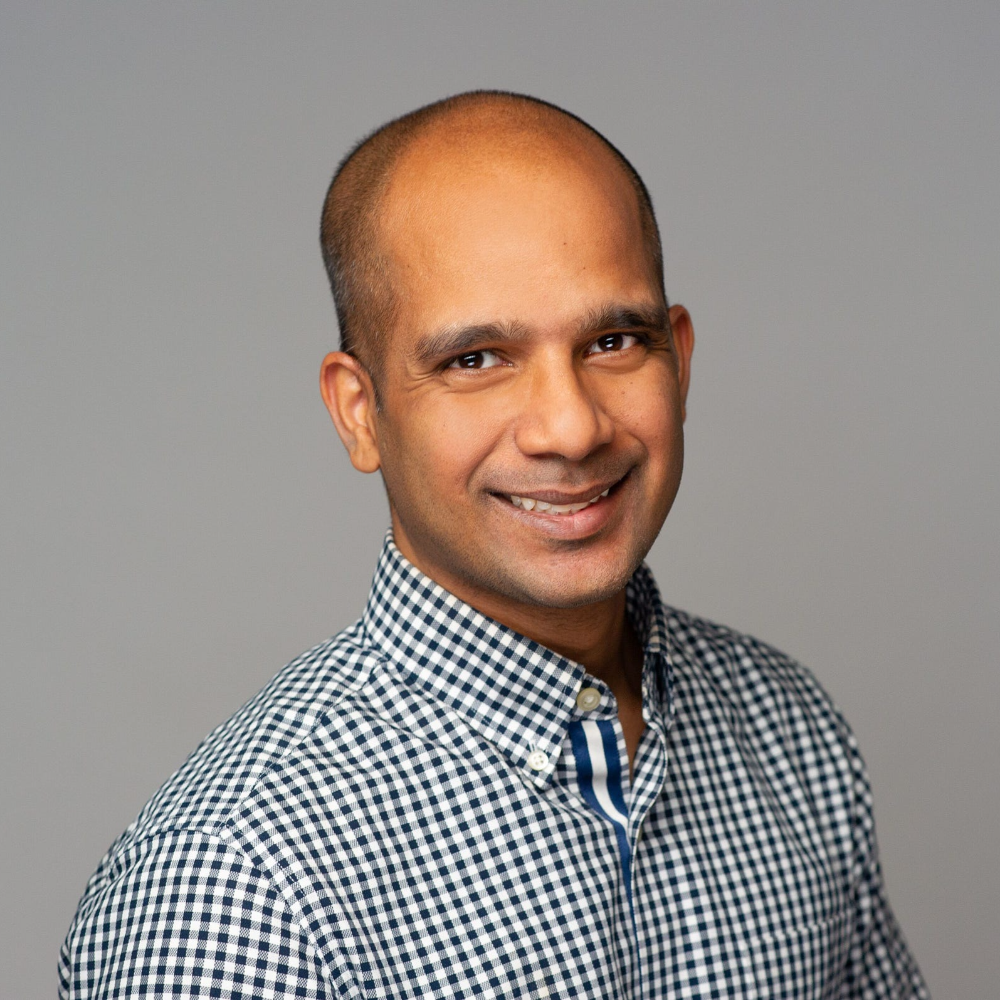
Bharani Rajakumar is the founder and CEO of Transfr, the leader in virtual reality-based skills training for middle-skilled careers.