
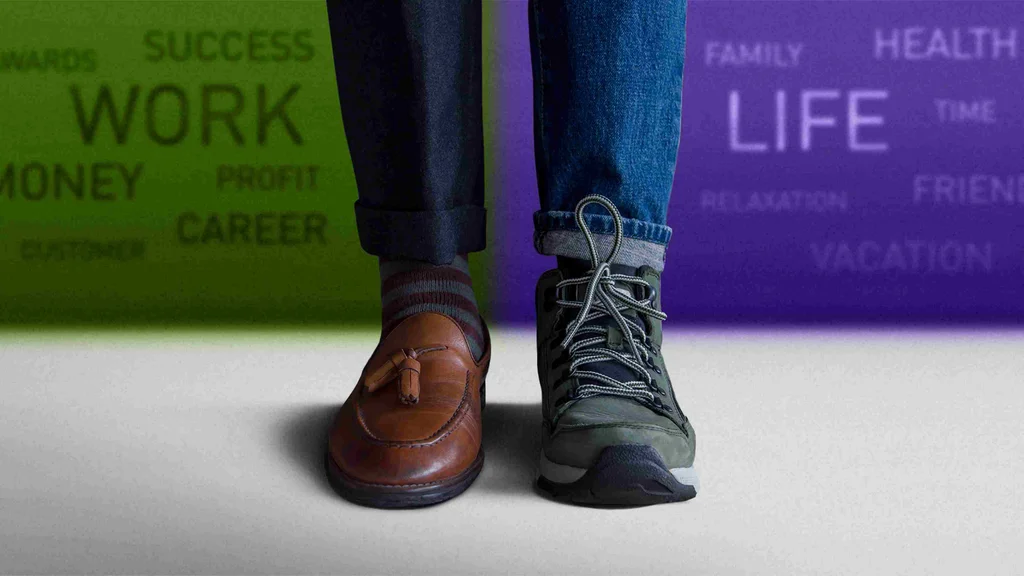

Work-life balance was a hot-button topic during the pandemic for a reason: Millions of people worldwide juggled more responsibility with fewer resources than ever before. As people continue to feel their way around the post-pandemic environment, continued poor work-life balance puts businesses at risk for disengagement, which can often be reflected in decreasing retention levels. And ultimately, having people leave and needing to hire again and again will cause revenue to suffer in the long term.
But the way you treat your people could solve the puzzle. When managers show people on both sides that they’re not just focused on work and have people’s best interests at heart, they can build trust for other activities and goals. To make work-life balance more tangible, organizations must consider the course correction of expectations, the need to identify distress, and the demand for good modeling and prioritization.
UNTANGLING THE MESS TO RESET EXPECTATIONS
When I started an oil and gas company out of my basement, I worked like a dog. I would be there during the day and inevitably at night. I had no boundaries. While I was in the middle of it, I didn’t appreciate how much I was working—it was just so accessible.
A similar situation played out for millions during COVID-19. During the pandemic, work-life became particularly unbalanced because the home was suddenly where people worked. Mental and physical lines became blurred.
But after having home and work become so tightly tangled together for the last few years, people finally seem to be teasing home and work back apart—and with new, better boundaries. For example, I catch a train to our downtown office three days a week, but when I leave the office, I don’t tend to take my computer home to work for a couple of hours at night the way I used to. In some ways, this clear boundary establishes a healthier environment.
Although many of the back-to-office debate is about people not wanting to return to the physical office, companies must also acknowledge the significant mind shift of being at the office again. The increase in compartmentalization shifted how people see the ratio of work-life time they have and impacted how tolerant they are of outside demands. They have become more aware that the previous ways of operating may not meet their needs anymore. All those pandemic puppies that have now become dogs will not walk themselves.
How about encouraging your team to take their allotted paid time off and how to transition back? One of the biggest things organizations could teach employees about work-life balance is how to transition back to work when they are inundated after being gone. If an employee is overwhelmed, it is tough to get quality work done. How will they know what to prioritize? Perhaps establish a protocol specific to an employee’s first five days back, such as an automatic email reply explaining they are catching up—everyone on their team would understand that they are back but not fully available just yet.
KEEP WATCH AND SUPPORT AS MUCH AS POSSIBLE
Workers don’t always tell their managers work-life balance is an issue. In fact, many people deliberately try to put on a front because they’re scared employers will think they can’t do their job if they admit they’re having a hard time.
During the first year of the pandemic, I had a tough situation where a member of my team lived with her mom in a small apartment. Regrettably, her mom took on the daycare responsibility for a couple of children. But because her mom was elderly, it became increasingly clear that my team member was actually taking on some of that work. We weren’t in the office, so it wasn’t like I saw her face to face, but I could tell she was struggling. This created several long conversations that ultimately led to her pursuing other opportunities, but it took several months of daily meetings to get to the bottom of the situation.
Anyone can go through situations like she did. Leaders must be attentive, looking for signs of problems—if they’re not watching, they can miss the cues. Take notes on what’s happening and what people need, not in a self-serving way or because you want to squeeze the last ounce of effort out, but because you want to ensure your workers are okay. This increases the likelihood that managers can intervene and offer support.
GOOD MODELING AND PRIORITIZATION ARE A MUST
If leaders want workers to engage in a healthy work-life balance, they must model it to allow employees to follow suit. But modeling can happen only if leaders watch for signs of trouble for themselves, just as they watch for warnings from employees.
I’ve learned over time what my out-of-balance signals are. When I’m feeling overloaded and my cup is full, I stress eat. I get irritable. I don’t sleep. I know I’m not being my best self when my pessimism takes over. The key to regaining my balance is often recognizing that I’m focusing on the wrong things. I take stock and try to be grateful for what I have rather than what I don’t have. Instead of focusing on whether I have a house and a car according to the American dream, I think about whether I am willing to inspire others. That work never ends.
DESPITE DIFFERENT GROUP AND INDIVIDUAL NEEDS, HOPE ALWAYS FITS
The lines around what is acceptable in work-life balance are course-correcting after the pandemic. Even so, work-life balance is not a one-size-fits-all equation. What one person finds stressful, another individual might find invigorating. Although leaders have to keep a general pulse on the needs of their team, they also have to keep watch and connect one-on-one with people. They can do that most effectively when they connect first with themselves and ensure they model what matters. Leaders rarely can go wrong if they focus first on inspiring others.
David Partain is SVP of Northern Trust and CMO of their subsidiary, FlexShares Exchange Traded Funds.