

Tipping culture has undergone a radical transformation, driven in large part by digital payment technology and accelerated by the COVID-19 pandemic. With customizable digital tipping options, restaurants and other hospitality businesses are finding new ways to tackle staff shortages and motivate their employees.
I’m a strong believer in the power of innovative technology to solve industry challenges, but it’s important we don’t lose sight of how this trend can affect the customer experience.
A RADICALLY DIFFERENT TIPPING CULTURE
During the pandemic, many of us tipped more generously than ever to support our favorite restaurants and show appreciation to front-line workers working in difficult conditions. More businesses shifted to digital point-of-sale systems to make tipping easier than ever, and tip screens sprung up in places we’d never been expected to tip before.
But while working conditions have more or less returned to normal, tip requests haven’t gone away. Instead, the opportunity to tip has been expanded to nearly every service vertical, and suggested gratuity amounts are going nowhere but up. This is great for service workers who’ve been able to supplement their incomes in a particularly tumultuous time, and beneficial to hospitality businesses that are also facing more challenges than ever.
But the simple act of paying more frequently with cards and digital wallets means we’re confronted with the tip screen more often than ever. For many consumers, this has created the perception that tipping in North America has gotten “out of control.”
THE CONSUMER BEHAVIOR DRIVING UP TIPS
The vast majority of customers want digital and mobile tipping options and are happy to see more businesses adding this infrastructure. When customers genuinely want to tip, not having the option to do so in a convenient way is frustrating. A business’s ability or inability to take certain payments can significantly impact its customer experience, its workforce, and its bottom line.
Digital payment technology enables customers to be more generous than they would be if they were limited to the change in their wallets, and subtly nudges them to be more generous with clever anchoring techniques. But tipping is an extremely complex human ritual that’s not just about the service. The reasons why we tip, where we tip, and how much we tip are various and complex.
The key takeaway here is that tipping is almost always an emotionally charged decision. We’re used to tipping servers, bartenders, and other service workers, but in this new reality, there are no clear norms. That may be why it’s disorienting for so many. In more and more situations, we face the possibility of not being liked or being perceived as cheap, even as we’re tipping more digitally compared to cash, and more often.
Screens and procedures for digital tipping are also harder to ignore than a cash tip jar. With the worker directly across from you, the interaction can be a little uncomfortable—on both sides of the counter. Under these conditions, many customers will choose the default option to tip simply to avoid feeling bad in the moment. But afterward, they may leave with a negative impression of the business.
PITFALLS FOR BUSINESS OWNERS TO AVOID
Digital tipping has certainly been a boon to restaurants and other hospitality businesses that are struggling with staff shortages and rising inflation. But there are some potential pitfalls that all business owners should keep in mind as we move into a cashless future.
First, be aware that the increasing pressure to tip and to tip more is reviving some negative feelings about tipping in general. We should not forget that Americans initially resented tipping, or being expected to tip, and even passed laws trying to abolish it. While those laws were quickly repealed, that feeling didn’t necessarily go away, and some people still view tipping as an unfair way for employers to pay workers subminimum wages.
Finally, and most importantly, we should never forget that providing an exceptional guest experience should be every entrepreneur’s first priority, especially in the increasingly competitive restaurant industry. If your customers are leaving your business feeling coerced to leave a higher tip than they were comfortable with, or feeling bad for leaving the lowest tip option on the screen, you risk losing them forever.
THE FUTURE OF TIPPING
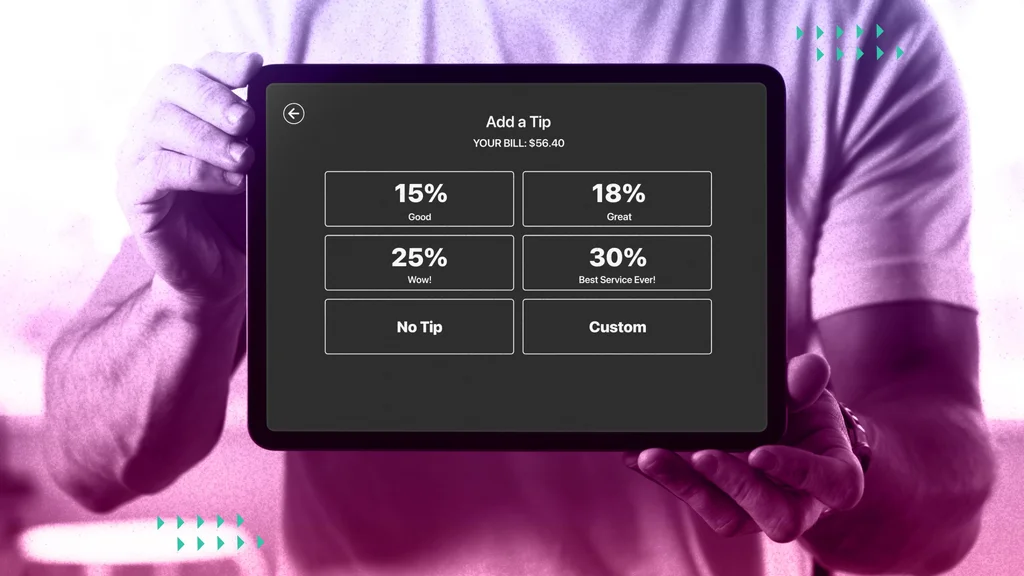
On digital gratuity screens, the “custom tip” and “no tip” buttons are almost always the same size as the tipping buttons. From a design perspective, all options are presented as valid and equal—it’s our perception that imparts meaning to them.
As we move toward a completely cashless society, we’ll need to approach tipping the same way we might approach managing app permissions on our phones: We’ll need to consciously decide when to opt out. While tips are always welcome and appreciated, it’s okay to choose when it’s appropriate and deserved. We’ll need to train ourselves to make these decisions objectively and without guilt.
There is evidence we’re already getting better at making these objective decisions about tipping. Roughly 70% of Americans report they tip less or the same as they did before the pandemic. Tips for take-out orders and in some limited service counters have also dropped significantly since the height of pandemic-era generosity.
While there’s no way to know for certain what tipping will look like in the future, it’s very clear in my mind that technology will be the key to connecting our digital and physical worlds. Restaurateurs and hospitality businesses will need to automate and get the insights they need to make data-driven decisions for a successful future.
JP Chauvet is the CEO of Lightspeed Commerce.