

We are handing the keys of software testing to AI agents because the speed advantage is undeniable. With Gartner predicting that 70% of enterprises will integrate AI tools into their toolchains by 2028 (up from just 20% in early 2025), the industry is clearly all-in.
But speed creates wrecks if you don’t watch the road. This rush to adopt AI brings real risks like false positives, hidden biases, and deep integration challenges, which is why 77% of engineering leaders already cite AI integration as a top technical hurdle.
As we let AI do more of the heavy lifting, we need a safeguard. We call this human-in-the-loop (HITL), and right now, it is one of the only ways to keep our testing accurate, safe, and honest.
HOW AI IS CHANGING HOW WE TEST SOFTWARE
Software testing used to be a rigid, deterministic process. Whether we were writing manual logs in the 1970s or using script-based tools like Selenium in the 2000s, the tools did exactly what they were told, and nothing more.
Today, AI infuses intelligence into the process. We now have predictive analytics that forecast where code might break before we even run it, and self-healing scripts that adapt automatically when a UI button moves.
Gartner notes that by 2028, 90% of enterprise engineers will use AI code assistants, a massive surge from under 14% in 2024. Testing is catching up, moving from static scripts to dynamic AI agents that can generate test cases, detect anomalies, and optimize regression suites faster than any human could.
However, without guardrails, this autonomy falters. It faces ethical scrutiny, risks GDPR violations from using real data, and threatens compliance in safety-critical apps. That is where HITL comes in.
Originally proven in medicine to reduce errors, it now acts as a validator in software too, helping decode complex system behavior so teams can trust decisions before shipping code.
3 WAYS AI TESTING FAILS (AND WHY IT MATTERS)
Fully autonomous AI testing fails specifically where human judgment is non-negotiable: context, accountability, and ethics. Here’s how that happens.
1. Hallucinations and false positives
AI test agents, especially those built on large language models, are often confident but wrong. They can invent plausible-sounding test cases that are irrelevant or misinterpret results entirely.
If you rely too much on automation, you create noise rather than value. Machine logic cannot replace human intuition regarding business impact, so quality engineering teams spend hours chasing non-existent bugs. If your engineers spend half their day fixing the AI’s mistakes, the automation’s value is lost.
2. Baked-in bias
AI learns from the data it is fed, so if the training data is incomplete, the output will be biased. It will fail to generate tests that cover diverse user groups or edge case scenarios simply because it never saw them during training.
The result is an insidious form of bias baked into the QA process, ensuring poor test coverage and perpetuating system errors against specific user demographics.
3. The ethical blind spot
Machines lack empathy, cultural context, and ethical reasoning. While AI excels at repetitive, data-driven tasks, MIT research highlights that humans still excel at subtasks requiring emotional intelligence.
Consider a healthcare chatbot. A test agent may confirm the bot gave a functional response, but only a human can score that response for toxicity, tone, and appropriate ethical context.
WHAT AN HITL WORKFLOW LOOKS LIKE
HITL is essentially a feedback loop where humans oversee the work to refine the model. The goal is transparency and accountability, ensuring a human has the final say, which has been shown to improve accuracy in moderation tasks by 45%.
The principle is straightforward: Machines handle the volume and speed, while humans handle the nuance and risk.
Here is how the four-stage loop functions:
- Input layer: Domain experts provide high-level intent, standardized test data, and ethical rubrics. You define the rules and what constitutes a critical failure versus a cosmetic one.
- Automation layer: AI agents generate test scripts and execute tests at a massive scale. They use machine learning to filter the results based on pre-set confidence scores, handling the brute force work.
- Decision layer: The automation platform pauses when it flags outputs that meet high-risk criteria. This could be a low-confidence failure, a suspected ethical breach, or an unexpected functional change. If the AI isn’t sure, it stops and asks for help.
- Feedback loop: Human corrections and expert judgments are fed back to retrain the system. When you re-label a false positive or confirm a bias finding, the underlying AI test agent learns from it, making the entire system smarter and safer over time.
WHY AN HTIL WORKFLOW IS WORTH THE EFFORT
HITL delivers strategic value by building trust and saving money. In data extraction processes, for example, it yields 99.9% accuracy and significantly reduces diagnostic errors.
Efficiency gains: It boosts efficiency by cutting processing time by over 40% while jumping accuracy from 82% to 98% in validation tasks. This means engineers stop fighting false alarms and focus on genuine issues.
Risk mitigation: It acts as a shield against false positives, which can inflate error rates in AI-driven inspections by up to 86% when left unchecked. A human gatekeeper prevents these errors from ever reaching production.
Ethical compliance: It ensures alignment with regulations like the EU AI Act by incorporating human ethics into AI outputs, providing the oversight required by modern compliance frameworks.
WHAT’S NEXT FOR YOU?
HITL turns AI testing from a risky implementation to something reliable. It balances the promise of the $1.5 trillion AI market with the necessary human ingenuity. If you want to slash errors, comply ethically, and innovate boldly, this is probably the quickest way to get a headstart. So go forth and start with a pilot program. Putting one human gate in the process today will pay off in resilience tomorrow.
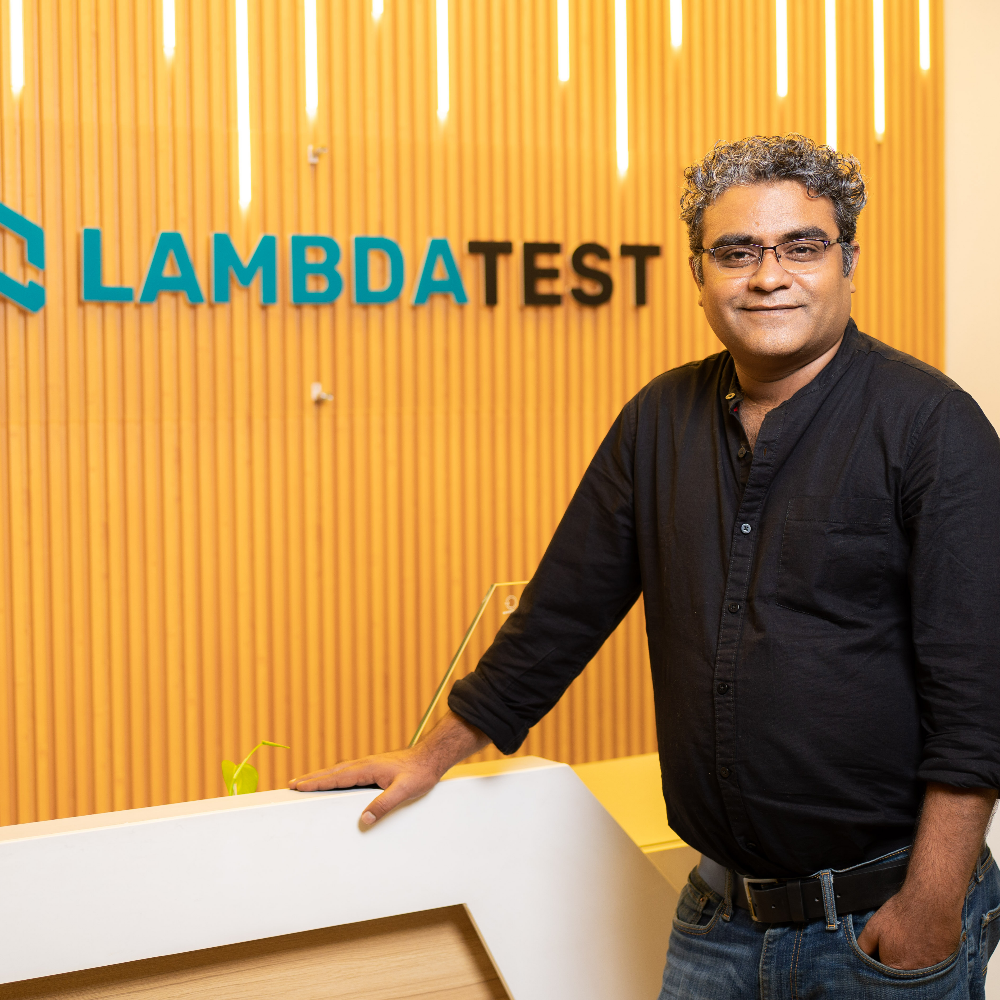
Asad Khan is CEO and cofounder of LambdaTest.