
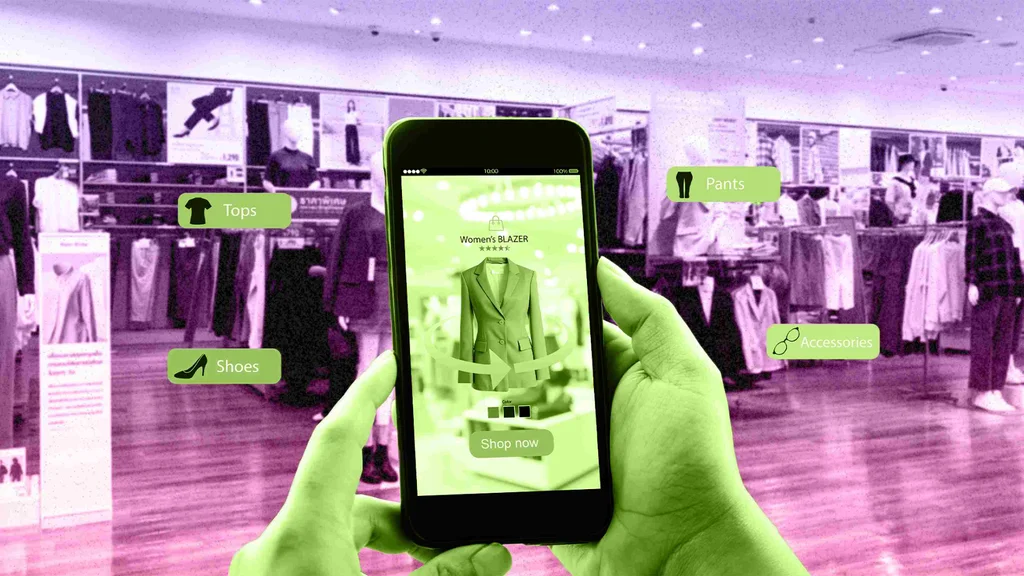

Augmented reality (AR) can bring customer interactions with products to a higher level and catapult business growth, but many business owners don’t understand how to use this new technology.
Here’s what business owners should know about incorporating AR into their marketing strategies, based on my decade of digital marketing experience using emerging tech.
A NEW SHOPPING EXPERIENCE
AR is making a significant impact in retail because it allows customers to interact with products in a meaningful way. Brands, including IKEA and Sephora, have AR applications with which customers can visualize using the products in their spaces before buying them.
IKEA’s AR app, IKEA Place, shows customers how virtual furniture would look and fit in their homes. Sephora’s Virtual Artist app allows customers to experience its makeup virtually, reducing both uncertainty and returns.
BUILDING ON VIRTUAL INTERACTION
AR can create an emotional bond for customers and products, which increases conversions. Such a bond provides a personalized shopping experience when people can see how a product will look on them without going into a store.
For example, many automobile brands use AR experiences to allow vehicle buyers to look at all of a car’s features, and even allows the ability to virtually customize models. That is exciting for the customer, leading to more sales.
THE ART OF CREATING IMMERSIVE BRANDS
Traditional marketing is making way for the new art of creating memorable brand experiences for customers. They are becoming more sophisticated as tech continues to improve.
Pepsi’s AR bus shelter campaign in London created fantasy objects like UFOs and tigers to mix into the real world for passersby entertainment. These are the campaigns that are shared thousands of times on social media, amplifying reach.
These are innovative marketing ploys that have people talking, leave an impression, and engage customers.
MERGING THE TWO WORLDS OF VIRTUAL AND REALITY
AR is creating a highly customized experience for shoppers both online and in stores. Interactive displays and AR-enabled mirrors can recommend colors, combinations, and offer feedback. Customers can put clothing pieces together without trying them on, making shopping more fun and engaging.
DATA PROVIDES CUSTOMIZATION
The secret to AR is in data collection, which allows it to customize every customer experience. Past interactions show AR what recommendations are best in new interactions. This builds customer loyalty and improves retention.
IMPLEMENTING AR: FIRST STEPS
1. Define Goals
Clarify your objectives for using AR, such as boosting sales or brand awareness.
A way to clarify objectives is to consider your mission statement and write down what needs to happen for the mission statement to become a reality. The things you write down can be turned into goals or objectives.
Consider the cost and the risk of losing money—at least in the short term—to achieve these objectives. It could be that you have to put out a good bit of money without seeing a return on it for a year or two. Can you possibly do that and survive? If not, you need to rework objectives into smaller, manageable steps.
Look at things like if you will need to hire more staff or specialized staff to handle the AR or the extra sales stemming from it, along with the cost of hiring.
One of the strategies I use is to list out three categories of objectives. One is listed as easy and cheap, the next is medium work with others involved, and the third is the ultimate dream, the most expensive, long-term goal. Breaking it down helps me see it more clearly and work toward each level while doing what I can now.
2. Identify Applications
Determine how AR best fits your industry by reviewing successful case studies.
The things I look for are examples of companies that have recently grown from small enterprises to medium enterprises in a short period of time. I look at what they’ve done, both with AR and with other strategies, to see if I can emulate techniques. Many ideas can be adapted for smaller companies to do on a lesser scale.
3. Set A Budget
Set a budget for development and maintenance, and decide if you’ll need specialized staff or partners.
Your AR budget shouldn’t be more than 10% of an operations budget. It may need to be less. Most companies make their AR budget a part of advertising and marketing, but I put it as a separate line item under operations because it involves automation, customer service, sales, and data.
Your AR investment should be a low-risk move with a good return, especially if you take money from other budgets. After all, that money will need to be returned.
4. Start Small
Launch a pilot project to gather feedback before expanding. A pilot project can be targeting a small group of potential customers, or even a small group of loyal customers, to see the response. The steps to launching a pilot project are
- Identify the goal of the project
- Identify the small group you will target
- Create an incentive to participate in the project
- Create the project
- Send to those willing to participate
- Create a survey for afterward and gather responses to refine the project for a larger market
The impact of AR will carry into the future and change business in ways that we can’t imagine today. Brands that prepare for the future by embracing it will create customer loyalty with every interaction. An augmented future with customer interaction is here, and business owners should be ready to see the world differently.