

When new research by Greenpeace showed that a mere 5% of U.S. plastic waste was recycled in 2021 (due to the inherent lack of recyclability of most single-use plastics), it was a wakeup call for anyone concerned about their personal impact on the environment. To many consumers, the notion that plastic containers could be rinsed, sorted into appropriate bins, and repurposed into other items such as park benches was a comforting, low-stakes way to feel they were keeping waste out of landfills and oceans.
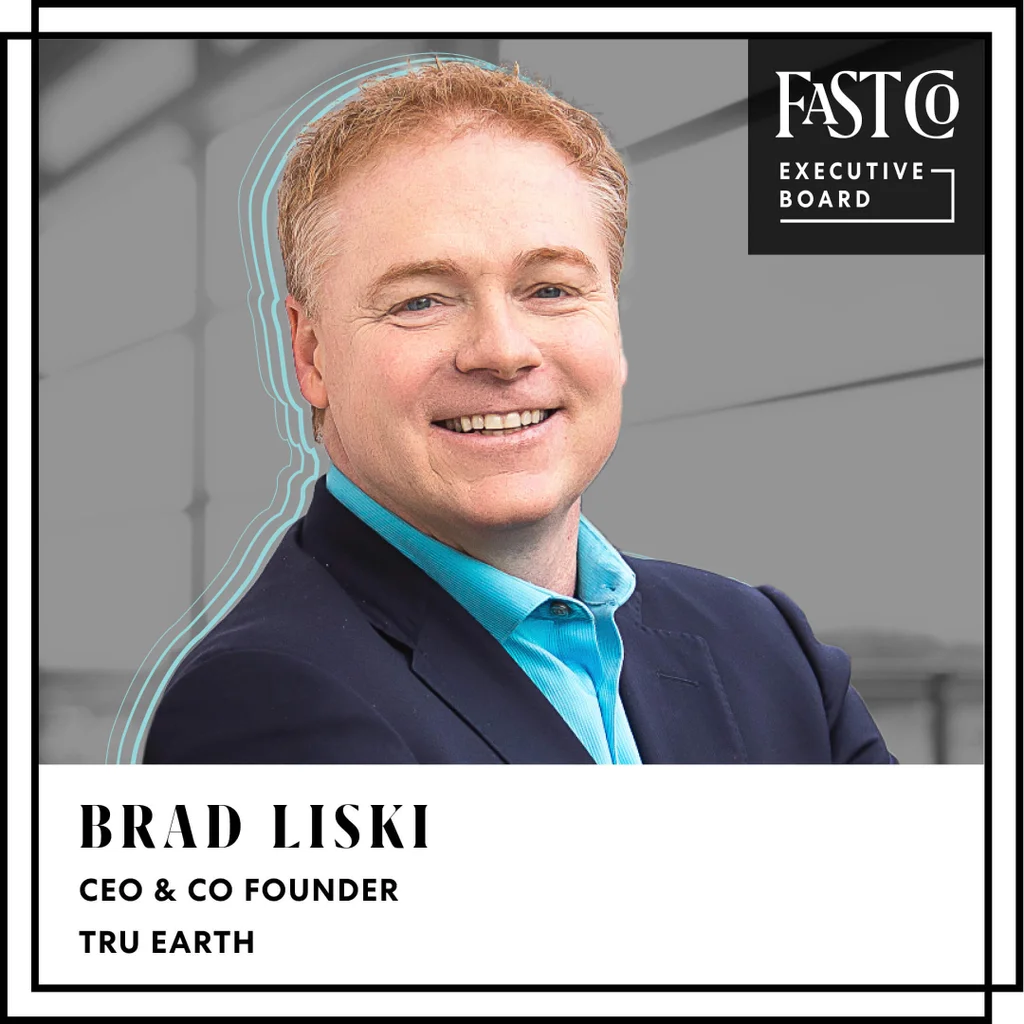
However, for Brad Liski, CEO of Tru Earth, a global household cleaning product company focused on biodegradability and the elimination of waste, the Greenpeace plastics bombshell was not exactly news: Liski, like many other experts, had been aware of the problem for some time. This news only fortified Liski’s and Tru Earth’s mission to eradicate plastic containers from households across the globe and effect true, lasting change for the planet.
One of Tru Earth’s marquee products is a deceptively simple yet powerful solution: laundry detergent “eco-strips” or sheets. Liski explains that selling detergent in strips instead of liquids or pods eliminates the need for disposable plastic jugs, an outdated method of packaging and shipping laundry products. Some non-biodegradable plastic ends up in landfills and oceans, yet Tru Earth’s detergent strips, packed flat in stacks of a dozen to several hundred, are shipped and stored in FSC-certified cardboard sleeves. A one-year supply of Tru Earth laundry detergent is approximately the size of a box of tissues.
Liski explains that doing away with plastic containers can also facilitate significantly “greener” product transportation. “From a per-use perspective, our product is significantly lighter than a plastic laundry jug of liquid detergent,” which he says can help to limit transport-related CO2 emissions. By eliminating the possibility for human error in overpouring liquid detergent based on the perceived size or dirtiness of a laundry load, Tru Earth’s pre-measured product also contributes to cleaner water supplies. (The detergent itself is also free of bleach, dye, and other chemicals that can be found in traditional detergents and that can pollute groundwater sources.)
The other of Tru Earth’s goals is philanthropic: “We’ve donated 19 million loads of laundry detergent to the most vulnerable people among us,” Liski says, estimating a total value of $10 million in detergent donations. This figure is all the more remarkable given the company was only founded in 2019.
Tru Earth currently boasts over a million customers in 78 different countries. Its suite of offerings now includes other household cleaning products such as toilet bowl cleaner, multi-purpose cleaning eco-strips, and recently launched dishwasher tablets with rinse aid. Products can be found in more than 6,000 brick-and-mortar retail locations worldwide.
In many ways, Tru Earth’s mission is to do the work today that will pay off tomorrow. “My co-founders and I are passionate about ensuring that future generations inherit a clean, healthy environment,” Liski says. “That was the number one driving force behind this.” Unable to ignore alarming statistics, such as the fact that billions of plastic containers end up in landfills and oceans worldwide, Tru Earth’s founders were moved to action. “We have no choice but to do something about it,” Liski says.
Soon after launching Tru Earth, its founders learned they were not alone in their concerns. People were eager to embrace a more environmentally friendly way to clean their laundry and homes. In the past year, Tru Earth has experienced a 944% growth rate, making it the 46th fastest-growing company in Canada.
Despite what may seem, at least at times, to be a Sisyphean task, Liski remains optimistic about the future, and about the potential to meaningfully and positively impact human-induced climate change, especially through education. “I believe in hope—I come from the ‘faculty of hope.’ There’s no question that there is a way out of this problem,” he says.
But Liski emphasizes that the success of the “way out” will fundamentally depend upon changes in consumer behavior. “We must continue making changes on a consumer level; we need to demand that plastic containers, especially single-use plastics, be eradicated,” he says. “Plastic does have a place in the world, but it’s not in delivering our cleaning supplies.”