
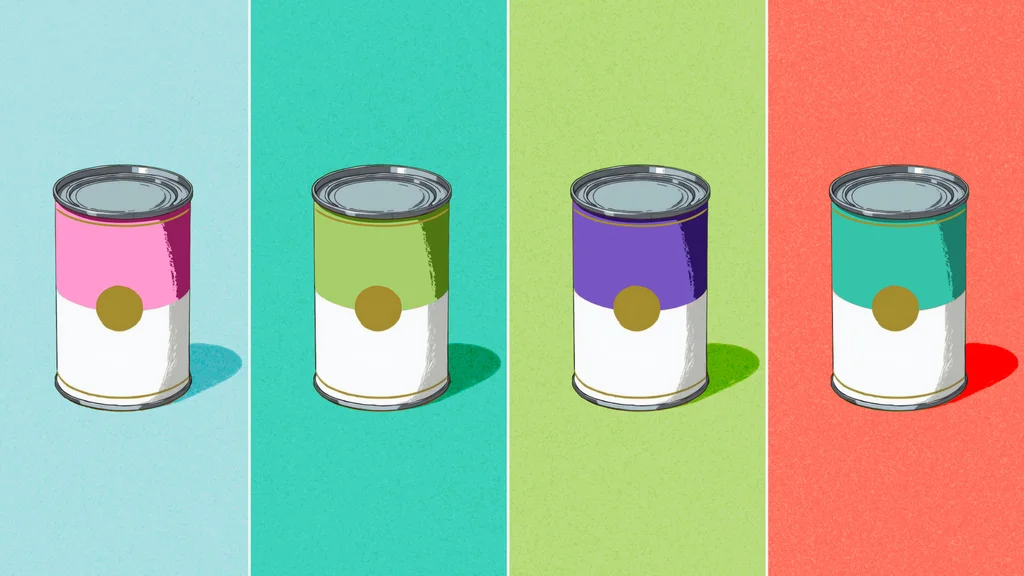

In the early 2000s, my first job was at Cactus Club Café, a Vancouver-born restaurant where pop art met pop culture. The walls were lined with Andy Warhol prints—vibrant silkscreens of Campbell’s Soup cans, neon-hued portraits of Marilyn Monroe, and social commentary hiding in plain sight.
Looking back, Warhol wasn’t just making art. He was pioneering synthetic media.
Warhol used industrial screen printing to mass produce images that challenged the very idea of originality. He blurred the lines between creator and machine, art and advertisement. Despite being mechanized, his work struck an emotional chord. It resonated deeply—proof that even in repetition, something human could survive.
In many ways, Warhol foreshadowed our current moment: a time when storytelling is once again being redefined—not by paint or print, but by code.
The tools we use to tell stories have changed. So has the definition of a storyteller.
In 1964, Marshall McLuhan wrote “the medium is the message.” In 2025, the medium is AI.
AI IS THE NEW NARRATOR
NVIDIA’s Jensen Huang defines AI as “the automation of automation—software that writes software.”
But historian Yuval Harari pushes further: AI, he says, is writing narratives—not just analyzing data, but shaping beliefs. Algorithms, like ancient scribes, now decide which stories we hear. Recommendation engines act like modern-day priests, curating our digital bibles. Whether you find this inspiring or terrifying, one thing is clear: AI isn’t just a tool, it’s a storyteller. And people follow storytellers.
AI-driven storytelling tools like ChatGPT and Sora may have begun their lives as inferior substitutes for human creativity, lacking depth, originality, and emotional resonance. But that’s no longer true.
When we encounter synthetic media, such as deepfake videos or AI-generated images, our cortical-striatal circuit evaluates sensory input to detect subtle inconsistencies that signal manipulation. This predictive coding mechanism helps us distinguish between real and artificial stimuli, even when the synthetic media appears highly realistic.
But will we always be able to tell the difference? Personally, I think not.
A recent study found people rated AI-generated faces as more trustworthy than real ones. And yet—something still feels off. Our brains, through a process called “predictive coding,” detect even the slightest inconsistencies. We know, on a gut level, when something isn’t quite human.
Take a quick watch of Coca-Cola’s AI-generated holiday ad. While it intended to pay homage to its classic 1995 commercial, it faced backlash for being perceived as “soulless” and lacking creativity.
Land Rover’s experimental spot for the Defender, which combined AI and live-action production, showcased the potential of synthetic media but also raised questions about the balance between technology and human artistry.
Now consider the emotional connection we form with AI therapists like Woebot and the LovingAI project led by Julia Mossbridge. These AI therapists use advanced algorithms to simulate empathetic interactions by providing emotional support and personalized therapy. And a recent study found that AI-generated responses in psychotherapy scenarios were often rated higher than those written by human therapists.
We are emotionally connecting with machines. But only when they get the tone just right.
THE INTERNET IS ALIVE…WITH BOTS
You’ve probably heard the “internet is dead” theory: that most of what we consume online is no longer made by humans. It’s not just a theory anymore.
- Bots generate over 50% of all content-related web traffic
- One-third of global traffic comes from bad bots
- Some experts predict 99.9% of all content will be AI-generated by 2030
AI isn’t just changing how we consume. It’s changing who creates.
What does that mean for your business? Millennials and Gen Z who now make up 71% of B2B buyers, don’t want a pitch deck. They want a story they discover. Something that’s personal, human, even a bit unpolished. The fact that nearly 40% are comfortable spending $500,000 or more without ever meeting a salesperson is testament to this trend.
THE FUTURE: HYBRID CREATIVITY
We’re entering an era of hybrid creativity,where machines enhance, not erase, human imagination. AI will not replace you. But a human who uses AI strategically will.
And as with Warhol’s prints, we’ll need to redefine what authenticity means when art is made in partnership with a process. The synthetic media market is projected to hit $16.6 billion by 2033, growing at 14% annually. So the question isn’t whether this shift is coming. It’s already here.
The real question is: How will you lead, connect, and create when the medium itself now speaks back?