
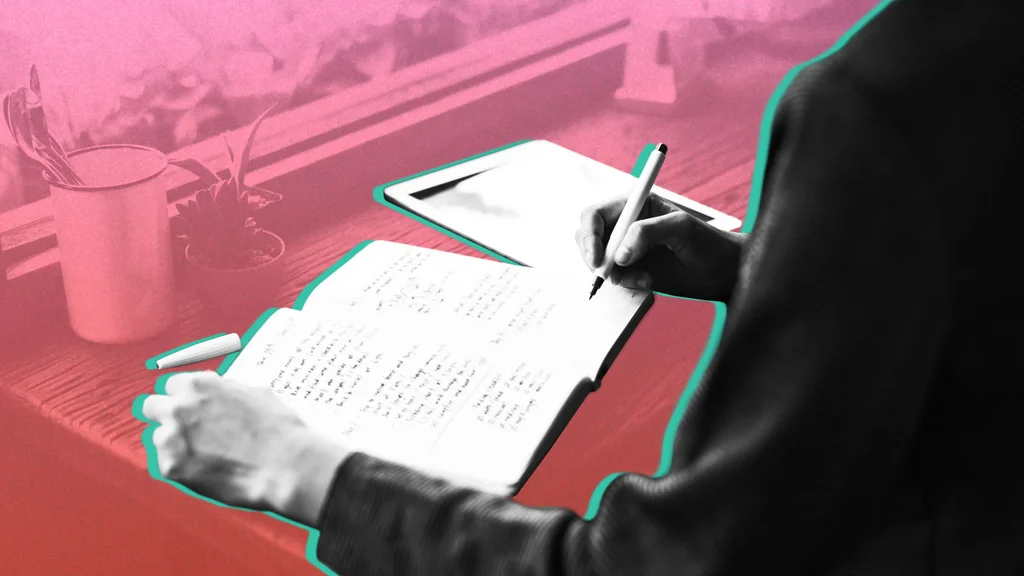

There’s something magical about taking a blank piece of paper and pen (or a laptop if you prefer) and working out what you want in your life, how that intersects with what the world needs, then building it, from scratch. I’ve done this many times now—on Madison Avenue as an executive charged with starting brand new divisions and as a CEO/founder of both a technology startup and a philanthropic nonprofit.
The most important thing when facing a blank slate is to bring your uniqueness to bear. As Melinda Gates said: “Treasure the things that make you uniquely you. The world doesn’t need more people who think and act the same—so resist the temptation to conform to what’s around you.”
New business ideas require out-of-the-box thinking. Here’s how I navigated my blank-slate journey when launching my first technology startup, Strategy Farm, which I later sold to advertising giant Havas.
THE INCUBATION STAGE
It was 2008, which, much like today, was a time of global economic uncertainty, financial market gyrations, and seemingly limitless new concepts in technology. I was an executive in the advertising industry and had just transitioned from the Boston HQ to New York.
The contrast between those two offices sparked something in my imagination. This was the year when millennials were starting to make their mark in the workplace, bringing new ideas and new ways of thinking. We’d never seen digital super-users like them before. I could see where the future was heading for my industry in terms of more collaborative, multi-skilled teams driving the economy.
As I often do, I tracked my observations in the lined Moleskine notebook I always carry with me. I recommend doing this; there’s a real psychological benefit to the physical act of writing in terms of brain activation and memory retrieval.
It’s also crucial to have a place to ideate that’s separate from your regular workplace, whether a traditional or home office. It might be a favorite coffee shop, a quiet spot in the local park where you won’t be disturbed, or a comfortable nook in your home. At that point of time, for me, it was an entirely new place, away from the city and my usual routine.
CREATE SPACE TO INNOVATE
Every person has a different concept of what creative space looks like. For me, it’s beautiful chaos. I need to be able to get messy. Throw my things on the floor if I want to, grab a huge roll of craft paper to sketch out ideas on, a pinboard to arrange notes on. That sort of thing. For me, nothing is structured until it really needs to be. I am not afraid of the blank page.
With any intense periods of focus, it’s important to take breaks to let the ideas flow. Once or twice a week, I’d drive upstate to a farm our family decided to purchase in Northern Westchester. This became the place where I invested in dreaming about a different future for myself. As we had little or no furniture, the house itself was a blank slate. I’d write and write and write.
As the little town near our farm was still new to me, it was stimulating to walk around, check out the stores, get a feel for the area, grab some fresh produce, go back home, and get back to the task at hand.
I don’t think it’s a coincidence that my best thinking flourished there. It’s how Strategy Farm came to life. Our new home inspired the name, and its logo was an illustration of the barn on our property, fashioned into a barcode design.
KEEP THE IDEAS FLOWING
Even after we launched Strategy Farm, there were still blank pages ahead. Slowly but surely, I started to hire people, find partners, source clients, and build the business. We set up shop at a funky architect’s space in Manhattan’s Flower District before it became a cool, agency-populated part of town. We got creative with our space, opening up all the doors, putting up huge brainstorming boards right up to the high ceilings, and encouraged collaboration and lots of water cooler moments.
When starting out, avoid shutting any ideas down, even if they sound naive or crazy. Dr. Amy Edmonson, Professor of Leadership and Management at Harvard Business School, has written extensively about psychological safety. There’s no point of having a multiplicity of viewpoints and a richly diverse crew if people are afraid to go against the grain. It’s a waste of intelligence. I like to keep things light and celebrate enthusiasm in order to nurture creativity. Brainstorming opportunities and tools should not be confined to an organization’s “early days.”
BUILD ON EXPERIENCE
I knew it was bold to start a digital agency in 2009, especially one that was purpose-driven, and a new idea. I think back on this time with great pride. My method of blank-slate incubation, innovation, and relentless pursuit of new ideas had delivered the positive change I was seeking. So, when I came to start my nonprofit organization, Creative Spirit US, I went through a similar process, confident that I had the experience to thrive amid uncertainty.
It’s exciting to start with a blank slate, to imagine how the world would be better if your wildly imaginative and brilliantly collaborative ideas became, you know, real.
When I was growing up, it was all about fitting into the status quo. Now, if I could tell my younger self anything, I’d say you’re far more resilient than you think. Now, pick up that ballpoint pen, settle down with your laptop, and start taking notes on what you want to do with your life.
Laurel Rossi is the CMO of Infillion, which powers connected consumer experiences at scale.