

I am an artist and designer of experiences who believes the value of my work is defined by the emotional connection between the viewer of my art and the audience’s engagement with the experience I have created. As a matter of fact, I buy into the premise that artwork or experiences don’t become real until this happens.
Stefano Catalani, executive director of Seattle’s Gage Academy of Art, articulates this well in an article published in the Seattle Times:
“But visual art such as drawing, painting, and sculpture can’t exist by itself, because art is also a process or an event that happens only in the presence of an audience. Until that encounter—that moment of shared experience and communion—even the greatest oil paintings by Monet, Rembrandt, and van Gogh are not art at all. They are just canvases where paint was spilled. Why? Because like the proverbial tree that falls in the woods, no one has experienced it.”
So, what moves the viewer to some form of action, physically or emotionally, the moment they engage? It is the profound connection formed when the viewer interacts with a creation via any combination of the five senses (sight, smell, sound, taste, and touch), which arouses an emotion or a memory. When this happens, you have a human connection.
A great example of this is Paquin Entertainment Group’s “Beyond Van Gogh,” an immersive experience created by taking Van Gogh’s famous paintings and converting them into larger-than-life animated digital art via projection technology. The senses of sight and sound are beautifully brought together to arouse your emotions, sparked by memories from art school of Van Gogh’s life story or when you first saw “The Starry Night” at the MoMA in New York. It rekindles memories, and you leave the experience inspired to paint or learn more about this genius.
It is worth diving deeper into behavioral science, as recently covered in a blog post by Justin Bolognino, CEO of the Meta Agency. He referenced the work of Ken Wilber, an American philosopher who created a construct around human behavior defined in the principles of synchronicity architecture.
The foundation of these principles connect back to the concept of synchronicity, which was first introduced in the work of Carl Jung to describe “circumstances that appear meaningfully related yet lack a causal connection.” It gets pretty deep but is worth exploring, as it provides the science behind the art. But as I mentioned earlier, I am an artist and designer, so I’ll stay in my lane for this article.
To move an audience of one or many to action, physically or intellectually, you must start with an artful approach designed so an individual can personally connect with the work. Designing with the senses as the palette and creating with the viewer in mind from the beginning is the consistent ingredient to the most meaningful connections. It is this connection that leads the audience to action, whether it’s screaming at a concert or sporting event or applauding or booing at the end of a speech.
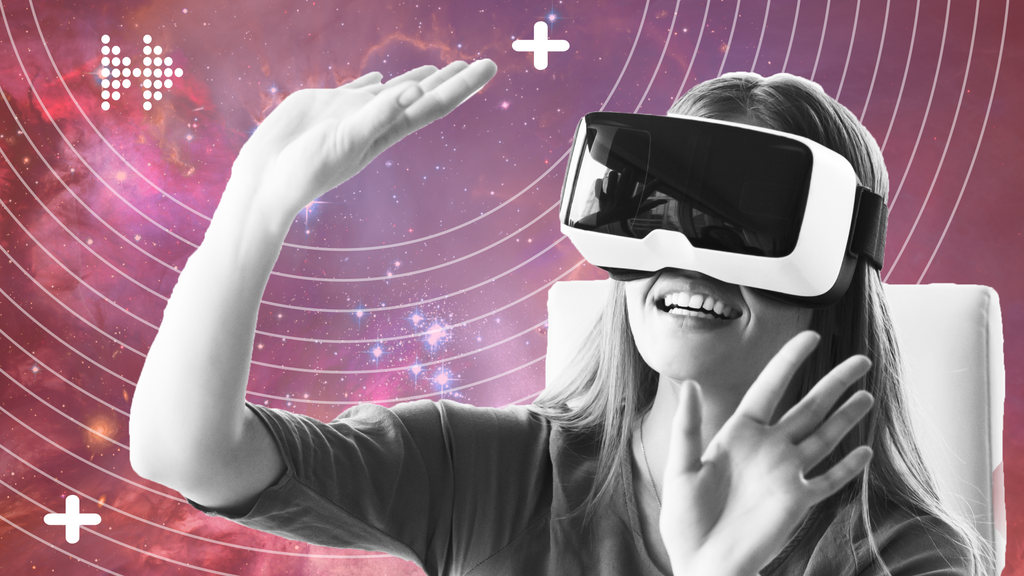
Whether in-person, virtual, or social, artfully designed experiences create energy that leads to change. But without a human connection, does the art or experience really exist? And how will this work in the context of the Metaverse, where physical, virtual, and social intersect?
In the Metaverse, the individual has the ability to create their own hyper-personalized engagement and, in essence, make the connections they desire. This might become the art form with the greatest potential for creating an emotional connection between the audience and viewer because the engagement is self-directed. The creator is the viewer and they are adapting their engagement in real time, as they desire.
The ultimate self-directed immersive engagement with an outcome that’s also self-directed—sounds amazing. Touch is the only missing sensory in the new dimensions of the Metaverse. But I suspect this won’t always be the case.
Jeff Rutchik, EVP, Global Strategy and Design, Freeman, +40-yr experienced creative executive leader, and passionate artist