
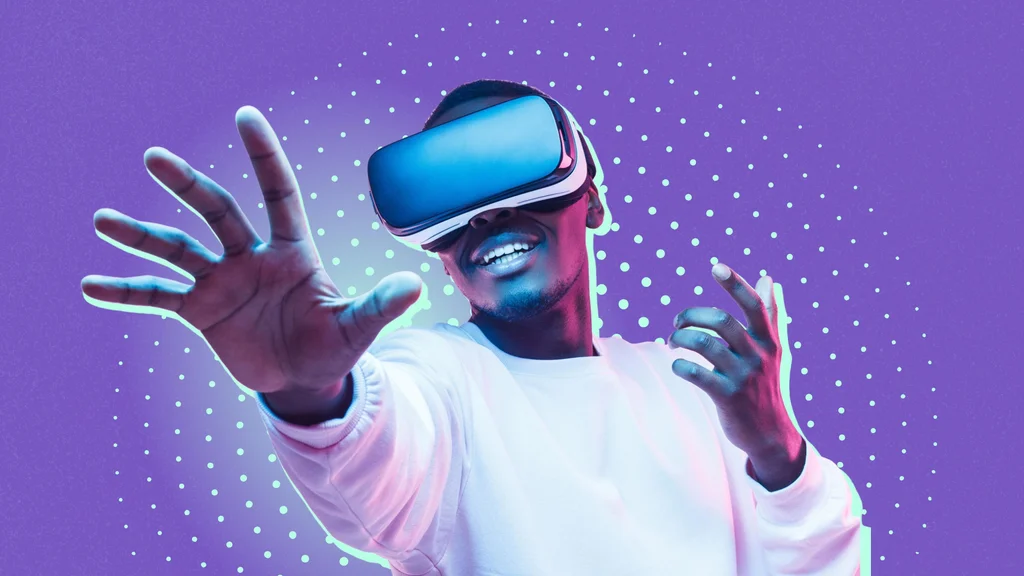

The world of product design, like almost every other industry, has a finger on the pulse of the next big thing to happen to us since the internet. The metaverse is undoubtedly the buzzword of the day, with some industries counting on the next-generation internet platform to transform the digital world as we know it.
The metaverse is expected to impact every aspect of our lives, from how we interact with our friends to the assets we own, the products we buy, and how we experience the world around us. While many metaverse enthusiasts are highlighting how several industries will essentially move to this online commercial utopia, adapt to a meta future, or simply risk obscurity, this might just be a little more hype than warranted. For instance, while there is no doubt the metaverse opens extensive opportunities for design and product development, I believe the future of product design is very much rooted in the real world—the world of physical objects that we already know and inhabit.
While the metaverse is made up of virtual 3D space, the real world is where we will continue to encounter physical objects. There is likely to be some overlap between the two; for example, guided cars, hybrid objects that allow you to make changes dynamically to spaces, or hardware that is integrated into virtual spaces. I believe designing products for the physical world is uniquely fraught with potential and innumerable possibilities for the future.
DESIGN FOR THE PHYSICAL WORLD
In my experience, product design for our physical world is a complex endeavor that is far less understood than software development. It takes extremely specialized and skilled teams of people from various disciplines to create and constantly improve the objects and even the various components that make up the products we use every day. Unlike in the virtual world where a product with glitches can be constantly updated and released with fixes, there is very little tolerance for error in the physical world, so getting it right the first time is critical.
Product design involves unique challenges, from understanding every aspect of mechanics to managing data privacy concerns, and from planning around the availability of components to the need to constantly test for the real world. To bring a product idea to life, companies often need to partner with a design firm that has the relevant deep experience and brings together a team with the required competencies that fill their own knowledge and skill gaps in creating a product and taking it to market.
Ideally, the design process focuses on a unique user and aims to provide a solution or improve on something making it more efficient, appealing, and useful. Design partners need to explore the space of buyers and users, research every aspect from the competition to technology that needs to be used, and take ownership over several stages from identifying the right manufacturer, sourcing components, distribution, pricing, and taking the product to market. Expertise in creating and selling successful products of their own is invaluable in a design partner.
Design firms should ideally work interactively with the business team as a single point of contact for the company, be a knowledge partner as well as empower decision-making, select low-risk high-value design decisions with the client, and manage and mitigate the risk that comes with new-product-development territory. Marketing experience embedded in the design team adds value to the process of connecting a great product with its ideal customer. Today, it is possible and necessary for a company with a new product idea or even a specific problem they would like to solve to find a design partner that can empower and support them in realizing their vision with transparency, integrity, and all-encompassing expertise.
DESIGN FOR THE FUTURE
Companies are always looking for product ideas that are likely to be commercially viable and find the right product-market fit. Naturally, there are some arenas where innovation is in great demand. When it comes to the areas where I believe we are likely to see the most innovation and “killer app” product development in the future, health could be a major driver with new and exciting wearables, connecting wellness, sports, and motivation. Bio-data collection and presentation to the user for immediate feedback is at the heart of the value. There is even a wearable that helps golfers improve their game! It’s intriguing to imagine what’s next.
I believe physical products that improve and enhance social connection and tech that fosters informative live interaction are likely to really take off in the next few years. Education is another area where I anticipate significant opportunity for growth and the introduction of game-changing new products. Sustainability and energy use awareness in product design and development has also moved from a nice-to-have trend to a core value that I see companies designing their products around and marketers using to brand and take their products to market.
The metaverse too, while far from being the all-encompassing future in my opinion, brings in personal and collected data to a wide platform of applications and opens exciting opportunities for real-world devices that improve virtual experiences and interactions. However, from fitness trackers that use and measure airflow quality to assess performance, to devices that clean and sterilize cellphones, to smart devices improving sexual health and well-being, the physical world is experiencing innovation like never before. In fact, as the real world and virtual world integrate more seamlessly, our world as we know it and constant improvement through the design of everyday things we encounter inform even our ideas of what the metaverse could look like tomorrow.
Kevin Bailey is the founder and president of Design 1st, and has 35 years designing and delivering hardware products for clients.