

For many organizations, growth milestones and sustainability goals might seem to be at odds—focusing on one is often perceived to come at the expense of the other. Despite increasing consumer focus on more sustainable lifestyle choices, the uncertain economic landscape is causing some companies to place environmental and social goals on the back burner in favor of prioritizing the bottom line.
For B-Corp-certified Tru Earth, an organization that makes earth-friendly household cleaning products while also battling plastic waste, the business model equally prioritizes financial, social good and environmental goals. With a 944% growth rate over the past four years, the organization’s critical cause—making true lasting change that helps save the planet—is more than a vision: It’s an actionable commitment that is integrated throughout every facet of the enterprise and its ecosystem.
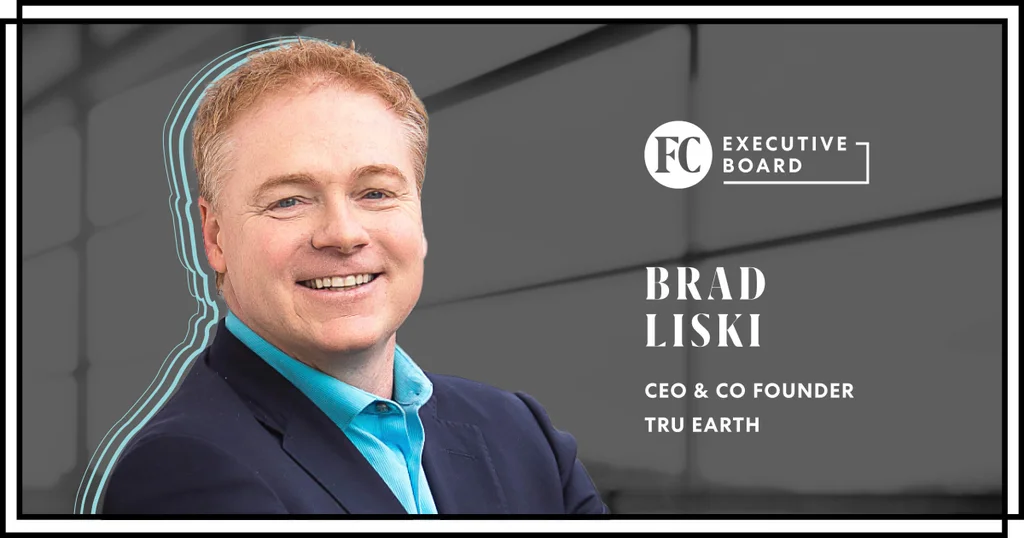
“We have several board-ratified mandates: We wanted to become a B-Corp certified company, donate millions of eco-strips, have a dedicated ESG department and undergo regular climate-smart audits and materiality assessments,” explains Tru Earth CEO Brad Liski. “By prioritizing these KPIs, as opposed to just profit and revenue, we’re in a strong position to keep sustainability as the focus of what we do.”
Liski describes Tru Earth’s work as existing “at the intersection of environmentalism, social responsibility, and capitalism.” In addition to the company’s impressive revenue growth, Tru Earth has donated 26 million loads of laundry detergent to in-need individuals and organizations around the world and with the help of its #TruChangemakers—its customers—has prevented 125 million plastic jugs from being created. Tru Earth is on track to increase its donations by 18 million this fiscal year alone, bolstered by an ambitious program where, for every $25 of Tru Earth products purchased, no matter the retailer or channel, Tru Earth will donate a month’s worth of laundry detergent to one individual. “We believe that cleanliness is a human right and that business leaders have a responsibility to help the most vulnerable among us,” said Liski. In doing so, Tru Earth hopes to “frame up” a paradigm in which capitalism and social and environmental responsibility can all coexist.
RESPONSIBLE PRACTICES FROM TOP TO BOTTOM
To be sure, meaningful socially responsible practices must be implemented throughout every stage of an organization’s internal culture, supply chain, labor, production and distribution processes. Liski says that social responsibility and climate responsibility overlap when it comes to manufacturing: “We take a careful look at living wages and safe working conditions, and that’s why we manufacture in North America and stay in North America,” Liski says. “The Canadian and the U.S. labor laws are much stricter, relatively speaking. They protect the workers, and that’s important to us. We could make a lot more money if we produced our products offshore, but we’ve opted not to do that.”
The same holds true for sourcing ingredients, Liski says. “We make sure we understand the supply chain. Are our suppliers adhering to ethical practices? Do we push them through regulation? Do we make sure that we’re regulated, monitored and audited? Those are all part of the process,” Liski says. He also acknowledges that this approach is a more expensive way of doing business, however, it’s aligned with Tru Earth’s critical cause and responsible practices.
In view of Tru Earth’s growing customer base, especially in the U.S., the organization has taken pains to ensure that distribution is “getting closer to the customer to help offset carbon emissions,” Liski says. In addition to its facilities in the Pacific Northwest, central and eastern Canada, Tru Earth has packaging now in Utah and a distribution center in Tennessee, along with over a dozen smaller distribution centers throughout the U.S. “Reducing this distance is a big part of the process,” Liski says. While he acknowledges that it would be more profitable to have one big facility and just ship their products from there, “that’s not the way to attack the CO2 emission problem.”
WHEN CAPITALISM AND ENVIRONMENTALISM CO-EXIST
Despite these concessions to logistics or revenue in service of environmental responsibility, Tru Earth remains profitable, boasting a two-year revenue growth of 8408%—a challenge to what Liski sees as a “common misconception” about the incompatibility of growth and sustainability. “Environmentalism and capitalism are complementary forces,” he says. “Too often, I’ve seen leadership teams, boards of directors or shareholders say, ‘We didn’t hit our targets, but let’s cut back on some of our spending on donations, or let’s scale back some of our ESG requirements, because they’re not necessary to the business overall.’ And I feel this is a mistake.”
For Tru Earth, compatibility of visions and goals—from the C-suite to the customer—has never been a problem. “One of the key elements to our success is that we’ve had the right board and the right investor group that have both supported us in prioritizing environmental and social good responsibilities and commitments at the forefront of our business,” Liski says. “As we’ve grown, we’ve reinvested in our social enterprise—and our customer, seeing that, has made a decision to stay loyal to us as a brand.”
THE UNSUSTAINABILITY OF NON-GREEN APPROACHES
Liski predicts that companies that choose to focus purely on profit are likely to confront issues down the road. “Capitalism in its purest form, if it disregards social responsibility or environmentalism, eventually won’t exist,” he says. “The demand by consumers for sustainably-produced products by ethical, eco-conscious organizations will continue growing, and eventually, companies focused purely on capitalism could lose their customer base.”
To succeed today, Liski says, companies must take ownership of the challenges of social and environmental responsibility. Only then can they create products or services that will change the world in a positive way. “There’s something that we say here constantly that I find resonant, in that it underlies everything an environmentally focused company must do,” Liski says. “‘We have to be bold; we have to stretch our thinking and we have to go faster.’”