

Chat buttons that take up too much screen real estate. Flashing animations that rapidly move around the screen. Videos without subtitles.
For some users browsing the internet, these three examples of UI/UX design choices can interrupt their experience. But for other users, these web design choices are a matter of accessibility, making it challenging or impossible for them to get the information they need for school, work, or fun.
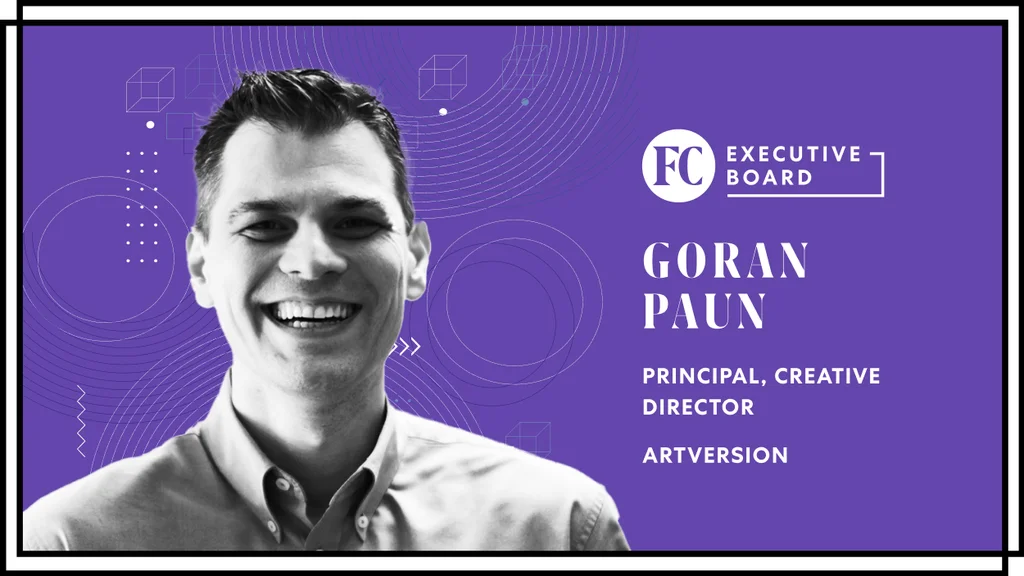
For the principal and creative director of the digital design agency ArtVersion, Goran Paun, and his multidisciplinary team, accessibility has always been an essential cornerstone for creating robust user experiences. The mission has always been clear-cut yet ambitious at ArtVersion: enhance usability and accessibility for all users across all digital design projects. Since 1999, the team has advocated for accessible design. But now, there are advancements in technology that enable them to create unforgettable user experiences without chasm.
“When it comes to UI/UX, usability and accessibility are still major challenges for many web properties,” says Paun. “But it’s still essential that we create an inclusive web. Our goal is to create platforms that are inclusive of everyone regardless of their abilities.”
TACKLING THE SERIOUS PROBLEM OF INACCESSIBLE UI/UX DESIGN
Unfortunately, inaccessible UI/UX design is a prevalent problem online. In its 2023 report, web accessibility nonprofit WebAIM examined the top million home pages online and found that “4.8% of all home page elements had a detected accessibility error. Users with disabilities would expect to encounter errors on 1 in every 21 home page elements with which they engage.”
Paun explains design has an obvious visual component, but brands must also pay attention to the invisible elements that make up the user experience. He points out that while some design choices might appear enticing and harmless initially, a closer examination unveils serious accessibility flaws.
“For instance, chat buttons that float take up significant real estate on a mobile screen, which could make them inaccessible to users navigating websites with a screen reader,” he says. “Flashing animations are another example. They pose risks for people with epilepsy and other seizure disorders.”
Some companies, Paun notes, add accessibility widgets to their websites. Such widgets can be helpful in some cases, but they don’t address the root cause of non-inclusive websites: the actual code itself. That’s why ArtVersion’s team of web developers incorporate accessibility functionalities natively to simplify the experience for users of all abilities. This further ensures that a website is fully compatible with assistive technologies, such as screen readers, speech recognition software, and alternative input devices. It’s an important behind-the-scenes process.
“Addressing the code itself is essential,” says Paun. “Layering another type of technology on top of faulty code just creates more complexity.”
BUILDING SEAMLESS WEB EXPERIENCES FOR ALL USERS
Usability and accessibility are the backdrops of ArtVersion’s process, notes Paun.
“Our end-to-end methodology is one we consider every step of the way,” he says. “From conceptual planning to more refined design concepts, the details that go into each contour of design are purposeful. Our team incorporates design languages that aren’t solely based on aesthetics but on accessibility compliance as well.”
Inclusive web experiences are important from a moral standpoint and delightful web experiences from a business one. Inclusivity and delight combined add up to seamless web experiences where all users can navigate a given website with ease.
“For every project we work on, we make sure it’ll be accessible to every user,” says Paun. “We natively incorporate accessibility and design best practices and current web standards into the code and design. We use design as a language and tool to create great experiences for users that ultimately translate to companies accomplishing their business goals.”
For the ArtVersion team, creating seamless web experiences starts with empathy—understanding what different users need and what pulls them toward the company in question. The ArtVersion team blends its decades of expertise with data-driven practices to connect those dots and make the right design choices. Human-centric design, as they call it, has the ability to reconceptualize the mindset of designers, developers, and other stakeholders. When the drive for every project is no longer tethered to the sole idea of aesthetics and is instead about placing the user at the forefront, the possibilities for amazing design come into clear vision, explains Paun.
To connect those dots, Paun and his team do a deep dive into each brand they work with. They analyze the brand itself, as well as its industry. Specifically, they leverage observations, surveys, and testing to jump into the headspace of users, create corresponding user personas, and build user journeys and user pathways.
“Through observations and surveys, we can create more seamless user experiences,” says Paun. “For example, if we notice that a workflow is a five-step process, we’ll plan to minimize those steps, increasing the likelihood that users will come back and use the platform for their needs.”
After their extensive analysis, the multi-disciplinary ArtVersion team starts wireframing, iteratively undergoing the design process to ensure everyone is on the same page. Each team member involved in a project brings their unique expertise, such as UX writing, UX design, and graphic design, to the table.
As ArtVersion works with brands, the team emphasizes establishing design languages for them. That way, brands have a visual roadmap that guides them on accessibility, usability, and inclusivity that they can turn to at any point in the future.
“We go beyond style guides and brand standards,” says Paun. “We give our clients language that speaks to their legacies and who they want to be moving forward. In essence, we help them craft their corporate identities.”
POWERING DEEPER CONNECTIONS BETWEEN USERS AND BRANDS
Paun and his team work with brands in various industries, such as finance, healthcare, manufacturing, and SaaS, among others. Industry aside, Paun notes that the goal is the same—eliminating friction through the design process.
And when end users have frictionless experiences on platforms, they can forge deeper connections with brands, becoming advocates or brand ambassadors. Those deeper connections translate to higher user retention and new user acquisition numbers; products can essentially sell themselves via product-led growth.
“Happy users make for happy companies,” says Paun. “ArtVersion’s philosophy extends beyond the expectations of the average user. Our team is setting the bar for intuitive and emotionally engaging design across the entire industry.”