
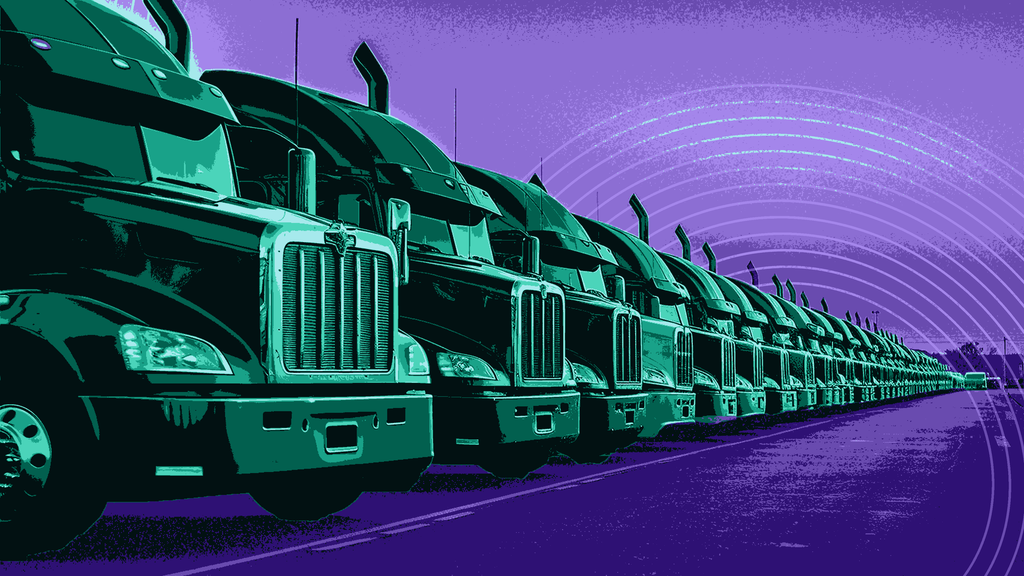

Drayage is the critical supply chain link you probably haven’t heard of until the pandemic hit. With greater attention and competition, this$6.2 billion industry is finally experiencing a technical renaissance.
It was only last year that I drove past a miles-long line of trucks waiting to get into the port of New York and New Jersey hauling empty containers. Drivers parked their trucks in a queue and sat overnight because the terminal had opened a window of time to return empty containers and avoid the per diem fee (which is like a fine for an overdue book, only for a 5,000- to 9,000-pound shipping container).
This waste of time, money, and energy is an everyday occurrence in ports around the U.S.—and around the world. It is difficult to believe that in this era of digital everything, we still have systems that leave drivers waiting in line along Corbin Street for hours, idling multi-ton, fuel-consuming vehicles.
WHY IS THIS STILL GOING ON IN 2023?
Drayage, which is short-haul trucking usually from ports or rail yards to distribution centers or warehouses, is an industry that has not evolved for decades. The majority of drayage carriers operate with “homegrown systems” using spreadsheets to track their work.
Dispatchers personally contact each driver using phone calls or text messages to get status updates and relay critical delivery updates. Information moves slowly, takes up too much human time and creates errors. The “first mile” of our shipping gets snarled as a result.
PANDEMIC LESSONS INSPIRE COMPETITION
Efficient drayage is critical to move goods closer to their destination and keep ports working smoothly. It’s like the domino effect. If containers can’t be removed from the port quickly, the terminal can’t take in another ship that is waiting offshore, resulting in long lines and delays.
During the peak of the pandemic, drayage received renewed focus because it was one of the major links in our supply chain that was under strain. With a shortage of drayage drivers and an increase in traffic, ports were hustling for solutions to move containers around and bring in dozens of ships idled outside the port.
Although the pressure has abated for now, demand on the supply chain will wax and wane. Drayage capacity will need to increase to meet projected demand. In a study that we commissioned, we found that due to the cost-versus-ROI associated with entering the market, the growth will come from carriers increasing their market share. We expect to see fierce competition among drayage providers trying to capture that market share.
That is the kind of competition that inspires innovation.
APPLYING TECH TO THE PROBLEM
Some are focusing on electrification and infrastructure. While important, they won’t address the problem of capacity and efficiency. But freeing carriers from manually driven processes such as spreadsheets and repeated phone calls to drivers by integrating tracking, reporting, and communications can.
That is not a simple task. Drayage is a connector, relying on the requirements and interfaces of warehousing, ports, steamship lines, regulating agencies, and their own drivers. They need to be integrated with mission-critical reliability.
For instance, each of the 12 terminals at Long Beach and Los Angeles—the largest in the U.S.—each have a unique portal for dispatchers to access in order to book appointments. When a dispatcher with drivers heading to Long Beach starts a shift, they log into 12 different web portals. Just the act of integrating the communication to these 12 locations into a single appointment interface can reduce complexity for the dispatcher and save hours a day.
Because drayage has made the headlines and gained attention, and because competition between existing carriers has them looking for advantages, technology offers an opportunity to improve this link in our supply chain.
I believe doing things the old way will only further clog up the supply chain. Using technology solutions instead of sticky notes and spreadsheets can optimize planning, efficiently utilize resources, and give visibility to both internal employees and customers.
In the year since I made that video showing lines of trucks idling outside the port, progress has been made in introducing efficiency to the drayage community. If another pandemic were to occur, that same backup might happen again. As competition inspires drayage carriers to modernize and ports to adopt better systems, I’m confident that the backups and bottlenecks will become more manageable thanks to technology that gives full visibility and connectivity.
Instead of lines of idling trucks, we can have an outstanding first mile.
Toni Ann Careccio is chief customer officer & board member at PortPro Technologies, Inc. She leads client experience and onboarding.