

According to Nonprofit Quarterly, the ability to adapt to challenges and changing circumstances is often what separates nonprofits that succeed from those that fail. This is especially true in the face of a major crisis.
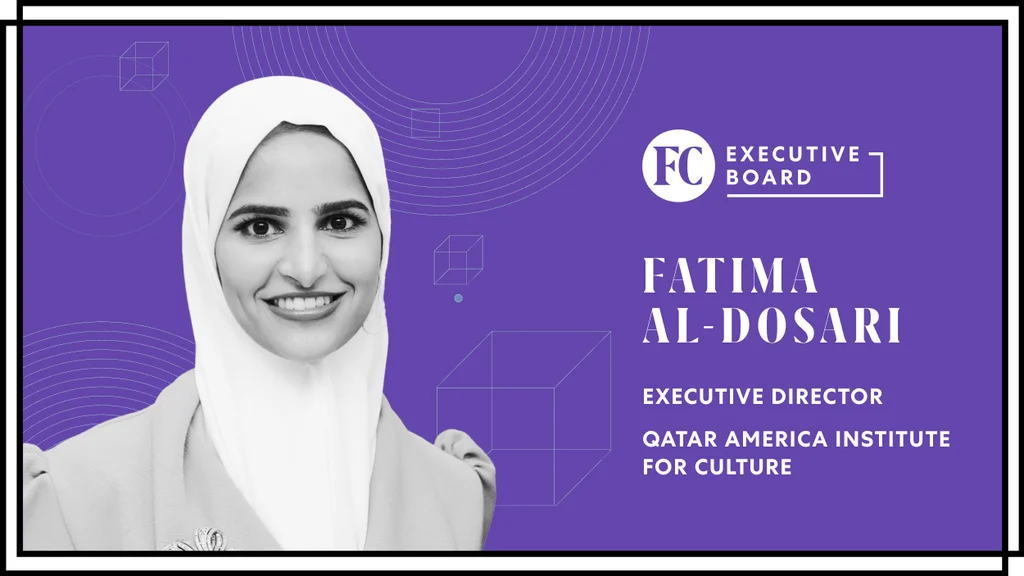
Fatima Al-Dosari, Executive Director of the Qatar America Institute for Culture (QAIC, pronounced “cake”), experienced this first hand. While QAIC is now a well-known nonprofit facilitating art and cultural exchanges between Qatar, the U.S., and the larger Arab and Islamic worlds, the nonprofit was forced to adapt as a result of the COVID-19 pandemic, and emerged a stronger, more streamlined organization.
After being promoted to executive director in 2019, Al-Dosari’s first task was to focus the organization around a singular mission, a tall order during the best of times and infinitely more challenging in the midst of the pandemic.
“I re-founded the organization in 2020 to focus on the shared culture, history and heritage between the people from both countries, and making our experiences more meaningful, interactive and focused on human-centered design, including looking at qualitative and quantitative methods to measure our impact,” she explains.
To start, Al-Dosari established three priorities for the team to focus on:
• The value provided to QAIC’s audience.
• The capacity within the team and board members.
• The support—financial and programmatic—QAIC receives from its partners, members, and audience.
A big part of tapping into that support was providing value for members through the organization’s membership program. This, in turn, helped build loyalty by changing the relationship with members from transactional to more of a family-oriented relationship where members experience a deeper engagement and connection to the mission. Al-Dosari also focused on the organization’s Perfumery Museum, which opened in 2021 as a unique way for visitors to experience an olfactory journey highlighting the best of Qatari, Arab, and global cultures.
That focus on culture and arts is very important to Al-Dosari, especially in a world where the two often take a back seat.
“Some people look at art and culture as a luxury, but we see it as a necessity for communicating diverse viewpoints, resulting in increased tolerance and empathy,” she explains.
GETTING EVERYONE ON BOARD
Establishing a mission with supporting priorities is one thing, but actually transforming an organization and getting everyone on board is an entirely different challenge. To achieve this goal, Al-Dosari ensured the entire team felt like part of the organization’s evolution.
“We held a mapping workshop with all the stakeholders from board members to key staff members to partners,” she explains. “Everyone who mattered to the future of the organization sat down, and we tried to visualize who our audience members were and what they valued.”
An important part of the workshop was ensuring QAIC properly communicated its mission. Landing on something that felt meaningful to the team at large took a lot of back-and-forth and many iterations of the mission.
Al-Dosari believes this type of pivoting is a situation many nonprofits may face, but she emphasizes the benefits of doing so, especially for organizations that face shifting priorities and new circumstances.
“The beauty of what we do with art and culture between Qatar, the United States, and the larger Arab and Islamic worlds is relevant for a lot of people, with their eyes on the Middle East and the questions they have about what’s happening,” Al-Dosari explains.
“We created an inclusive and diverse space for people to come together, appreciate various forms of artistic expression, and engage in meaningful dialogue. They can have a voice for peace-building through the arts. And it’s the best form when you understand someone’s identity, when you understand someone’s cultural background.”