
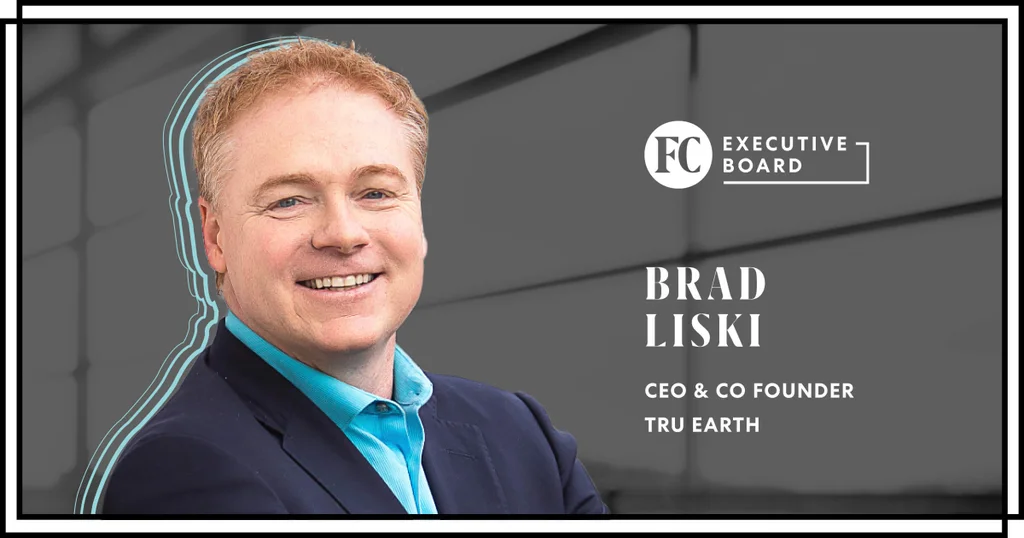

During this year’s golden quarter, typically a frenetic time in retail and other B2C sectors, leaders are likely also focused on charitable donations. At Tru Earth, giving to those in need isn’t a seasonal activity; rather, the organization’s robust global donation initiative gives to communities in need throughout the year. The program is rooted in a philosophy of “clean giving,” and per Tru Earth’s CEO and co-founder Brad Liski, this means “giving with no strings attached, no quid pro quo, no matching program, and no expectation of anything in return.”
For many companies, this type of giving may be hard to envision; frequently, organizational giving is inextricable from reputational enhancement. Liski is emphatic that, with clean giving, a company’s image is not the point. “On the surface, it’s kind of counterintuitive to everything we’re taught in business. But the dividends are long-term and massive,” he says.
Liski also emphasizes that clean giving has to work for both the giver and the recipient. “It needs to be cleanly given and cleanly received for true impact. This means keeping in mind your bottom line while identifying unmet needs in society that your organization is equipped to address—and then providing quality products, services, and solutions, as opposed to donating excess inventories that are not quite perfect for sale,” he explains. “Of course, those are important to give away as well, rather than landfilling. But true clean giving, from a perspective of corporate social good, occurs when there isn’t a connection to profits or revenue lifts.”
This season, over and above the 33 million loads of laundry eco-strips that Tru Earth has already donated through partnerships with Feeding America, Feeding Hong Kong, Food Banks Canada, and The Trussell Trust in the UK, among others, the organization is donating U.S. $2 million worth of non-detergent products, such as multi-use silicone bags, beeswax wraps, reusable shopping bags, and lunch kits.
The $2 million donation is split between two organizations close to the Tru Earth founders’ hearts: $500,000 is allocated for the Greater Vancouver Food Bank, and the remainder to the Homeless Prenatal Program in San Francisco. “Food banks are at their highest need in a very long time due to high inflation and interest rates and uncertain economic fluctuations,” Liski says. The Homeless Prenatal Program, he explains, “is committed to breaking the cycle of poverty for moms and children by helping to find housing for them while also providing support services and guidance to help them get them back on their feet. They’ve been a partner of ours for a while, and this was a perfect fit.”
For Tru Earth, identifying and giving to community members in need is part of its business model. “We equally prioritize environmentalism, social good, and capitalism, because it’s at that intersection that corporations must exist. That’s where we thrive and our position as a registered B Corp underscores this commitment. The B Corp paradigm, Liski explains, codifies the manner in which businesses “can and should give back year-round, not just in the holiday season.” (Throughout the year, for every $25 of Tru Earth product purchased anywhere in the world, online or in-store, the company “gives one person in need clean clothes for an entire month,” Liski says.)
But that impetus to give year-round, and not just in December, “also shouldn’t be limited to B Corps,” Liski emphasizes. “We want to set an example and urge business leaders to give throughout the year, making it a core part of their mission and leadership strategy. The issues affecting people in need don’t stop in January. They’re year-round. They just get a spotlight during the holiday season.”
Organizations should also not feel deterred from clean giving by small size, Liski notes. “You don’t have to be so big that you create a foundation. Because many of us can’t create foundations, but can still meaningfully give back,” he says.
Most importantly, Liski urges organizations to make clean giving consistent and practicable. “To keep clean giving top of mind, you need to think beyond the monetary support and consider providing quality in-kind solutions that address unmet societal needs,” he explains. By “in-kind,” Liski means the same service or product in which the company specializes. “In-kind is an important way of doing it, so that you can take care of it within your own P&L structure. That way, you don’t always have to write a check,” he says. “There’s another way to cleanly give.”
Liski is bullish on organizations’ capacities for clean giving, even if it may not seem immediately apparent to their leadership how this can occur, or what they can contribute. “Every business has the power to implement clean giving and make a positive impact. Full stop,” he says. “We survive and thrive because our respective communities support us. And one way or another, your customer is your community. So, in order to have long-term sustainability as a business, you need to support that community. That’s the simplest and only way forward.”