
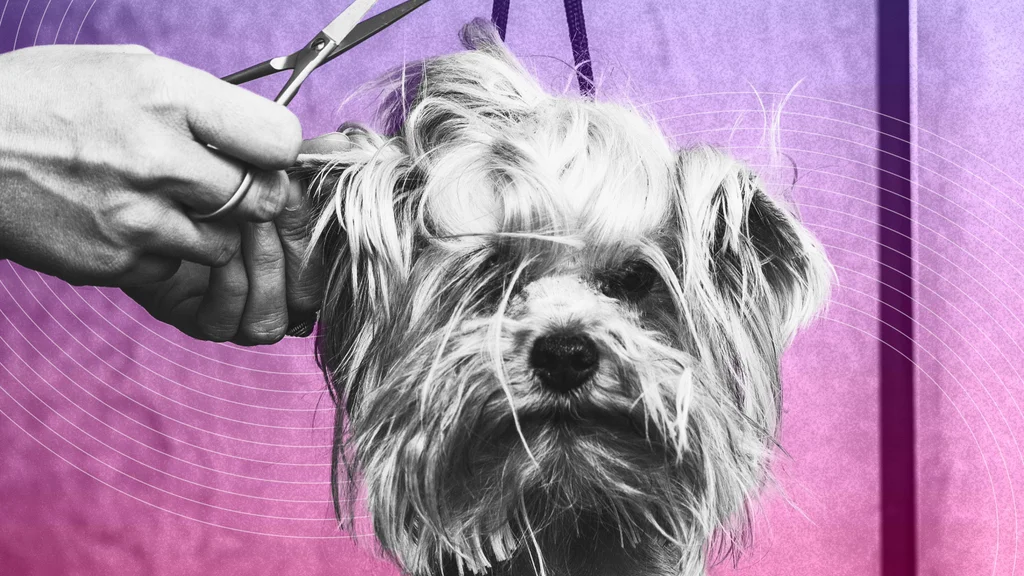

Cages, high anxiety, and weeks-long wait times—miles away from home. This is how many dogs experience grooming. But with the help of Wilbur Labs (founded by ex-Google employees Phil Santoro and David Kolodny), Jeff Safenowitz and his team at Barkbus are changing that—one luxury mobile van at a time.
The pet industry is one of the fastest-growing consumer segments. Morgan Stanley estimates the United States pet industry will grow to $275 billion by 2030. And grooming is part of that growth. As the Humane Society of the United States explains, regularly maintaining dogs’ fur, ears, nails, and teeth “prevents painful and costly health issues that may require a veterinarian.” According to data from IBISWorld on the U.S. pet grooming and boarding industry, “pet owners’ steep spending on pets” resulted in “industry-wide revenue to expand at a CAGR of 2.8% to an estimated $11.8 billion” between 2018 and 2023.
The grooming landscape, Safenowitz notes, has historically been dominated by salon grooming.
“Traditionally, you take your dog to the salon,” Safenowitz says. “But as the world has been shifting to premium at-your-door services, mobile grooming has been building momentum.”
A CATEGORY-DEFINING OPPORTUNITY
Safenowitz shares that he and Patrick Riley, Barkbus’ co-founder and chief technology officer, had grown up with dogs and disliked taking them to grooming salons.
“Taking our dogs to the grooming salon was always a stressful process for our dogs and ourselves,” Safenowitz says. “We tried mobile grooming and loved how much more comfortable our dogs were. While it was a superior experience, we quickly realized that finding a great mobile groomer was hard, and booking one was even harder as most of the landscape is run by independent owner-operators with limited technology and availability.”
The problem, Safenowitz explains, is scaling; a sole proprietor running a mobile grooming business with one van can only have so many customers, and due to the recurring nature of grooming, it can be tough for customers to book appointments when needed.
Seeing an opportunity, Safenowitz and Riley got to work in 2017. They began prototyping the concept that would eventually become Barkbus in Los Angeles. In 2020, the duo connected with Wilbur Labs to help grow and scale the business. Santoro points out that the timing turned out to be consequential, as pet ownership and home delivery surged during the COVID-19 pandemic.
“We met with Jeff and Pat back in 2020 as the world was rapidly moving to door-to-door services for everything,” Santoro says. “Barkbus was accelerating a trend that was already underway, but for pet care—a space that was ripe for disruption.”
Kolodny explains how the Wilbur Labs model has been instrumental to Barkbus’ growth.
“Being able to leverage our shared resources and operations enabled Jeff and Pat to focus solely on building,” Kolodny says. “Barkbus went from two vans in Los Angeles to over 60 in three states today.”
A NEW APPROACH IN AN ANTIQUATED SPACE
Taking dogs to grooming salons, Safenowitz notes, is a “stressful and inconvenient experience for both the dogs and the pet parents”—and that’s what Barkbus is changing.
“The unfortunate truth is that in most grooming salons, dogs sit in cages for hours,” Safenowitz says. “That, combined with all the sounds, smells, and stress from other dogs around, makes it unsurprising that dogs aren’t usually the biggest grooming fans. When you add the stress and inconvenience for pet parents, it becomes even more clear that there is a gap in the existing service offerings. Grooming should be about health, wellness, peace of mind, and convenience, which is why we started Barkbus.”
With a Barkbus mobile grooming experience, all dogs get one-on-one service from a professional groomer in a calm environment—no barking from other dogs, no having to wait in cages for their owners to pick them up. Dog owners also benefit. They don’t have to battle traffic or worry about how their dog is doing at a grooming salon, not to mention how their dog might feel and act afterward. They always know how their dogs are doing; the Barkbus team sends dog owners photos of their dogs throughout a grooming session (the soapy mohawk shot is a specialty). And dog owners can quickly book online once it’s time for the next appointment.
Leveraging technology has been a crucial component of Barkbus’ success. According to Safenowitz, Barkbus has optimized routes, implemented AI-driven customer support, and built a custom CRM to create “seamless” experiences for dogs, owners, and groomers.
“Dog grooming is an area that has had little to no technical innovation to date,” Safenowitz says. “Barkbus needed to think from scratch.”
Artificial intelligence, in particular, has enabled Barkbus to deliver great customer experiences, Safenowitz explains.
“We’re a very text-heavy business, and we want to respond quickly to ensure an A+ customer experience,” Safenowitz says. “Right now, we use AI to route our inbound messages to the right team, which creates efficiencies and saves time.”
Safenowitz adds that Barkbus has an AI chatbot called Astro that chats “directly with returning customers” to help them quickly book appointments that best suit their needs.
“Astro makes an arduous booking task seamless for customers and increases loyalty,” Safenowitz says.
ACCELERATING GROWTH IN 2024 AND BEYOND
When Wilbur Labs and Barkbus initially sat down together, Kolodny says, it was apparent they had a “shared goal” to make Barkbus “a category-defining brand” in the grooming space.
“It’s been exciting to watch that come to fruition,” Kolodny says. “While Barkbus has doubled revenue each year since its inception, we’re even more excited about where Barkbus is going to go and the growth opportunities ahead.”
In 2023, Barkbus launched its services outside of California—Dallas, Texas, and Phoenix, Arizona. Safenowitz notes that both markets have experienced rapid growth.
“We’ve gotten many five-star reviews for excellent service along the way,” Safenowitz says.
Safenowitz shares that the company plans on continuing its expansion across the United States in 2024, starting with Houston, Texas, and Atlanta, Georgia in the first half of the year. He notes that he and his team plan on leveraging AI to continue building more systems and processes that enhance the customer experience and create operational efficiencies.
“We believe that grooming should be fun and relaxing and are excited to bring our services to many major cities across the US in the coming years,” Safenowitz says.
But while technology is essential, Safenowitz stresses, he and his team members also recognize the need to blend it with “human service.” Providing a great work environment with paths for career progression for Barkbus groomers is a huge part of that (all are employees rather than contractors). Another key element? The seemingly little things that go into delivering great customer experiences. He points to the Barkbus-branded bandanas that every dog walks out with—and how one of those bandanas helped bring a lost dog home.
“We got a call from a good Samaritan that found a dog in the street,” Safenowitz says. “The dog had no collar or identifying information but had our blue Barkbus bandana. Our team was able to search through photos in our customer database to identify the dog and get him safely back home within hours.”
It was a “feel-good moment” for Safenowitz and his team—one that reiterated the importance of going above and beyond for dogs and their owners. “We love what we do and are excited for what’s ahead,” Safenowitz says.