

Rapid, substantial growth is a central goal for many early-stage startups. They strive to secure large amounts of venture capital to scale as quickly as possible. Yet there are drawbacks to growing too big too fast, as demonstrated by familiar boom-and-bust cycles in the tech industry and the most recent wave of layoffs.
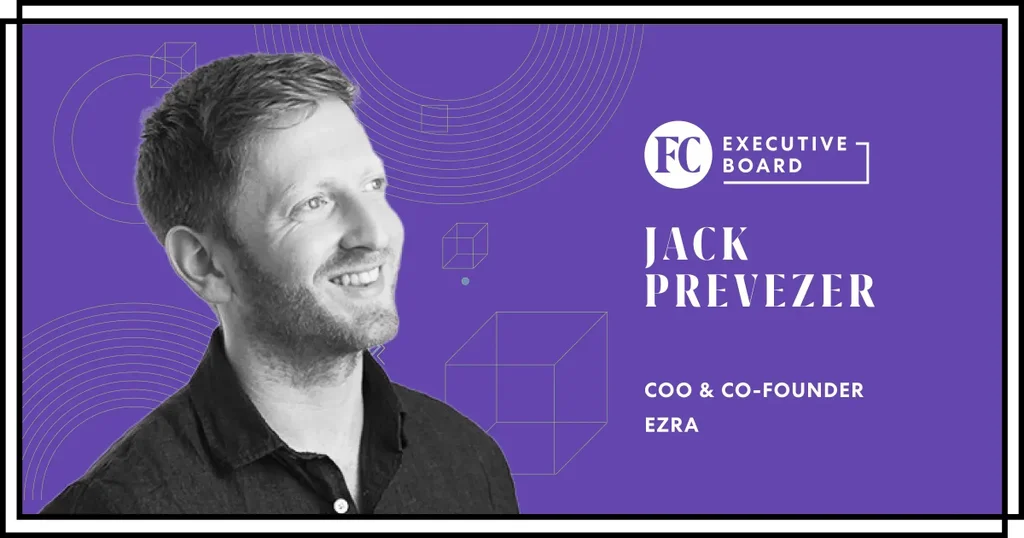
In the classic fable, the steady, consistent tortoise surpasses the swift but overconfident hare by avoiding rash decisions and maintaining a sustainable pace across the finish line. This tale offers valuable lessons for startup leaders who are often pressured to pursue aggressive growth at all costs, according to Jack Prevezer, COO and co-founder of the virtual coaching and learning platform EZRA.
Over the last five years, EZRA has become one of the largest coaching providers in the digital space—not through venture capital funding but with the support of “patient capital” from its parent company, the talent advisory and solutions organization The Adecco Group.
“We had this vision to scale and democratize one-to-one coaching, and the market really responded to it,” says Prevezer. “There was a clear product and market fit with our customers, large enterprises looking to bring the superpower of one-to-one development and coaching to more people in their organizations. We reached an inflection point in the context of our growth where we could have overspent rather than being more sustainable and conscious in how we grew. And we went down the latter path.”
As EZRA has prioritized innovation and steadily built its team, client base, and revenue over time, The Adecco Group has provided ongoing investment—but with long-term, not immediate, returns in mind. A major challenge of venture capital or private equity models, explains Prevezer, is that investors expect quick returns on their investments. This pressure can force startup leaders to make decisions that aren’t in the best interests of the business in the long run.
“When you scale too quickly, I think you lose touch with your essence, what makes you special,” says Prevezer. “You have to hire too quickly, with less care, and you risk losing the culture. When you’re forced to enter markets at speed, you can lose focus on what’s important. And ultimately, when you are under pressure to deploy capital at speed, it can distract you from your core strategy.”
KEY MARKERS OF SUSTAINABLE GROWTH
At EZRA, sustainable growth is rooted in focus. The company’s leaders are hyperfocused on their mission to expand the reach of one-to-one professional development to as many people as possible. They aren’t distracted by chasing improbable dreams or off-brand ideas; they concentrate on their primary purpose of driving performance in the workplace.
Prevezer outlines three key factors that show a business is scaling sustainably.
• Continuous growth: Consistently increasing revenue, clients, offerings, and other business metrics
“There hasn’t been a year since we started five years ago where we haven’t significantly grown year on year, indeed, quarter on quarter,” says Prevezer. “Every year we outpace ourselves, growing and achieving our mission.”
• High client retention: Partnering with clients to deliver measurable results and nurture lasting relationships
“Once clients start working with EZRA, they stick around,” explains Prevezer. “They begin to use one-to-one coaching and development in more and more places. And I think they appreciate the fact that we’re not going away, that we’re so focused on delivering our mission, and we’re so in lockstep with their mission that they can trust us.”
• Strong culture: Investing in an organizational culture that makes people feel safe, heard, cared for, and valued
“We’re only as good as our people,” says Prevezer. “To retain and develop our people, it’s incredibly important that we preserve our culture. We live and breathe our core values, and they’re embedded in the fabric of daily life. When we started, we had a very flat, nonhierarchical structure, and it’s still something we passionately try to stick to, even though we’re now close to 400 staff. We can because we’re growing our headcount sustainably, rather than wildly. We still get to know everyone. It’s an important part of feeling like you’re in a family, when you go to work and are supported by people who are living their values every single day.”
EZRA’s story still features rapid growth, but without the pitfalls that have befallen other high-growth startups. It may even seem counterintuitive at first glance: a corporate-backed startup gaining market share in a space crowded with venture-funded competitors. But Prevezer emphasizes that startup leaders can learn far more from the tortoise than from the hare.
“In the tech world, venture money has dried up, but we’re clearly unaffected by this,” he says. “We’re continuing to grow significantly and hit our targets. My advice for other leaders is: Find the right investors who are patient, supportive, and will grow with you as you evolve your business. Be strong in your conviction. Our conviction is that we have a sustainable strategy and that we make wise decisions supported by data. When your investment is scarce, rather than unlimited, it forces you to make informed decisions. I think we’ve made the right bets that have paid off in the medium and long term—and we’re only getting started.”