
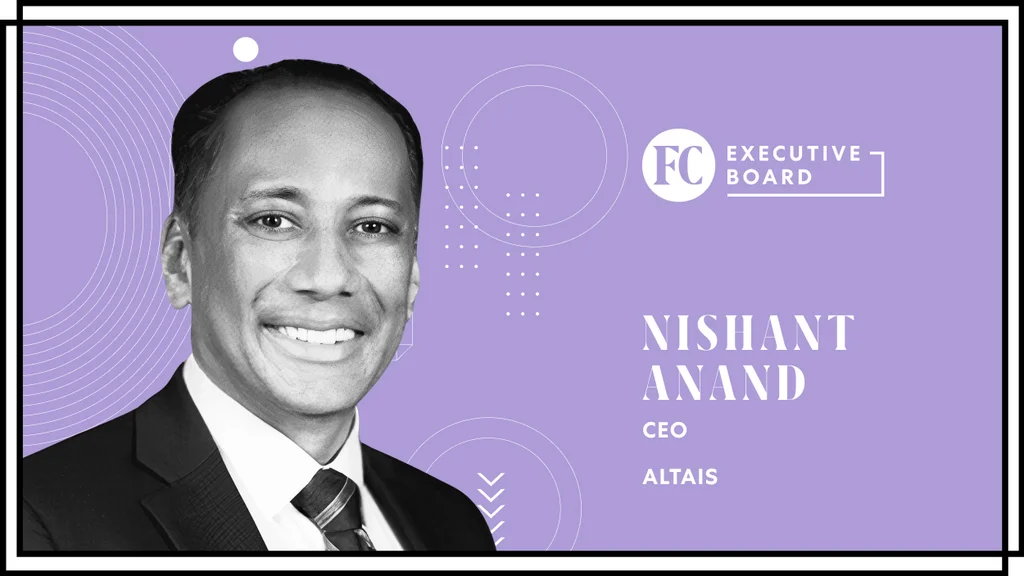

The healthcare industry is changing rapidly. Today’s patients want more than just clinical treatment—they need personalized support and options that adapt to their lives and needs. Technology is opening new possibilities, allowing providers to shift their focus to what matters most: building meaningful, human interactions with their patients. Altais is embracing this shift and rethinking the way care is delivered, making both patients and providers central to their mission.
CEO Nishant Anand set out with a straightforward goal: to create a healthcare experience that responds to each patient’s unique needs, one that values relationships and lets the right business model grow naturally from there. In this article, Anand opens up about the journey of scaling patient-centered care at Altais, from early challenges to key lessons learned through home visits, and how focusing on community care is elevating healthcare standards.
NAVIGATING EARLY CHALLENGES
Starting Altais meant making some tough decisions on where to focus early efforts. “Prioritization is key,” Anand explains. “You need enough scale to be sustainable, but you also have to quickly determine what brings value to patients.” Balancing growth with a strong unwavering commitment to quality care wasn’t always easy.
The team soon realized they couldn’t tackle everything at once—they needed to focus on areas where they could make a lasting impact. Building the right leadership team was essential to this. “We needed leaders with expertise,” Anand says. “But even more important was getting everyone aligned with our mission.”
In healthcare, every role is interconnected. When one team member succeeds, the entire organization benefits. Fostering this kind of shared purpose meant that every member of the team understood their role in delivering patient-centered care.
LEARNING FROM HOME VISITS
Implementing home care brought valuable, sometimes surprising insights. Visiting patients in their own homes revealed factors that would rarely come up in a clinical setting. Altais found that details like loose rugs or expired medications—small but significant risks—could only be identified by observing patients in their home environments. Noticing these details meant they could sit down with patients to address health and safety concerns that otherwise went unnoticed.
At first, only physicians and nurse practitioners conducted home visits, but the team quickly realized that most conversations weren’t about medications. Many of their conversations centered on practical health practices, like mobility and basic wellness. Recognizing this unmet patient need, Altais introduced health navigators to guide patients on these everyday health matters and make care more adaptable to patient needs.
ENGAGING WITH COMMUNITIES
Altais knew from these conversations that there were huge benefits to meeting people where they were. So, they started hosting health fairs and community events—not just to provide checkups, but to connect with people directly. “Healthcare needs to be close to home,” Anand says, adding, “Each community has unique needs, and if we’re not speaking to those, we’re missing the mark.”
These gatherings turned out to be about a lot more than health screenings. They helped connect people with resources and build trust by showing up in their neighborhoods. By learning the needs of each community, Altais made healthcare feel like a part of everyday life, not something far removed. While centralization is an essential part of healthcare, local efforts are becoming more and more impactful.
EMBRACING TECHNOLOGY FOR BETTER CARE
Looking ahead, Altais sees technology as an essential partner in improving patient care. They’re using AI to take care of routine administrative tasks, which frees up doctors and clinicians to spend more time with patients. “AI is great for the day-to-day work that doesn’t need a human touch,” Anand explains. “But it’s never going to replace the expertise and personal judgment our clinicians bring to the table.” This careful balance between technology and hands-on care keeps things efficient without losing the personal connection.
As more patients become comfortable using digital tools, Altais makes it simple for them to manage their own health data. Giving patients this option helps them feel more in control and deepens the trust between them and their healthcare team.
TRUST AS THE FOUNDATION
The core of Altais’s approach is built on a straightforward idea: focus on what’s best for patients, and the rest will fall into place. “If we focus on helping our patients, the business model will follow,” Anand says. This outlook shapes every choice they make, from hiring decisions to the services they offer. Building trust by staying true to these values has been key in creating a healthcare experience that both patients and providers can believe in.
For Altais, patient-centered care underscores a broader commitment to making healthcare better every step of the way. In a time of rapid change, Altais’s story shows that by focusing on relationships, using technology in smart ways, and keeping an eye on continuous improvement, healthcare providers can build a system that delivers great outcomes at an affordable price.