

“A brand is a promise. A great brand is a promise kept,” Walter Landor, the founder of the eponymous global brand consultancy, once said. The idea that “a brand is made in the mind,” not in a factory, still shapes Landor’s work over 80 years after its inception. But today’s customer is more fragmented, distracted, and empowered than ever. So how do you make—and keep—a brand promise when the rules are constantly rewritten?
Business owners and brand managers face a harsh reality. Budgets are squeezed. Marketing has transformed from a brand-led monologue to an always-on dialogue with customers with high expectations. The media landscape has broken into many pieces, diluting a brand’s control. Creators are cherry-picking brand elements. Emerging tech is rewiring brand asset creation. In this chaotic world, how can brands not just survive, but dominate?
YOUR BRAND: YOUR TOP BUSINESS ASSET
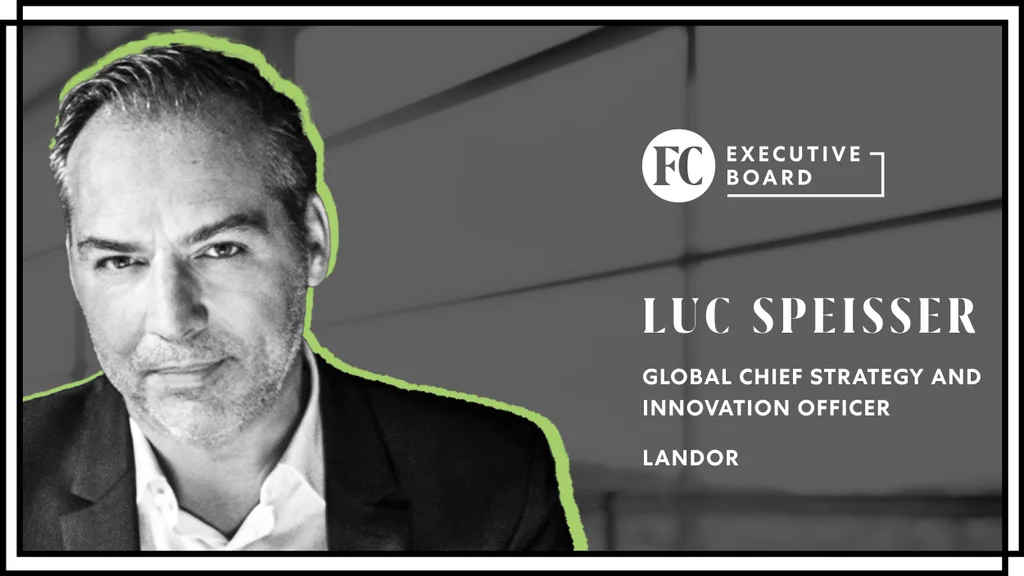
The answer, according to Luc Speisser, global chief strategy and innovation officer at Landor, is simple: Recognize your brand as your most valuable asset. This means constantly and seamlessly connecting three things: define, make, and keep your brand promise.
“I’ve been teaching branding master classes for 20 years, and I always start by asking: What’s the last brand you bought, and why?” says Speisser. “I’ve seen a massive shift. Early on, a third would say, ‘I bought it because I love the ads.’ Now, 99% say, ‘I bought it because I love the design, the product, the experience.’ It’s not enough to talk about your promise. Customers will judge you by how well you live it. To win, you have to keep on keeping your promise with relentless innovation.”
Yet an estimated “70% to 90% of innovations fail.” According to research from Bain & Company, the winners “reinforce the company’s purpose and create mutual value” for everyone involved. They address unmet needs in a unique way that champions the brand’s core promise. Unfortunately, customer trust is tanking. Today’s consumers are savvy, skeptical, and exacting—and they expect brands to keep their promises.
“What we’ve seen is that organizations are siloed,” explains Speisser. “Marketing, innovation, R&D, HR, and finance are all working from different playbooks. Marketing needs to define and ignite the promise through all branded assets. Then other departments need to deliver that promise through products, services, people, and spaces. Often, there’s a disconnect. It has to be a joint effort from day one.”
Organizations need a holistic approach to nail their brand promise and stay relevant. Brands are trying to extract meaningful insights from massive datasets.
“With personalization, we all have our individual channels now,” says Speisser. “Nobody watches the same thing at the same time anymore. Brands need to produce more content, but for smaller groups. It’s a challenge to personalize at scale while maintaining brand coherence.”
STRATEGIES FOR KEEPING YOUR BRAND’S PROMISE ALIVE
To tackle these obstacles, Speisser recommends that brands:
• Constantly connect the dots: “Build a unified brand experience driven by a laser-sharp promise. We’re shifting from channel strategies to one brand promise brought to life through a holistic method. The future isn’t about shouting louder. It’s about connecting the dots to connect deeper. It’s about building brands that resonate, become a key part of culture, and are a part of people’s lives way beyond the transaction. We must create a symphony of connections powered by the human heart. Only this way can we make brands less vulnerable and more valuable.”
• Combine relevance and difference: “The temptation is to focus only on relevance driven by customer-centricity. The problem? The more relevant you are, the more you penetrate the market. But that is not enough to guarantee sustainable competitive advantage. Our research shows that 80% of the biggest brands have dropped in differentiation. You need to combine relevance and difference to build something your competitors can’t touch. We’ve measured that this drives margin and future growth. And we can now predict this margin and future growth for any brand we are working with.”
When Landor was invited to pitch for a Kellogg’s packaging redesign, Speisser and his team saw an opportunity. They used their brand asset evaluation framework to uncover that Kellogg’s was strong on attributes such as “original,” “authentic,” and “trustworthy”—attributes shared by the top 20 food brands. This led to a recommendation to elevate Kellogg’s master brand, unlock the power of their iconic assets, first through packaging and concluding last year in a new brand identity.
The result is Cornelius the cockerel now front and center, symbolizing Kellogg’s optimism and its influence on starting the day on a positive note. Landor’s versatile asset design system aims to celebrate the creativity of personalized breakfast moments. Highlights include liberating “the OG,” a distinctive asset that was always there, built from the Kellogg’s logo. Along with a distinctive new type, also born from the logo, specifically the K and the apostrophe. These new brand assets are amplified through the new “See you in the morning” communications campaign by Leo Burnett.
“All of the brand’s assets reinforce Kellogg’s promise,” says Speisser. “They multiply relevance and difference at scale.”