
Artificial intelligence has effectively commoditized code production, allowing a single developer to match the output of an entire engineering pod. Software teams have reached a point where simply adding new software features to operating systems is the bare minimum, not a winning strategy.
The volume increase creates a massive problem: Writing code is now basically free, while the cost of making sure that code doesn’t break your existing system has skyrocketed.
Stripe’s research found that developers spend over 17 hours a week just fixing things that are already built, costing the global economy an estimated $85 billion every year. If your team is spending half their time on maintenance, your speed is an illusion.
The real advantage now belongs to companies that can ship constantly without their quality collapsing. To do that, leadership must stop treating quality as a final step and start making it an automated, continuous part of the entire development cycle.
CLOSE THE GAP WITH AUTONOMOUS TESTING
The real breakthrough in 2026 is not using AI to write test scripts faster. Instead, the breakthrough involves removing the human handoff entirely. In most organizations, code is written, and then the testing team is asked to catch up.
This delay is structural. By the time a regression surfaces, it has often already touched several parts of the codebase.
True autonomy happens when the testing infrastructure reacts the moment a developer opens a pull request (PR). By integrating AI agents directly into the PR validation workflow, the system interprets the intent of a code change and generates relevant test scenarios immediately.
Instead of a senior engineer spending hours manually verifying a code difference, the agent runs a targeted suite against that specific change in minutes. The PR process stops being a queue and becomes a filter. Only validated code moves forward.
PROVIDE CONTEXT THROUGH MCP
For an AI agent to be effective, it needs more than just access to the code on the screen. It needs to understand how the entire application fits together. This is where model context protocol (MCP) becomes essential.
By connecting an AI agent to an MCP server, you give it access to your application programming interface (API) documentation, database schemas, and system architecture. This context allows the agent to perform a few critical tasks:
● Understand business logic: It knows the reason a change was made instead of just seeing what changed.
● Auto-heal scripts: When a user interface (UI) element changes or an API is updated, the agent adjusts the tests automatically rather than breaking.
● Bridge the gap: It allows the agent to debug issues directly in the integrated development environment, or IDE, catching flaws before they ever reach the repository.
Without context, an agent is guessing based on code patterns. By feeding it your system’s specific logic, the agent starts validating actual behavior. That distinction is what separates a tool that catches obvious failures from one that prevents the ones you never saw coming.
RELIABILITY ACROSS THE FULL STACK
Most teams measure reliability by what users see. If the UI loads and the buttons work, the assumption is that the system is healthy. But production failures rarely originate at the surface.
The majority of critical incidents trace back to layers underneath. Testing only the interface while leaving these layers unvalidated is like checking the paint on a car and assuming the engine is fine. A genuine reliability moat requires coverage at every layer:
● UI and web flows: The most visible layer, but often the least informative about root cause. Tests here confirm user journeys work end to end.
● API validation: Endpoints need to be tested for correct responses, edge cases, and how they handle failure under real conditions.
● Database integrity: Queries need to be validated against real schemas under realistic conditions. Mocked responses hide the failures that only appear in production.
● Third-party integrations: External services behave differently in production than in staging. These touch points need active validation, not assumed stability.
WHY DATA MUST TURN INTO TEST INTELLIGENCE
Most engineering teams have plenty of data like logs, dashboards, and alerts, but they lack the intelligence to act on it. They can see that a test failed, but they can’t always see why. To build a reliability moat, you need test observability to see deep into the execution layer.
Testing platforms can allow teams to plug in this observability layer to identify if a failure was a network glitch, a database timeout, or a genuine logic flaw. With test analytics, leadership can identify chronic hotspots in the codebase that are prone to failure. Instead of guessing where to spend your engineering budget, you have a data-backed map of your application’s risk profile.
THE NEW ROLE OF TECHNICAL LEADERSHIP
In the past, the vice president of engineering was responsible for the output of their team. Today, they are responsible for the systems that govern that output. Moving to an AI-native quality framework is not about cutting costs. It’s about ensuring that as code velocity increases, reliability keeps pace with it.
Software reliability is the foundation of your brand. It is your primary defense against competitors who can ship features but cannot ship trust. By investing in autonomous agents and intelligent analytics, you aren’t just improving your quality assurance process. You are building a system that ensures your company can scale as fast as the market demands without breaking.
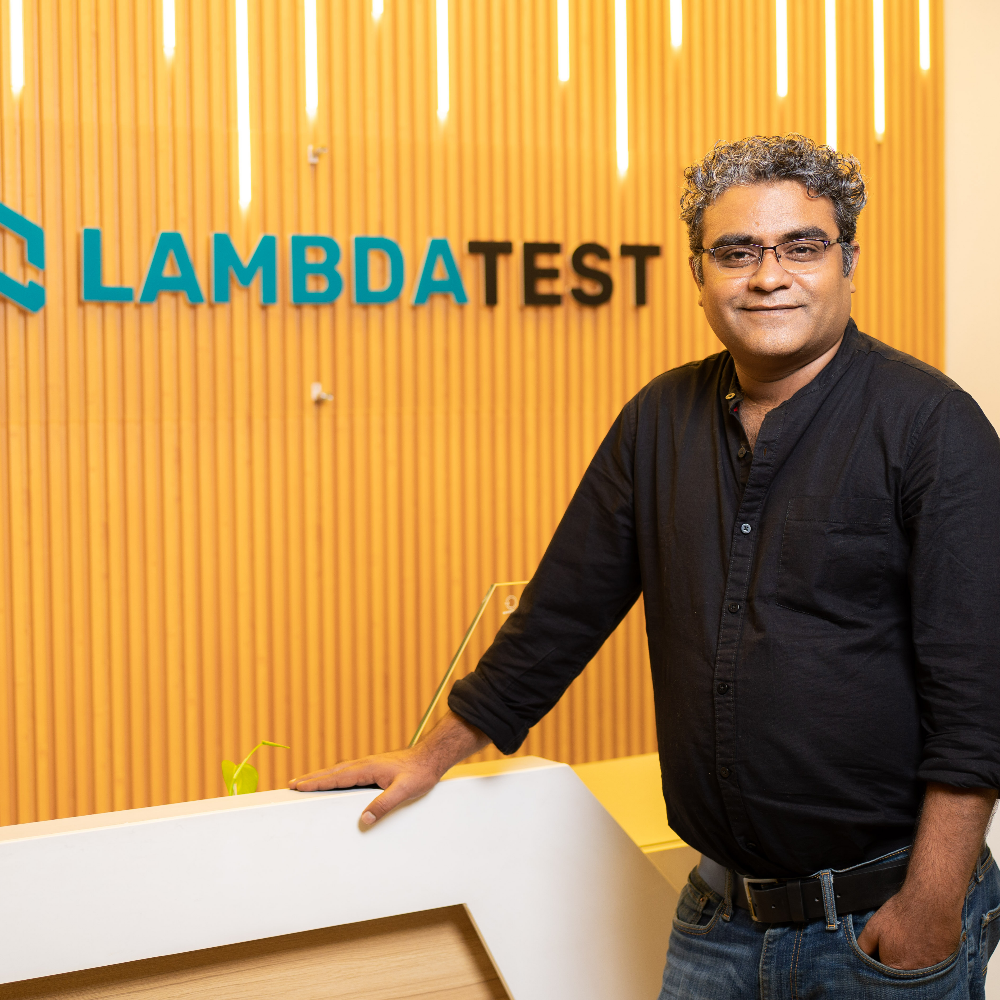
Asad Khan is cofounder and CEO of TestMu AI.