Fast Company Executive Board
41 leaders debunk AI myths
What executives think organizations misunderstand about artificial intelligence.
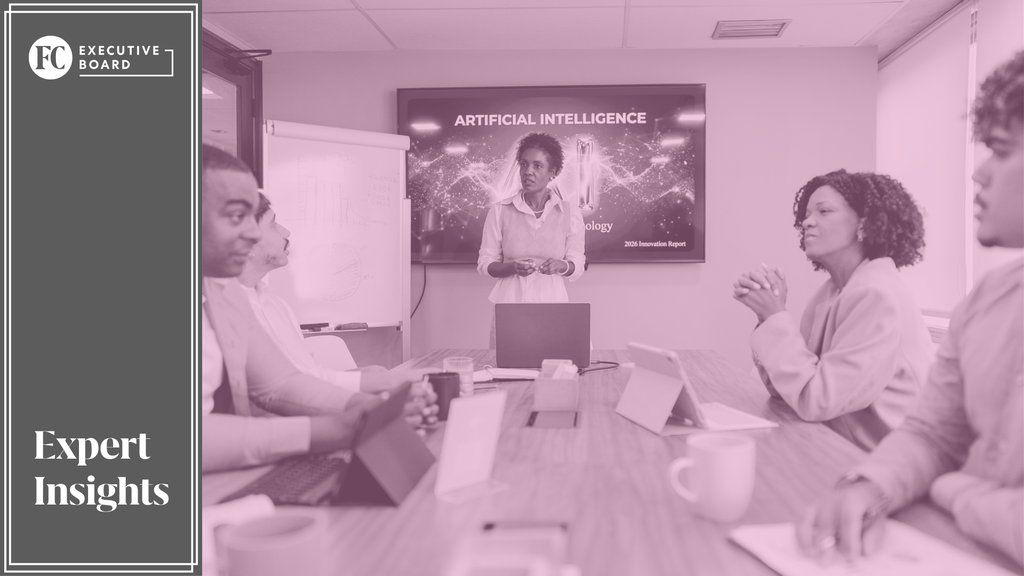
The Fast Company Executive Board is a private, fee-based network of influential leaders, experts, executives, and entrepreneurs who share their insights with our audience.
I believe advertising is broken. Not for lack of technology. The pipes are built, inventory is commoditized, optimization levers are everywhere. Advertising broke because we optimized behavior so aggressively we erased the human. For twenty years, I worked inside that system. Performance got sharper. Persuasion quietly disappeared. Three weeks before my wedding, I was diagnosed with a neurodegenerative disease. Suddenly the brain wasn’t abstract. It was measurable, observable, real. Which raised a simple question: if medicine can measure the brain with precision, why is advertising still built on assumptions? That tension became an obsession. How the brain works. How memory forms. How trust is built and lost. Neuroscience is not new. It already powers systems that help people move, communicate, and reconnect. What it lacked was scale. Advertising has scale. Work from UPenn Medicine, Wharton, and neurotech spinout Cogwear made the missing link clear. World-class neuroscience was decoding emotion and attention. It needed a real-world system to apply and validate it. Advertising was that system. That convergence became GlassView. We now work with 80 of the top 100 brands in the world. Emotion improves performance. Performance funds scale. Scale advances neuroscience. It’s a system that learns from real human response and evolves. This only matters if it serves people first. We’re building it that way.
Neuroscience, Human Behavior, Brand Health
Glassview was founded on the belief that advertising does not have a technology problem. It has a human one. That belief became personal for our founder, J. Brooks, after being diagnosed with a neurodegenerative disease in 2018, just weeks before his wedding. Overnight, the brain stopped being theoretical. It became urgent. Today, J. has two small children at home with his husband. That perspective sharpens the stakes. We are living in a world that feels increasingly lonely, isolated, fearful and divided. Those are not cultural coincidences. They are signals of systems misaligned at the human level. If something is broken, the first step to fixing it is measuring it honestly.
Neuroscience is foundational to understanding how the brain processes emotion, attention, memory, and intention. Additionally, it already underpins efforts to decode motor intent in paralysis and to detect cognitive decline Neuroscience struggles with scale. Advertising has it.
Through our partnership with Cogwear, a neurotech spin out of UPenn Medicine and Wharton Neuroscience, GlassView measures emotional response inside live media environments and validates those signals against real performance. For brands, this restores persuasion and improves advertising performance. For neuroscience, that performance funds the scale required to move understanding of the human brain forward, beyond the lab and into real life.
Artificial Intelligence & Data
Neuroscience, Human Behavior, Brand Health
Fast Company Executive Board
What executives think organizations misunderstand about artificial intelligence.
Fast Company Executive Board
The honest words that can build trust, clarity, and better decisions.

Fast Company Executive Board
Are you prepared for how audiences will react?

Fast Company Executive Board
How the industry drifted from real human signals

Welcome! We use cookies to track visitors to our site and personalize your experience.
If you decline, your information won’t be tracked when you visit this website. A single cookie will be used in your browser to remember your preference not to be tracked.