

Whenever I’m tempted to make predictions—about business, about the planet, about what my son will want for his school lunch—I remember the three most important words for Futurists: “Listen, listen, listen!”
For me, this first involves asking the right questions. And, crucially, it means listening intently—listening to learn, not merely to hear what someone says. Business leaders should be listening to the community at large, listening to Gen Z as they are creating the future, and listening to the data and what it can tell us about the way forward.
LISTEN TO THE COMMUNITY
Education looms large in my Corporate Citizenship work for Samsung. Our signature program is the Samsung Solve for Tomorrow STEM competition for U.S. public middle and high school students. To keep grounded in the field, I’ve been attending local school board meetings—listening to educators, parents, and students. Where do they see STEM education going? What are the implications for companies like mine, which need to nurture future STEM workforces?
I’m hearing shifts in the language of education—away from “problem-based learning” toward “inquiry-based models,” and building STEM learning around “integrated curriculums.” These shifts recognize the curiosity we see in Gen Z; their desire to transcend silos between individual “subjects” to take a holistic approach to learning, life, and work. That’s a principle employers should borrow, emulating education’s adaptations to Gen Z.
LISTEN TO THOSE CREATING THEIR OWN FUTURE
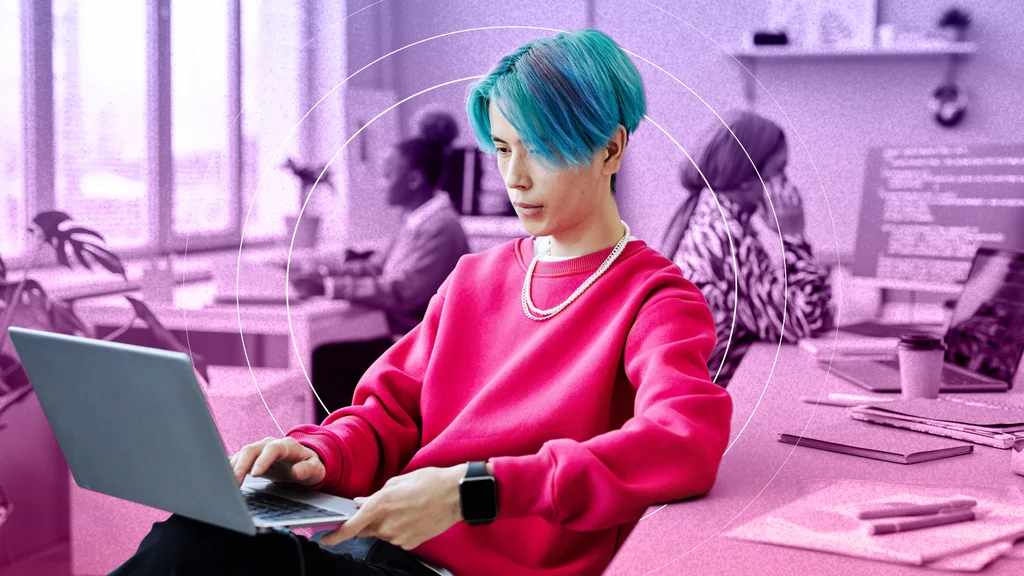
We’re already living in a Gen Z world, and the rest of us need to understand their different perspectives and adopt and learn from them. To better understand Gen Z’s vision, particularly about the future of work, we collaborated with Morning Consult on a survey that found Gen Z is driven by a strong entrepreneurial spirit: 50% want to become entrepreneurs or start their own businesses. That underscores Gen Z’s innovative mindset and drive for autonomy in the ever-evolving landscape of work.
Gen Z anticipates significant changes in the workplace: 58% expect increased use of advanced technologies like AI, machine learning, robotics, and virtual reality, while 41% look for growth of remote and flexible work options. Many (21%) believe AI will create new job opportunities, but more (40%) are concerned AI will cause job disruption in traditional industries. They also prioritize work-life balance, cited by 50%; career growth and skill development, 50%; and job stability and security, 47%.
Those insights are amplified by the experience of Gen Zers who competed in Solve for Tomorrow. Revisiting past years’ winning teams, we’re told time and again that helping people in local communities and helping society at large is a key motivator for Gen Z.
LISTEN TO THE DATA
A key thread behind those winning ideas—and ever more Solve entries each year—is using data to address community problems.
I started my career in consumer insights when marketing campaigns were built around what consumers told us they wanted through focus groups and research, provided we asked the right questions. Over time, marketers learned that data can tell more about how consumers will behave—what they buy, how much, when, and even what they abandon in digital shopping carts.
Actual behaviors are better predictors of consumers’ future purchase decisions than their stated preferences. Analyzing hard data is a more precise way of managing any enterprise—or solving problems. This makes data literacy as vital an employment skill as reading and math for the future of work.
MY CRYSTAL BALL FOR 2024 AND BEYOND
So where do smart companies need to head as businesses and employers? How should they prepare for a Gen Z-populated future?
First, embrace Gen Z’s entrepreneurial spirit in combination with the group’s focus on creating positive change. Build attractive employment environments that encourage creativity and innovation. Showcase how the business is generating a lasting impact. We’re doing that within Solve for Tomorrow, adding a new Rising Entrepreneurship Award to honor a project that proposes a sustainable enterprise as part of its STEM solution.
Also, feed Gen Z’s appetite for professional development by creating pathways for upskilling. Address their concerns about AI tech disruption by putting data literacy tools like analytical and predictive AI into their hands—similar to how retailers use predictive AI models and analytics to optimize a seamless shopping experience.
Finally, sync your organization’s future of work with what Gen Z demonstrates they want—flexibility to enhance work-life balance, opportunities for career growth and development, and an eye toward job stability and security. Above all, ask the right questions and keep listening. Always.
Ann Woo is Head of Corporate Citizenship at Samsung Electronics America.