

AI agentic testing is fundamentally changing how companies make product and market decisions.
We learned this after launching one of the first industry platforms for agentic testing last year at our industry flagship conference, TestMuConf. Subsequent conversations with CIOs, quality assurance (QA) leaders, and product teams revealed that agentic testing is flipping the script in decision making.
Companies are finding that agentic testing uses intelligent systems to plan, adapt, and learn in real time instead of relying on scripts and brittle automation.
WHY TRADITIONAL TEST AUTOMATION FAILS AT SCALE
Traditional QA depends on fragile scripts and record-and-playback flows. Even with early AI-assisted testing, engineers still get stuck in maintenance cycles that slow release velocity.
Agentic AI testing works differently. Intelligent agents can:
- Plan and execute tests independently without pre-written scripts.
- Adapt in real time to user interface changes, API updates, and unexpected edge cases.
- Learn continuously from failure patterns and commit histories.
These agents self-heal, meaning they detect, diagnose, and fix problems autonomously, so updates evolve alongside your product instead of requiring manual updates.
7 WAYS AGENTIC TESTING CHANGES STRATEGY
AI testing agents transform QA from a downstream checkpoint into a strategic growth enabler. Product teams can make decisions based on test intelligence rather than assumptions:
1. Real-time roadmap adjustments based on risk intelligence
Roadmaps used to be static documents set in quarterly meetings and disrupted by unexpected failures. With agentic testing, roadmaps become responsive tools because:
- Agents identify fragile flows, defect-prone modules, and adoption drop-offs.
- Priorities shift based on real risk and opportunity signals.
- Leaders can accelerate or delay features using readiness data instead of assumptions.
As Nitor Infotech notes, agentic AI works like a partner that surfaces insights for recalibration when markets or products shift.
2. Predictive risk assessment for go-to-market confidence
Risk used to surface late in the QA process or after release. Agentic testing identifies risk sooner because it:
- Analyzes defect histories, change frequency, and user behavior to assign risk scores to features and flows.
- Simulates conditions before launching in new geographies or platforms to reveal hidden weaknesses.
- Ensures continuous testing so critical regressions don’t slip while teams focus on innovation.
The result: fewer surprises and stronger confidence in go-to-market decisions.
3. Data-driven feature prioritization beyond business cases
Features were historically approved based on business cases and effort estimates. Agentic testing adds a third dimension: risk and user impact.
- High ROI features may be delayed if agents show they destabilize core user journeys.
- Smaller features can be fast-tracked if they show low risk and high adoption signals.
- Go/No go decisions use real test intelligence instead of gut feelings.
This turns testing into a growth lever, ensuring product strategy combines ambition with evidence.
4. Accelerated release cycles with continuous quality assurance
For years, leaders felt trapped between releasing fast and releasing safely. Agentic testing solves this because:
- Self-healing tests reduce broken pipelines and flakiness.
- Regression testing happens continuously, not just before major releases.
- Every commit gets validated in real-world conditions.
Teams can release products faster with higher confidence, proving that speed and safety work together.
5. Unified quality dashboards for executive decision-making
Testing insights often stayed in QA reports, disconnected from product or strategy. Agentic testing creates shared visibility in these three ways:
- Developers, QA engineers, and PMs see unified dashboards of product health.
- AI-generated reports translate technical test data into business-friendly insights.
- Conversations shift from “what broke” to “what’s the impact and priority.”
Teams finally speak the same language, using data to bridge technical execution with strategic decision-making.
6. ROI impact
Manual testing costs enterprises up to $2.3M yearly in labor and delays. Agentic testing rewrites that equation because:
- Adaptive test agents replace reliance on static scripts and oversight.
- Agents learn, adapt, and execute tests at scale without bottlenecks.
- Testing becomes a driver of scale instead of a drag on velocity.
7. Human-AI partnership for quality at scale
AI won’t replace human testers. The reality is more practical:
- Agents handle heavy lifting like regression sweeps, environment coverage, and risk mapping.
- Humans provide context, validate edge cases, ethical implications, and business logic.
- Human feedback continuously improves agent behavior, creating a learning cycle.
This hybrid model combines machine speed with human insight, building trust, and accountability across the product lifecycle.
MARKET IMPACT
Agentic testing becomes the accelerator resulting in faster go-to-market timeframes and higher quality in this equation:
- From lag to flow: Agentic testing shrinks test cycles from hours to minutes. Teams with tighter feedback loops cut MTTR to 17.5 hours.
- Markets dictate timing: Continuous validation lets releases align with external events instead of QA cycles. Risk-based testing drives 35% higher ROI by focusing on business-critical areas.
- Faster test execution: Agentic test execution dramatically shrinks end-to-end cycles. Boomi reduced test execution time by 78%, cutting runs from about 9.5 hours to under two, while tripling coverage.
These shifts show that agentic testing is part of an ecosystem-wide movement toward autonomous quality engineering.
THE FUTURE IS SELF-EVOLVING PRODUCTS AND AI INTEGRATION
Today, AI democratizes QA by enabling every team to create and manage tests using natural language. But this is just the beginning. Tomorrow’s AI agents will integrate insights from analytics, customer feedback, and product telemetry into strategic roadmaps.
We’ll see hyper-personalized release paths where agents tailor features and roll out timing to segmented user cohorts.
The ultimate vision is a self-evolving product loop where agents propose experiments, measure impact, and refine both roadmap and market timing with minimal human orchestration.
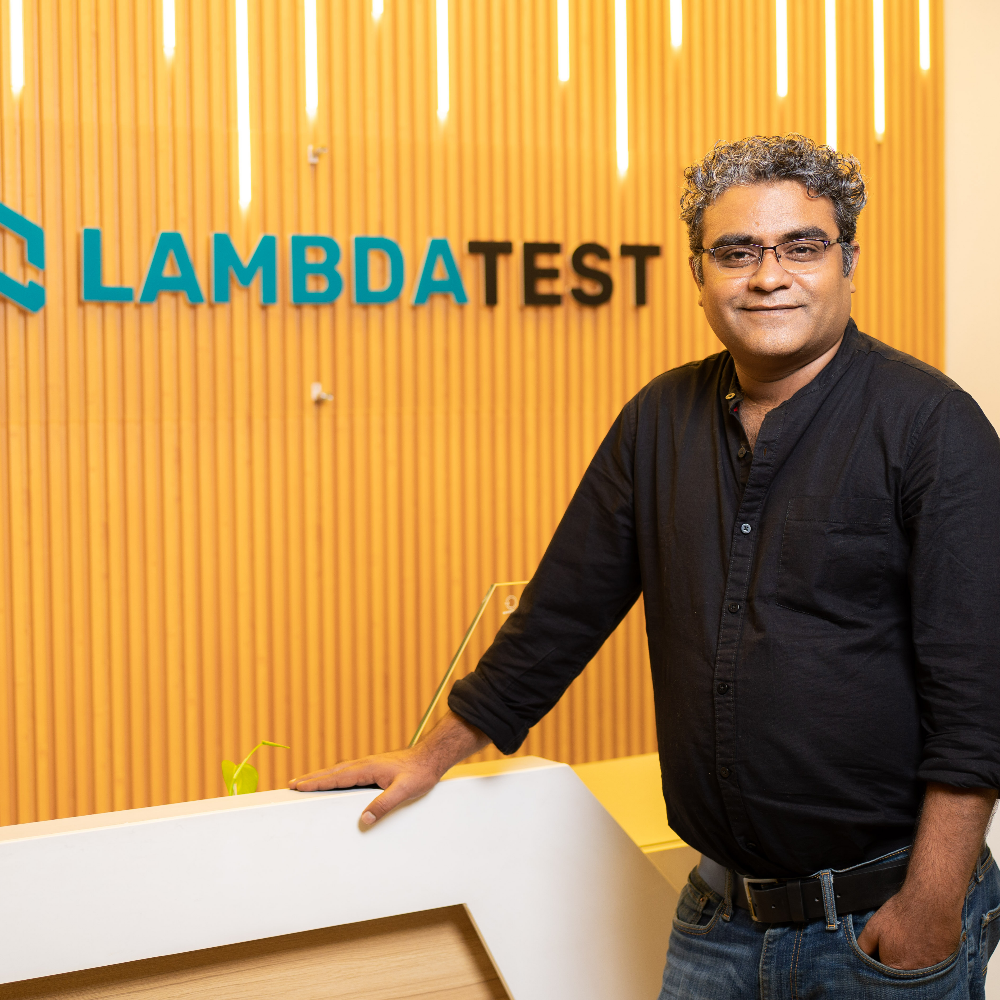
Asad Khan is the co-founder and CEO of Lambda Test Inc.