

Alcohol often seems like a ubiquitous part of personal and professional life. From beers at neighborhood barbecues to happy hours with colleagues after work, unwinding and socializing with a few drinks is culturally accepted, if not encouraged, in many places. Yet alcohol use has a clear dark side.
According to data from the WHO, “the harmful use of alcohol is a causal factor in more than 200 disease and injury conditions” and results in 3 million deaths worldwide every year. A 2021 study of more than 25,000 people in the UK found that even moderate drinking is harmful to the brain. Higher weekly alcohol consumption was associated with lower density of the brain’s gray matter, a tissue responsible for functions related to cognition, speech, learning, memory, and movement. In the U.S., the CDC estimated that losses in workplace productivity made up 72% of the costs related to excessive drinking.
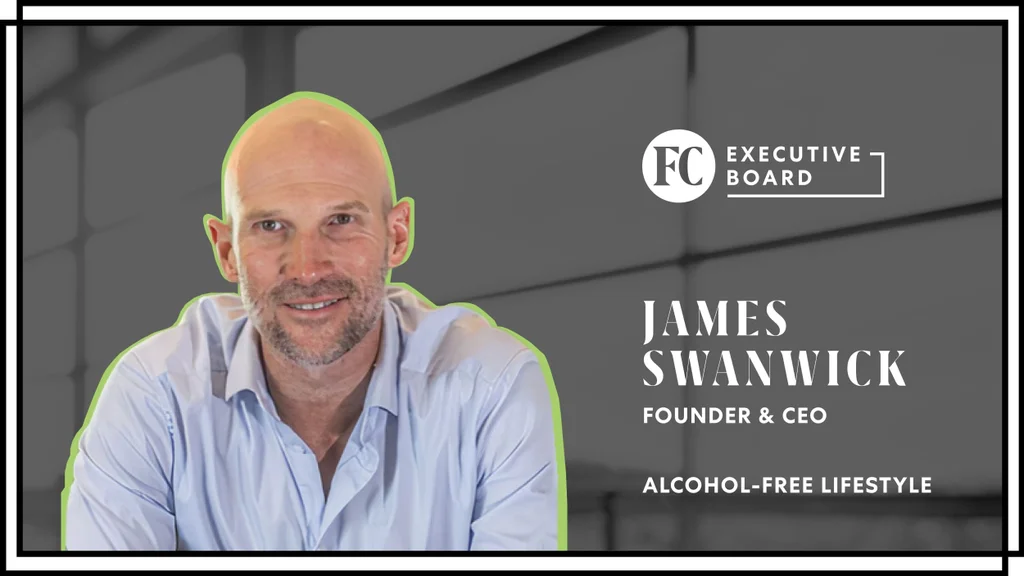
For decades, Alcoholics Anonymous and other 12-step programs have been the norm for people who want to break their harmful alcohol habits. But James Swanwick, founder and CEO of Alcohol Free Lifestyle, believes there is a better alternative to these traditional models.
Swanwick positions AFL’s Project 90, a personal development and executive mastermind program for high achievers, as a disruptor in the recovery space. Project 90 uses a holistic framework that combines virtual expert coaching, community support, and evidence-based techniques to empower participants to change harmful habits, develop healthy behaviors, and move toward personal and professional goals. After 90 consecutive days without alcohol, program participants can choose to continue being alcohol-free or to practice moderation in drinking.
In 2023, the University of Washington and the University of Florida conducted a study of Project 90’s effectiveness. Researchers assigned 164 participants to start Project 90 either at the beginning of the study or after the study’s final survey (waitlist control group). The self-reported drinking for participants in the Project 90 group was 98% less than that of people in the the waitlist control group. Project 90 participants also reported drinking on 3% of the study days, in contrast to 48% of waitlist control group participants.
“The default modality, where almost all people consider getting help with their drinking, is AA,” said Swanwick. “I support the mission of frameworks like AA. They want people to do better, to be better, and to heal. But studies suggest that AA and rehab have low long-term success rates. So we’re really challenging the notion that these traditional approaches are effective solutions.”
It’s challenging to compare the success rates of 12-step programs to other mainstream contemporary treatments, such as cognitive behavioral therapy and motivational interviewing, because newer treatment plans typically have a duration of several months, while participation in AA is seen as a lifetime commitment. One AA study reported that 27% of participants abstained from alcohol for up to a year and 13% stopped drinking for more than five years. Another analysis estimated a 5% to 10% success rate. A 2020 review of 27 studies found that 22% to 37% of people in AA remained abstinent from alcohol versus around 15% to 25% of people seeking other treatments.
AA was founded in 1935, initially as a peer support system for people who wanted to stop drinking, and later as a more formalized 12-step program based on participants’ experiences with recovery. AA’s framework, which is rooted in Christian beliefs, hasn’t changed significantly in nearly 90 years. Some find its strict requirements—including complete abstinence from alcohol and submission to a higher power—difficult to adhere to.
“A big difference between our program and traditional modalities is that we use empowering versus stigmatizing language,” said Swanwick. “‘I’m an alcoholic,’ is an example. We challenge the notion that people are alcoholics. We feel most people who are describing themselves as alcoholics actually just drink too much and have been for many years. We feel confident that, in many cases, we can help them stop drinking with a few simple neuroscience-based techniques. In AA, there’s a belief in a higher power: ‘I’m powerless. I surrender to this higher power.’ We think that this is keeping people stuck in being powerless. We want to instill in them that they are powerful.”
Swanwick also notes other distinct differences between Project 90 and traditional 12-step programs. Participants have the support of coaches and community members, but coaching is entirely virtual, so they can engage from any location without attending in-person meetings. Coaches include Yale- and Cambridge-educated experts in neuroscience and addiction and bestselling authors, such as James Clear, John Gray, and Ryan Holiday.
The program emphasizes the importance of creating healthy habits in their daily lives, including exercise, nutrition, sleep hygiene, and positive psychology practices supported by scientific research. Participants have reported positive changes in their physical and mental health, relationships, job performance, and income—and many have opted to remain alcohol-free long after completing the program.
“In traditional programs, they are lamenting the past; we try to help participants create their future,” said Swanwick. “In other modalities, they’re using the words ‘sober’ and ‘sobriety,’ which to me implies that participants are using willpower—that under normal circumstances they would drink, but because they’re sober, they can’t. We use language like ‘alcohol-free.’ You’re choosing an alcohol-free lifestyle as opposed to practicing sobriety. Our perception of AA and rehab is that there’s a lot of shame, guilt, and remorse, whereas what we do is encourage people to be proud of how far they’ve come and all of the changes that they’re making.”