

Picture this: An 80-year-old needs long-term care. And even though several of the surrounding nursing homes are only at 75% capacity, the facilities don’t have enough staff to be able to accept and care for any new patients. So, the patient gets sent home. Over the next several months, the patient goes to the emergency room multiple times for health issues that could have been better addressed in a long-term care facility, unnecessarily overburdening the hospital. By the time the patient is able to move into a nursing home, the facility still doesn’t have enough staff, and ultimately, the patient doesn’t receive the best care based on their specific needs.
It’s a hypothetical example—but not an unrealistic one. Consider 2022 reporting by the Texas Tribune, which noted that Texas “does not have enough nurses for its senior care facilities” and that amid that staffing shortage, nursing homes in the state “are closing.” In fact, according to a 2023 Wall Street Journal article, the publication’s analysis of federal data revealed that the United States has “at least 600 fewer nursing homes than it did six years ago.”
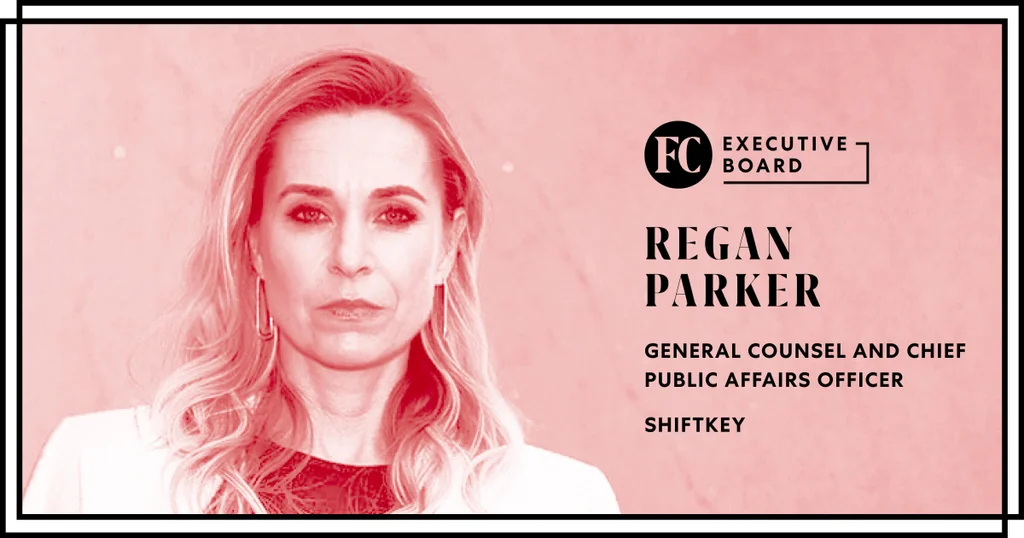
The federal government is attempting to put minimum staffing requirements for nursing homes in place, which will require an influx of new workers in the field. But Regan Parker, the chief legal and public affairs officer of ShiftKey, a platform that connects licensed healthcare professionals with open work opportunities, says that the healthcare industry simply can’t depend on expanding its workforce via traditional W2 roles.
“There are not enough healthcare workers willing to work traditional full-time jobs,” Parker says.
WORKFORCE SHORTAGES IN LONG-TERM AND POST-ACUTE HEALTHCARE
Grueling hours are par for the course in healthcare, Parker explains. Long shifts don’t give the flexibility many healthcare professionals need—and not everyone can work them.
“Maybe someone can’t work a 12-hour shift, but they can work a four-hour one,” Parker says. “When healthcare leaders and policymakers get into the weeds, they forget that people have lives outside of work, like families of their own and caregiving responsibilities at home.”
According to the nonprofit KFF, elder care facilities “had 976,500 employees nationwide in February 2020, but only 964,000 in October of 2023,” which was a -1.3 % reduction. The nonprofit also noted that skilled nursing care facilities “have seen an even more dramatic employment drop of -9.7% since February of 2020.” Parker stresses that if it comes down to two options—a healthcare worker leaving the industry for good because they can’t pull long shifts multiple times a week at a nursing care facility or continuing to provide services on a schedule that meets their personal needs (such as working just two shifts a week)—the best option is to embrace the independent professional and engage them on the terms and hours that work best for them, as it would help the facility meet its workforce needs.
“There really isn’t another choice,” Parker says. “The workforce shortage in healthcare is evident, and with our aging population, the reality is that there are not enough caregivers and healthcare professionals to care for them.”
She emphasizes that if long-term and post-acute care facilities don’t have enough workers, patients won’t be able to get the care they need.
“This isn’t just about getting a nurse into a nursing home for a shift to care for a set of patients,” Parker says. “Getting that one nurse into the facility impacts the entire healthcare ecosystem; it helps some of the most vulnerable members of our community get equitable access to healthcare.”
Moreover, she explains that the lack of sufficient long-term and post-acute care workers has a domino effect on the entire healthcare ecosystem.
“When hospitals call long-term and post-acute care facilities and ask if they can take patients, those facilities can’t take them in because there aren’t enough workers,” Parker says. “Meanwhile, those hospital beds remain occupied, and other patients can’t get the care they need. When patients aren’t able to get care in the right settings—the settings that are best for their needs—the entire system becomes clogged, which increases costs and reduces successful patient outcomes.”
WHY AN EMPOWERED WORKFORCE IS CRITICAL
Parker advocates the empowered workforce as the future of work—a future where people have more agency over whether they want to be independent workers or full-time employees. An empowered workforce, she believes, will be critical in helping long-term and post-acute care facilities fulfill their workforce needs moving forward.
“I think it’s important to embrace all of the different ways that people want to work and give people options to solve the crisis we’re having in healthcare,” Parker says. “It’s about choice, freedom, and flexibility.”
LinkedIn data published in 2023 indicates that healthcare workers want the choice, freedom, and flexibility that Parker emphasizes. Specifically, LinkedIn found that between 2020 and 2022, “there was a nearly 10 percentage point increase (from 13.7% to 23.1%) in the number of nurses who listed contract roles on their LinkedIn profiles.” Additionally, LinkedIn noted that these trends are “playing out for doctors, mental health professionals and pharmacists, all of whom have contributed to an uptick in contract and self-employment work.”
Parker notes that while some people might fear that an empowered workforce will take away full-time positions, that’s not the case.
“What’s important to remember is that there will always be a need for full-time work,” Parker says. “Traditional W2 work opportunities would not be taken away by an empowered workforce. This is simply another option to bring more workers into healthcare and keep them there.”
THE ROLE THAT TECHNOLOGY WILL PLAY IN THE FUTURE HEALTHCARE ECOSYSTEM
The empowered workforce will be instrumental in shaping the future healthcare ecosystem, but so will technology, Parker explains.
“Over the years, in various industries, we’ve seen how technology has created marketplaces that give people visibility and access to different types of available work,” Parker says. “Our platform is one example; we help healthcare professionals find open work opportunities that fit their lives.”
Parker adds that it will be “fascinating” to see how artificial intelligence and predictive analytics can help address healthcare workforce gaps.
“For instance, AI and predictive data could help us see where there might be health emergencies and pandemics,” Parkers says. “This would allow healthcare facilities to better prepare for waves in demand and ensure there are enough workers and supplies to support people who will likely need care during those critical moments.”
Parker stresses that being proactive rather than reactive will be increasingly crucial.
“Part of what we’re doing at ShiftKey is helping long-term and post-acute care facilities get out of reactive mode and start predicting their workforce needs with our technology,” she says.
Ultimately, says Parker, with more proactive approaches, long-term and post-acute care facilities can provide better care for patients while catering to the evolving needs of the workforce.
“The workforce itself has changed,” Parker says. “What workers, particularly younger workers, want out of work is changing. People want work-life balance. They don’t just want to go to work to support a lifestyle. They want a lifestyle and to be able to do work they’re passionate about. We have to provide options and find ways to bring more people into the workforce.”