
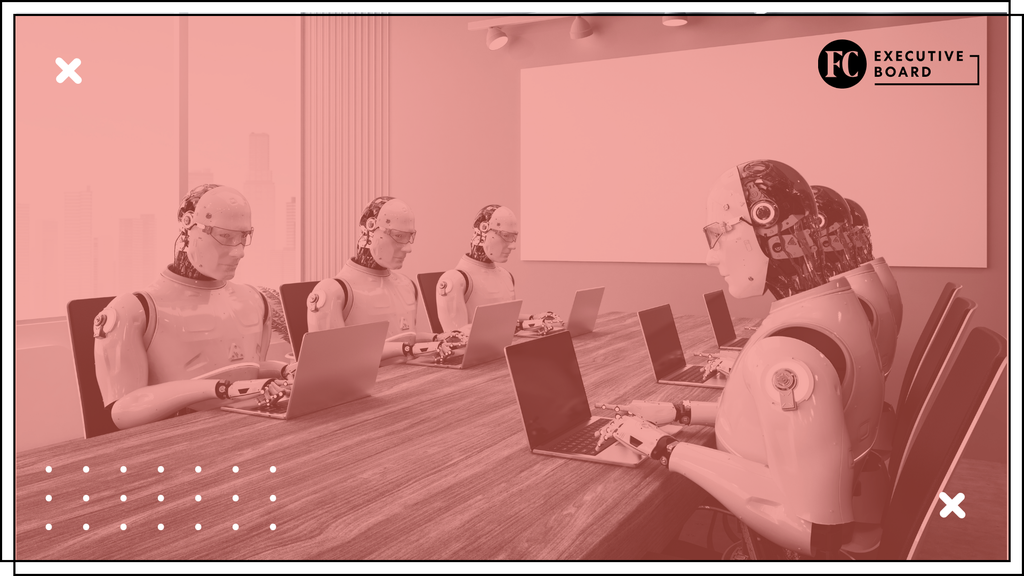

Calling up Claude or chatting with Gemini has become second nature to many of us in the software-as-a-service (SaaS) world. But now the industry is moving on to the next big thing: agentic AI.
A February 2026 report from Microsoft found that 80% of Fortune 500 companies use AI agents, particularly in sales, customer service, and product innovation.
My software company recently built an internal AI agent. What we’ve found is that the agent can almost act like a coworker. We call him “Captain.” He’s like the world’s best engineer, who can code solutions faster than anyone else and knows everything about our customers’ industry.
Instead of a generic build prompt. We had to train Captain on standard operating procedures (SOPs), just like any employee. We also fed him knowledge about our customers’ industry, drayage, a niche trucking sector that hauls freight to and from seaports and railyards. We ensured Captain was ingrained in our processes, not a bolt-on solution layered clunkily atop other tools.
Now, Captain is working (virtually) right next to us every day, helping our business—and our customers’ business—operate more efficiently.
How we made Captain work for us
Drayage trucking has unique needs and fast-moving operations, which means a generic chatbot or agent won’t do the trick. That is why, when building Captain, it was critical for us to ensure the agent knew everything about the industry.
With Captain’s knowledge base, I can ask about best practices for how a trucking company should handle industry-specific tasks, such as dispatching a truck or checking a port terminal’s appointment availability. Then, based on its response, I can direct it to create the feature, and it will automatically build it.
Meanwhile, if a trucking company reports a software bug, it’s an immediate fix. The bug gets uploaded right away, Captain repairs it in minutes, and we can deploy the fix ASAP. There’s no more logging the bug, following up with the dev team, taking time to build the fix, and doing quality assurance before eventually rolling it out to customers.
We’re already fixing more than 95% of bugs within 24 hours. By the end of July, we anticipate we’ll be able to ship 99% of bug fixes within hours of an issue being reported.
What we’ve built accelerates software development and makes our business more efficient. But it also helps our customers because we’re solving issues faster. If there’s a glitch in their transportation management system, which essentially acts as the control center for their whole business, Captain can help resolve it ASAP.
That, in turn, gives our trucking customers a competitive advantage, because they can get back to running their businesses more efficiently and profitably.
3 steps to make AI your coworker
To transform AI from a chatbot to an embedded employee that works side-by-side with you, it’s a move away from passive prompts to agentic workflows. Here are three steps to make it work.
1. Introduce your agents to your customers’ problems
As someone who grew up in the trucking industry, my work at PortPro relies on understanding actual customer needs and creating real solutions to existing problems. There is no point developing a solution for a manufactured problem when there are plenty of real-world issues in the industry that software and AI can help solve.
So when we started building Captain, we knew that industry knowledge was critical. Take dispatching, for one. Variables in the process include which load should move when, which driver should haul which freight, and when port terminals have available appointments for truckers to pick up or drop off containers. AI can suggest how best to match loads to drivers, but only if it understands the nuances of freight trucking and port operations.
If your software company works with a niche industry, this will be critical for your business too as you build agents. And if your audience is broader, it’s still essential to understand their pain points and build an agent that develops features to resolve real problems.
2. Connect the agent directly to your tools and apps
We all have tons of internal documentation, best practices, and SOPs. The best way to make an AI agent work specifically for your software company is to give it access to all files and technical documentation.
If you think about it, building an agent has many parallels to hiring an employee. You can hire a great person, but if you don’t give them the necessary hardware and software to do their job, you won’t set them up for success. The same is true with AI agents. You need to give them access and tools so they can perform their agentic duties.
With Captain, we provided access to the wealth of drayage industry knowledge we had, which made the agent even smarter and able to execute tasks specific to the drayage industry. Plus, it followed the internal processes we’ve developed at PortPro, so employees didn’t need to go back and fix these steps.
3. Create a human-in-the-loop workflow
We trust Captain to work autonomously. But AI isn’t perfect. That’s why it’s important to still have a human-focused review process before shipping a new feature or deploying a bug fix.
When you’re building agents, ensure there’s a step in the workflow that sends the finished product to a human employee. That person acts as a manager who reviews and approves the work, then finalizes everything before sending it to customers.
In this next phase of AI we’re entering, agents will make the biggest impact. For us, Captain has already proven that AI can be more than a tool. It can be a digital team member who helps us serve our customers better and faster. The result? Quicker innovation, which means happier customers—and that’s what running a SaaS business is all about.
Toni Pisano is chief customer officer and board member at PortPro Technologies, Inc.